Climate Change and Health

What Canada’s Climate Defenders Need to Know About the UN Framework Convention on Climate Change

The UNFCCC is the foundational treaty from 1992 that created the overall framework for international climate cooperation, while the Paris Agreement is a…

The Climate Change Arena Is Where Young Voices Are Reshaping Our Future

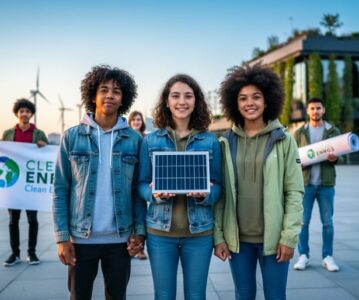
The climate change arena is the evolving space where individuals, organizations, and governments come together to tackle environmental challenges through collaboration, innovation, and shared action. Unlike traditional environmental movements that often felt siloed or partisan, this arena thrives on diverse participation, bringing together renewable energy advocates, community organizers, business leaders, and young activists who recognize that climate solutions require everyone at the table.
What makes this framework powerful is its emphasis on access and agency. You don’t need a science degree or political connections to …

Anthropogenic Climate Change and Human Health: Understanding the Impacts, Who’s at Risk, and Where to Find Support

Anthropogenic climate change refers to the warming of Earth’s atmosphere and oceans caused by human activities, primarily the burning of fossil fuels, deforestation, and industrial agriculture. These activities release greenhouse gases like carbon dioxide and methane that trap heat in our atmosphere, creating cascading effects on weather patterns, ecosystems, and most importantly, human health. The connection between what we emit and how we feel isn’t abstract. Rising temperatures intensify heat waves that strain …

What Is Concrete Construction and How Does It Impact Our Climate?

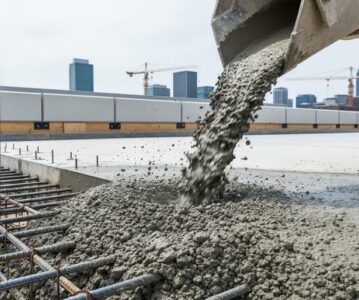
Concrete construction is the process of building structures using concrete, a composite material made from cement, water, and aggregates like sand and gravel. From sidewalks and bridges to skyscrapers and dams, concrete shapes nearly every aspect of our built environment and stands as the second most-consumed material on Earth after water.
If you care about climate change, concrete construction demands your attention. The cement industry alone accounts for roughly 8% of global carbon dioxide emissions, more than the entire aviation sector. …

What Is Off-Grid Living in Canada (and How Does It Work)?

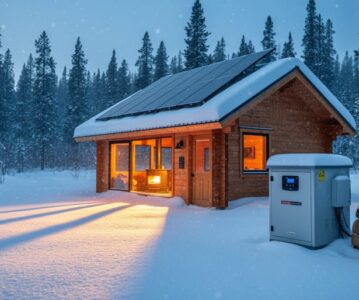
Off-grid living in Canada means disconnecting from municipal utilities and generating your own power, water, and heat independently, typically in rural or remote locations where traditional infrastructure is costly or unavailable. For Canadians pursuing energy independence, this lifestyle has evolved from a fringe survival choice into a viable path toward personal sustainability, especially as solar technology improves and the renewable energy movement gains momentum.
Canada’s geography makes off-grid living both challenging and uniquely rewarding. Winter temperatures regularly plunge below -30°C across much of the country, …

What Is Solar Integration in Electric Vehicles (and How Does It Work)?

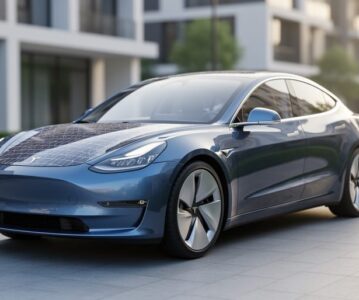
Solar integration in electric vehicles means embedding photovoltaic cells into the body, roof, or windows of a car to generate electricity that supplements or extends the battery’s charge. Rather than relying solely on grid power or combustion fuels, these vehicles harvest energy from sunlight as they drive or park, turning surfaces into small power plants. It’s a practical step toward reducing the root causes of climate change by cutting emissions and fossil fuel dependence.
For young people …

Carney Climate Change News Update: What Changed and What to Watch in 2026

Prime Minister Carney’s government is facing a two-front youth uprising over climate policy in 2026. On June 16, three young Canadians joined forces with the Canadian Association of Physicians for the Environment and Environmental Defence to file a federal court case alleging the government rolled back its 2030 climate plan, while a separate campaign is pushing Carney to make last November’s $40 million Youth Climate Corps pilot permanent in the 2027 budget. The dual movements reflect a generation unwilling to wait for incremental change, particularly as climate-driven …

Why Is Climate Change Happening? Root Causes and How We Can Fix It

Climate change is happening because human activities, primarily burning fossil fuels for energy, transportation, and industry, release massive amounts of heat-trapping gases into the atmosphere. Since the Industrial Revolution, we’ve added billions of tons of carbon dioxide and methane to the air by running cars, heating homes, generating electricity, and producing the goods we use daily. These greenhouse gases act like a blanket around Earth, preventing heat from escaping into space and steadily raising global temperatures.
The diagnosis is clear and the root cause is measurable. Every gallon of gasoline burned, every coal-…


Who Is Ontario’s Minister of Environment and What Do They Actually Do?

The Minister of Environment, Conservation and Parks in Ontario is the provincial cabinet member responsible for protecting Ontario’s natural resources, managing conservation areas, overseeing pollution control, and enforcing environmental legislation across Canada’s most populous province. Currently appointed by the Premier, this minister leads one of the province’s most consequential portfolios, affecting the daily lives of over 15 million Ontarians through decisions on air quality standards, water protection, waste management, and …

When Will Climate Change Be Irreversible? Understanding Tipping Points and What We Can Still Do

Climate change becomes irreversible when Earth’s natural systems cross critical thresholds called tipping points. These are moments where the climate shifts into a new state that cannot easily be undone, even if we stop emitting greenhouse gases entirely. The IPCC defines tipping points as “critical thresholds in a system that, when exceeded, can lead to a significant change in the state of the system, often with an understanding that the change is irreversible.”
Here’s what you need to know right now: recent IPCC assessments show these tipping points could be triggered between 1°C and 2°C of warming above …