What Are Solar Panels (and How Do They Turn Sunlight Into Power)?
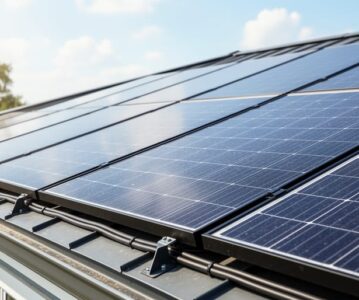
A solar panel is a flat device that turns sunlight directly into electricity, with no fuel, no moving parts, and no smoke.

A solar panel is a flat device that turns sunlight directly into electricity, with no fuel, no moving parts, and no smoke.
The UNFCCC is the foundational treaty from 1992 that created the overall framework for international climate cooperation, while the Paris Agreement is a…
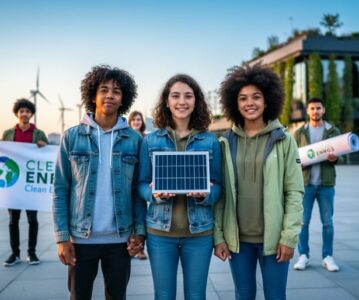
The climate change arena is the evolving space where individuals, organizations, and governments come together to tackle environmental challenges through collaboration, innovation, and shared action. Unlike traditional environmental movements that often felt siloed or partisan, this arena thrives on diverse participation, bringing together renewable energy advocates, community organizers, business leaders, and young activists who recognize that climate solutions require everyone at the table.
What makes this framework powerful is its emphasis on access and agency. You don’t need a science degree or political connections to …
The MIT Solar Electric Vehicle Team is a student-led research and engineering group pushing the boundaries of how solar energy can directly power transportation, designing high-efficiency vehicles that compete internationally while advancing renewable technology with real-world applications. Since their founding in 1985, these students have built some of the world’s most efficient solar cars, capturing sunlight through onboard photovoltaic panels and converting it into usable power with minimal energy loss. Their work matters because it demonstrates that solar integration in electric vehicles isn’t just a futuristic concept but…
A climate change clock is a public countdown displaying the time remaining until global temperature rise becomes irreversible based on current emission trends, designed not to paralyze viewers with fear but to transform urgency into action. These digital installations, which have appeared in major cities worldwide, calculate the years, days, hours, and seconds left before we cross critical temperature thresholds, typically 1.5°C above pre-industrial levels. Rather than serving as doomsday devices, they function as accountability tools and rallying points for solutions already within reach.
The concept is straightforward: scientists…
The albedo effect describes how different surfaces reflect sunlight back into space rather than absorbing it as heat. Light-colored surfaces like ice, snow, and clouds bounce solar radiation away from Earth, while darker surfaces like oceans, forests, and asphalt absorb it, warming the planet. This simple physical process plays a surprisingly powerful role in regulating global temperatures and is becoming central to climate conversations in 2026.
Understanding albedo matters because small changes in Earth’s reflectivity create cascading climate impacts. When Arctic ice melts, it exposes dark ocean water that absorbs more heat…
Yes, global warming directly causes climate change. Global warming is the long-term heating of Earth’s atmosphere due to human activities, primarily burning fossil fuels. Climate change is the broader set of planetary changes that result from this warming: shifting weather patterns, rising sea levels, more intense storms, and ecosystem disruption.
Think of it this way: global warming is the cause, climate change is the effect. The relationship isn’t theoretical. Since the late 1800s, Earth’s average surface temperature has risen approximately 1.1°C, and that warming drives measurable changes everywhere from Arctic…
Mitigation, in the climate context, means taking action to reduce or prevent greenhouse gas emissions that cause global warming. While the term appears across fields from law to emergency management, climate mitigation specifically targets the root cause of rising temperatures by cutting the carbon dioxide, methane, and other heat-trapping gases we release into the atmosphere.
Understanding mitigation matters because it represents our most powerful tool for limiting how severe climate change becomes. Every ton of emissions we avoid today translates to less warming, fewer extreme weather events, and reduced pressure on communities …
Solar panels are an increasingly popular form of renewable energy, and they’re popping up on roofs worldwide. But how exactly do they work? What is inside a solar panel? In this article, we’ll dive into the inner workings of solar panels. Then, we will explore their history, production process, and different types available in the market today.
What Are the Types of Solar Panels?
Solar panels are devices that use solar energy to produce electricity. The most …
These days, people have developed a desire for off-grid living. They want to resort to the natural way of living to connect better with nature and be disconnected from the hustle and bustle of urban life. Though the grid refers to a country’s electrical distribution or supply network, it goes beyond that in this context.
Living off-grid in Canada or other countries involves generating your electricity via a wind turbine or solar panels, growing your food, disconnecting your cell service, and cutting off or reducing utilities such as gas and the sewage system. In essence, to live off-grid is to become self-sufficient in …