
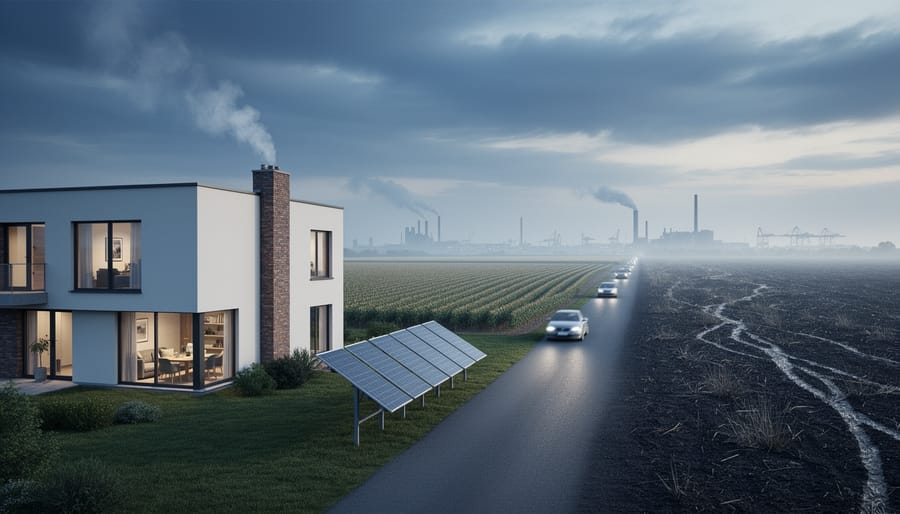

Climate change isn’t some distant threat unfolding on melting ice caps thousands of miles away. It’s happening because of how we power our homes, grow our food, move from place to place, and manufacture the products we use every day. The science is straightforward: human activities are releasing massive amounts of greenhouse gases into the atmosphere, trapping heat and warming the planet faster than at any point in recorded history.
Since the Industrial Revolution, we’ve burned fossil fuels at an unprecedented scale. Coal plants generate electricity. Gasoline powers our cars. Natural gas heats our buildings. Each of these processes releases carbon dioxide, which accumulates in the atmosphere like an invisible blanket. The numbers tell the story: atmospheric CO2 levels now exceed 425 parts per million in 2026, up from 280 parts per million before industrialization began.
But fossil fuels aren’t the only culprit. Agriculture contributes about a quarter of global emissions through methane from livestock and rice paddies, nitrous oxide from fertilizers, and deforestation to clear land for farming. Manufacturing and industrial processes add their share. Even our food waste matters, decomposing in landfills and releasing methane.
Understanding these causes isn’t about assigning blame. It’s about recognizing where we have the power to change course. Whether you’re a conservative focused on energy independence or a progressive passionate about environmental justice, the physics of climate change doesn’t care about politics. Heat-trapping gases warm the planet regardless of who releases them or why. This knowledge becomes the foundation for solutions that can unite us across political divides, harnessing innovation and human ingenuity to build a more sustainable future.
The Greenhouse Effect: How Earth’s Temperature Changes
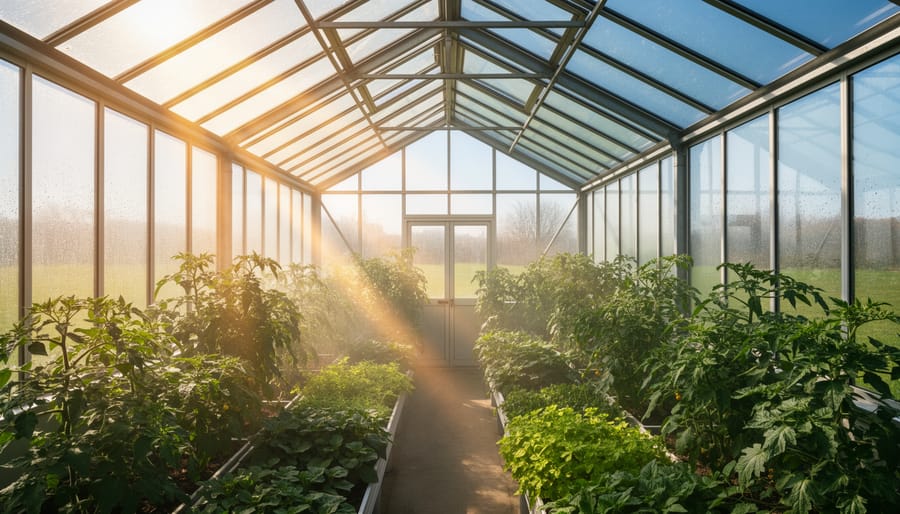
Earth’s atmosphere works like a blanket, trapping some of the sun’s heat and keeping our planet warm enough to support life. This natural process, called the greenhouse effect, happens because certain gases, mainly carbon dioxide, methane, and nitrous oxide, act like the glass in a greenhouse, letting sunlight in but preventing heat from escaping back into space. Without these gases, Earth would be a frozen, lifeless rock averaging about 0°F instead of the comfortable 59°F we experience today.
The problem isn’t the greenhouse effect itself, it’s that human activities have dramatically increased the concentration of these heat-trapping gases in our atmosphere. For hundreds of thousands of years, Earth’s greenhouse gas levels fluctuated naturally through ice ages and warm periods, driven by volcanic activity, ocean circulation changes, and variations in Earth’s orbit. These natural shifts happened gradually over millennia, giving ecosystems time to adapt.
What makes today’s warming different is its speed and source. Since the mid-1800s, we’ve been burning massive amounts of coal, oil, and natural gas for energy, transportation, and manufacturing. This combustion releases carbon dioxide that had been locked underground for millions of years, flooding the atmosphere faster than natural processes can absorb it. The result is that we’ve thickened Earth’s heat-trapping blanket by over 40 percent in just 150 years. The atmosphere now holds more CO2 than at any point in the last 800,000 years, and this accelerated buildup is pushing global temperatures upward at an unprecedented pace, warming that would have taken nature 10,000 years is happening in decades.
The Main Culprit: Fossil Fuels and Energy Production
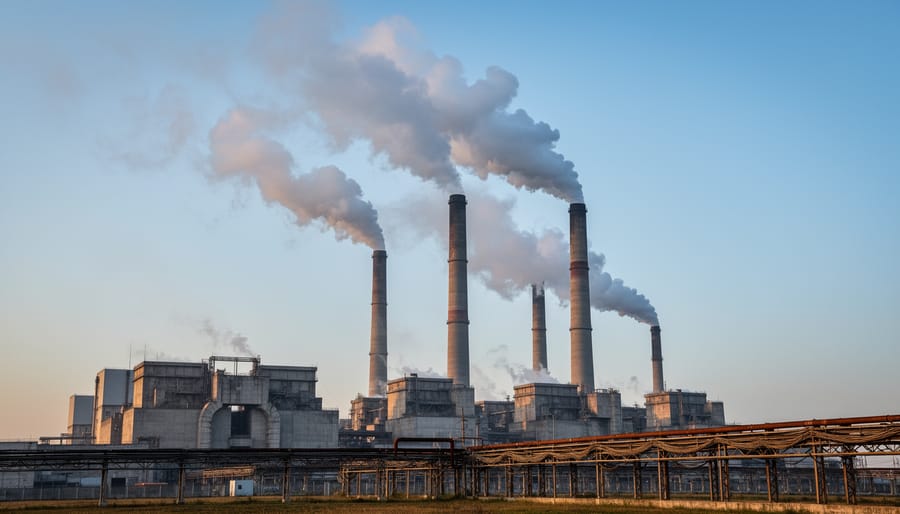
When you flip on a light switch, heat your home, or charge your phone, you’re tapping into an energy system built on fossil fuels, and that system is the single largest driver of climate change. The energy sector accounts for roughly 73% of global greenhouse gas emissions, dwarfing every other source. Coal, oil, and natural gas power our electricity grids, fuel our vehicles, and heat our buildings, but burning them releases vast quantities of carbon dioxide that accumulate in the atmosphere for decades.
Coal remains the dirtiest player. Power plants that burn coal emit more CO2 per unit of energy than any other fossil fuel, which is why phasing out coal has become a priority in many climate strategies. Oil follows closely behind, powering transportation worldwide, cars, trucks, ships, and planes all depend on petroleum products that release carbon when combusted. Natural gas, often promoted as a cleaner alternative, still contributes significantly to emissions both through combustion and methane leaks during extraction and transport.
The data is clear: fossil fuel use dominates CO2 emissions at the global scale, making energy production the linchpin of any meaningful climate solution. This isn’t just an environmental issue, it’s an economic and generational one. Young people today will inherit an energy infrastructure that either locks in decades more emissions or pivots toward cleaner alternatives.
Understanding this dominance matters because it focuses our efforts. If energy is the main culprit, then transforming how we generate and consume power offers the most leverage for reducing emissions. The good news? Technology has advanced rapidly. Renewable energy sources like wind and solar are now cost-competitive with fossil fuels in many regions, and battery storage is improving. The path forward requires scaling these solutions while creating jobs and economic opportunities that bring people together across political divides.
The Five Major Sources: Breaking Down Where Emissions Come From
Carbon Dioxide: The Primary Driver
Carbon dioxide accounts for roughly three-quarters of global greenhouse gas emissions, making it the single biggest driver of climate change. CO2 primarily from fossil fuels enters the atmosphere when we burn coal, oil, and natural gas for electricity, transportation, and heating. Once released, CO2 lingers for centuries, some molecules will trap heat for a thousand years or more, which means today’s emissions lock in warming far into the future. This atmospheric persistence distinguishes CO2 from shorter-lived gases: even if we stopped all emissions tomorrow, the CO2 already airborne would continue warming the planet for generations. Industrial activities like cement emissions add further CO2, but fossil fuel combustion remains the dominant source, underscoring why transitioning our energy systems is the most critical climate solution we can pursue.
Methane, Nitrous Oxide, and F-gases: The Supporting Cast
While CO2 gets most of the headlines, three other greenhouse gases punch well above their weight. Methane traps roughly 28 times more heat than carbon dioxide over a century, making it a serious concern despite lower atmospheric concentrations. CH4 from agriculture sources accounts for much of global methane, released when livestock digest feed and when rice paddies flood. The energy sector also contributes through natural gas leaks and coal mining operations.
Nitrous oxide, primarily from nitrogen-based fertilizers used in farming, is even more potent, about 265 times stronger than CO2 at warming the atmosphere. When farmers apply fertilizer to boost crop yields, soil bacteria convert some nitrogen into N2O. This creates tension between feeding a growing population and reducing agriculture emissions.
Fluorinated gases, or F-gases, appear in refrigeration, air conditioning, and industrial processes. Though emitted in smaller quantities, some F-gases can trap thousands of times more heat than carbon dioxide. They are entirely human-made, with no natural sources whatsoever, coming from products we use daily like cooling systems and aerosol propellants.
Why Our Consumption Patterns Drive Emissions
Our everyday choices ripple outward, connecting directly to the emission sources driving climate change. When you flip a light switch, stream a show, or charge your phone, you’re drawing on energy grids that, in many regions, still rely heavily on fossil fuel combustion. Transportation choices matter, too: personal vehicles account for a substantial share of energy-related emissions, while the goods we order online travel through complex supply chains burning diesel and jet fuel at every stage.
Food systems illustrate this connection vividly. The meat and dairy we consume tie back to agricultural methane emissions and nitrous oxide from fertilizers, while energy-intensive processing, refrigeration, and long-distance shipping add carbon dioxide at multiple points. Manufacturing demand works the same way, every product purchased required energy to produce, raw materials extracted and processed through industrial activities, and often fluorinated gases released during fabrication of electronics, appliances, and other consumer goods.
Collectively, these consumption patterns create the demand that keeps emission-heavy systems running. This isn’t about assigning blame or suggesting individual guilt. Rather, understanding these connections reveals where change can happen most effectively. When we recognize that our transportation habits link to energy sector emissions, our food choices connect to agriculture’s methane output, and our purchasing decisions drive industrial processes, we gain clarity on which solutions matter most, and where collective action, health impactsand economic opportunities for improvement align.
The path forward involves both smarter individual choices and systemic changes that make sustainable options accessible and affordable for everyone, regardless of political perspective or economic circumstance.
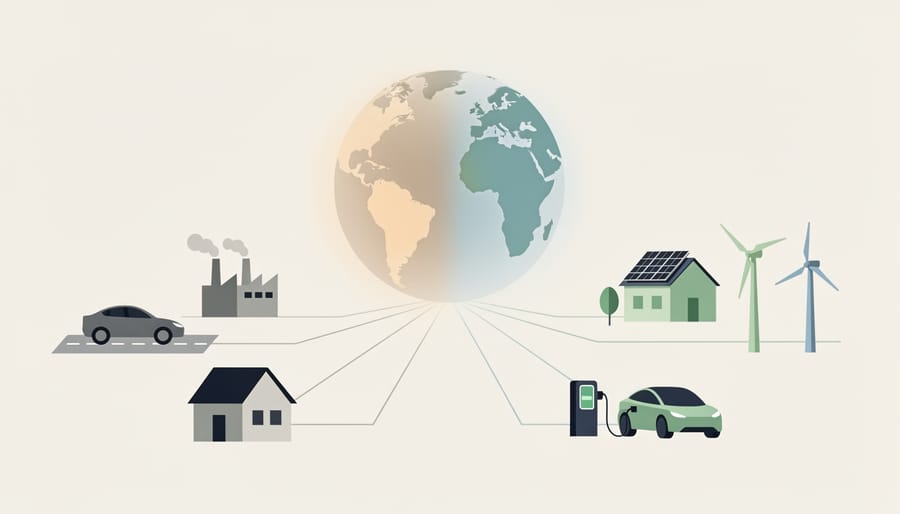
The Path Forward: Solutions We Can Rally Behind Together
Understanding where emissions come from points us directly to where solutions make the biggest impact. The transition from fossil fuels to renewable energy tackles the largest source head-on, and the economic case has never been stronger. Solar and wind power now cost less than coal in most markets, creating jobs faster than traditional energy sectors while reducing emissions. Learning how solar works reveals technology that is accessible, scalable, and increasingly affordable for homes and businesses alike.
Innovation extends beyond energy. Regenerative agriculture reduces emissions while improving soil health and farm profitability. Industrial carbon capture technologies turn waste CO2 into usable products. Electric vehicles eliminate tailpipe emissions while lowering fuel costs over their lifetime. These solutions share a pattern: they address specific emission sources with measurable results, and they create economic opportunity rather than sacrifice.
Policy plays a role too, but the most effective approaches unite rather than divide. Investments in clean energy infrastructure create construction and manufacturing jobs in every region. Tax incentives for efficient technologies put money back in household budgets. Research funding drives breakthroughs that make solutions cheaper and more effective. When we frame climate action around job creation, energy independence, and economic growth, common ground emerges across the political spectrum. Understanding the causes gives us the roadmap. Now we need the collective will to follow it.
Understanding what is causing climate change isn’t just academic knowledge, it’s the foundation for every solution we’ll build together. When we know that fossil fuel combustion drives the majority of emissions, that agriculture and industrial processes play critical roles, and that our daily choices connect to these larger systems, we can target our efforts where they’ll matter most. This knowledge bridges political divides because the science doesn’t care about party affiliation, and neither does our shared future.
Young people are uniquely positioned to turn this understanding into action. You’re building careers in clean energy, innovating in agriculture, demanding accountability from industries, and proving that economic growth and environmental stewardship aren’t opposing forces. The path forward runs through bipartisan collaboration on renewable infrastructure, technological advancement, and pragmatic policies that create jobs while cutting emissions. Understanding the causes empowers you to champion solutions that work for everyone, economically, environmentally, and politically. The challenge is real, but so is our capacity to meet it.