



Climate change posters remain one of the most accessible and powerful tools for sparking conversations that transcend political boundaries. Whether you’re preparing for a school presentation, organizing a community event, or leading a youth climate initiative, the right poster combines compelling visuals with fact-based messaging that resonates across the aisle.
Start by identifying your specific audience and setting. A poster designed for a college campus will differ significantly from one intended for a town hall meeting or a bipartisan climate forum. Your message should address shared values like economic opportunity, national security, and protecting natural resources rather than relying on partisan talking points.
Download templates from reputable sources that provide customizable designs suited to various advocacy contexts. Free platforms now offer templates specifically built for climate communication, allowing you to adjust colors, text, and imagery while maintaining professional quality. The best templates include space for local data, making your message immediately relevant to your community.
Ground every claim in verified data from trusted scientific institutions. In 2026, audiences across the political spectrum demand credibility, and a single unsupported statistic can undermine your entire message. Cross-reference your sources and include QR codes linking to full reports when appropriate.
Focus on solutions rather than catastrophe. Posters highlighting renewable energy jobs, technological innovation, and community resilience generate more engagement than doom-focused messaging. Young advocates have proven that optimistic, action-oriented visuals inspire participation rather than paralysis, turning viewers into allies regardless of their prior political leanings.
Why Posters Still Matter in the Digital Age
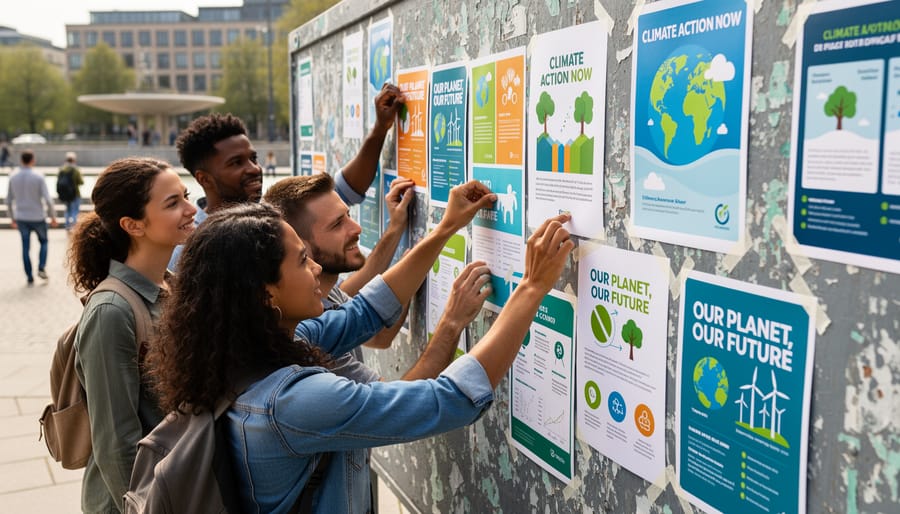
Social media algorithms keep most climate content locked in echo chambers, shown mainly to people who already agree. Physical and digital posters break through that filter. When you tape a poster to a community board, display it in a classroom, or share it beyond your usual networks, you reach neighbors, classmates, and family members who might never see a climate post in their feed. That tangible presence starts conversations where they matter most: face-to-face, in shared spaces, across the kitchen table.
Posters work because they’re immediate. Unlike scrolling past a tweet, people pause at bulletin boards, linger near displays, and actually read what’s in front of them. Research consistently shows that visual information processed through physical or prominent digital placement creates stronger memory retention than fleeting social feeds. A well-designed poster communicates its core message in three seconds, making it perfect for busy adults, skeptical relatives, or anyone who won’t click through to read a long article.
For young activists just starting out, posters offer the lowest barrier to entry. You don’t need a massive following, email list, or event budget. Download a template, customize the message, print a few copies, and you’re advocating. That accessibility matters when building confidence and creating your first climate impact, especially in communities where climate change in cities demands local solutions that resonate beyond partisan divides.
The psychology cuts deeper than convenience. Posters spark dialogue because they occupy neutral territory. A poster emphasizing renewable job growth or cleaner air for kids presents information without the social pressure of a confrontational post. People engage with it on their own terms, process the message privately, and often bring it up later in conversation. That delayed, organic response builds understanding across political lines far more effectively than heated online debates ever could.
Where to Find Free Climate Change Poster Templates in 2026
Getting your hands on professional-quality poster templates no longer requires a design budget or specialized software. In 2026, several platforms offer free, customizable climate change poster resources that young organizers can tailor to their specific campaigns and communities.
| Platform | Templates Available | Key Strengths | Best For |
|---|---|---|---|
| PosterMyWall | 633+ | Largest selection, ready-to-print formats | Campaigns needing variety and quick customization |
| Adobe Express | Dozens | Professional polish, intuitive editing | High-impact visuals for diverse audiences |
| Canva | Extensive library | User-friendly drag-and-drop, social sharing | First-time designers and multi-platform campaigns |
| Template.net | Multiple options | Professional templates, fully editable and printable | Formal presentations and institutional settings |
| Kapwing | Curated collection | Eye-catching graphics, flexible layouts | Social media and digital-first campaigns |
PosterMyWall leads the pack with over 633 free templates designed to empower action and raise awareness in local communities. The platform focuses on environmental advocacy, making it ideal if you are organizing a community event or school campaign and need quick access to professionally designed materials.
Adobe Express provides dozens of templates that balance visual appeal with flexibility. The platform excels at helping you create posters that look polished without requiring design experience, which matters when you are presenting to audiences across the political spectrum who expect credibility.
Canva stands out for its customizable designs that you can easily share across social media platforms. The drag-and-drop interface lets you personalize templates with your own photos, local data, or community-specific messaging in minutes rather than hours.
Template.net offers professional, editable, and printable options that work well for school presentations, community board postings, or educational settings where a more formal aesthetic helps establish authority. The templates download in formats ready for both digital display and physical printing.
Kapwing brings eye-catching graphics and flexible layouts that you can personalize with your own text and images. The platform shines for campaigns prioritizing digital distribution, including social media posts and Zoom backgrounds that keep climate awareness visible in virtual spaces.
Each platform serves different campaign needs, so your choice depends on whether you are prioritizing print materials for physical community spaces, digital assets for online organizing, or a combination that reaches audiences where they already gather.

Design Principles That Drive Action
Messaging That Unites Instead of Divides
The words you choose for your climate poster can open doors or slam them shut. Instead of focusing on what’s wrong or who’s to blame, frame your message around what we all want: thriving communities, good jobs, and healthy families. Lead with economic opportunity and climate and health benefits that matter to everyone, regardless of political background.
Replace “save the planet” with “protect our air and water.” Swap “climate crisis” for “clean energy future.” Talk about local jobs in solar installation and wind manufacturing, not abstract global targets. When you emphasize solutions that strengthen your community’s economy and safeguard children’s health, you cut through partisan noise and connect with shared values.
Here’s how to keep your messaging inclusive and action-oriented:
- Do: Highlight job creation, energy independence, and lower utility costs
- Don’t: Use phrases like “climate deniers” or assign political blame
- Do: Focus on community resilience and protecting what we’ve built together
- Don’t: Lead with apocalyptic imagery or guilt-based appeals
- Do: Frame renewable energy as smart investment and innovation
- Don’t: Dismiss concerns about economic transitions or energy reliability
Ground your text in concrete local benefits. “Cleaner air for our kids” resonates more broadly than “reducing carbon emissions.” When you root your poster’s message in what unites rather than divides, you create space for conversations that actually move people toward climate action.
Visual Elements That Command Attention
Graphics should serve your message, not overwhelm it. Choose images that feel immediate and relatable rather than abstract. A wind turbine against a local skyline connects better than generic stock photos of melting ice caps. Real people in your community, local renewable energy projects, or recognizable landmarks ground climate action in tangible reality.
Fonts matter more than you think. Headlines need bold, readable typefaces that work at a glance from across a room. Limit yourself to two fonts: one for headlines, one for body text. Sans-serif fonts like Arial or Helvetica ensure readability on both screens and printed posters. Avoid decorative fonts that sacrifice clarity for style.
Layout determines whether someone stops or walks past. Leave breathing room around key elements. White space focuses attention rather than dilutes it. Position your strongest visual element and headline where the eye naturally lands first, typically the upper third of the design. For social media formats, center critical information where it won’t get cropped by different platform dimensions.
Context shapes your approach. Community boards need high contrast and fewer words. Classroom posters can include more detail since viewers have time to read. Event displays should prioritize from-a-distance visibility with large text and simple graphics. Social media versions require square or vertical formats and text large enough to read on mobile screens. Adapt the same core message across formats rather than forcing one design everywhere.
Ensuring Your Message Is Accurate and Credible
Your poster’s impact depends on its accuracy. Even a single questionable statistic can undermine your entire message and give skeptics an opening to dismiss your work. Before you finalize any design, verify every claim, number, and statement against reliable sources.
Start with trusted institutions. Government climate agencies like NASA, NOAA, and the EPA maintain current data on temperature trends, sea level rise, and carbon emissions. The Intergovernmental Panel on Climate Change publishes comprehensive assessments that synthesize thousands of peer-reviewed studies. University research centers often translate complex findings into accessible formats perfect for visual communication.
Check the date on every source you cite. Climate science evolves rapidly, and a study from 2020 may have been updated or refined by 2026. When discussing the drivers of climate change use the latest emissions data rather than outdated projections. This attention to currency matters especially for posters aimed at politically diverse audiences who may scrutinize your claims closely.
Avoid common pitfalls. Don’t conflate weather events with climate trends. Don’t cherry-pick dramatic statistics without context. Don’t use vague phrases like “scientists say” when you can cite a specific study or institution. Be precise about what the data actually shows versus what it suggests.
Accuracy builds bridges. When you ground your message in verified facts, you create space for genuine dialogue across political divides. Conservatives and progressives alike respect evidence-based arguments, particularly when they’re presented clearly and honestly. Research shows that factual content plays a critical role in boosting credibility against misinformation especially when reaching audiences beyond your immediate network.
Your credibility as a young organizer depends on this rigor. Take the extra hour to verify your sources. That investment pays dividends when your poster sparks productive conversations instead of defensive arguments.
From Template to Community Impact
Once you’ve chosen a template that aligns with your message, the path from digital file to community impact requires intentional planning. Start by customizing your chosen template with local data, regional examples, or specific initiatives relevant to your community. This localization transforms a generic climate poster into a conversation starter that resonates where you live.
- Select a template that matches your campaign goal and adjust the text to emphasize shared values like economic opportunity, health benefits, or community resilience.
- Replace placeholder images with visuals that reflect your local context, whether renewable energy projects in your region or climate impacts your neighbors recognize.
- Fact-check every statistic and claim using reliable sources before finalizing your design, ensuring your poster builds credibility across political audiences.
- Download your poster in the appropriate format: high-resolution PDFs for physical printing, JPEGs or PNGs for social media sharing, and landscape formats for digital displays or Zoom backgrounds.
- Print physical copies for community boards, classrooms, local businesses, and events where face-to-face conversations happen.
- Share digital versions across platforms where your target audience gathers, tailoring dimensions to each platform’s specifications.
Distribution matters as much as design. Physical posters work best in locations with high foot traffic and diverse audiences: libraries, community centers, coffee shops, and school hallways. Ask permission from venue managers and explain how your poster addresses shared concerns rather than partisan politics. Digital versions can reach broader audiences through community Facebook groups, Instagram stories, and email newsletters to local organizations.
Measure your impact by tracking conversations sparked, not just impressions. Pay attention to questions people ask, the concerns they raise, and the connections they make between climate action and their own priorities. When your poster prompts a business owner to ask about renewable energy incentives or inspires a neighbor to attend a town hall on sustainability, you’ve created genuine community engagement. Document these stories to refine future campaigns and demonstrate how youth-led visual advocacy builds momentum for climate solutions that everyone can support.
Real Stories: Youth-Led Poster Campaigns Making a Difference
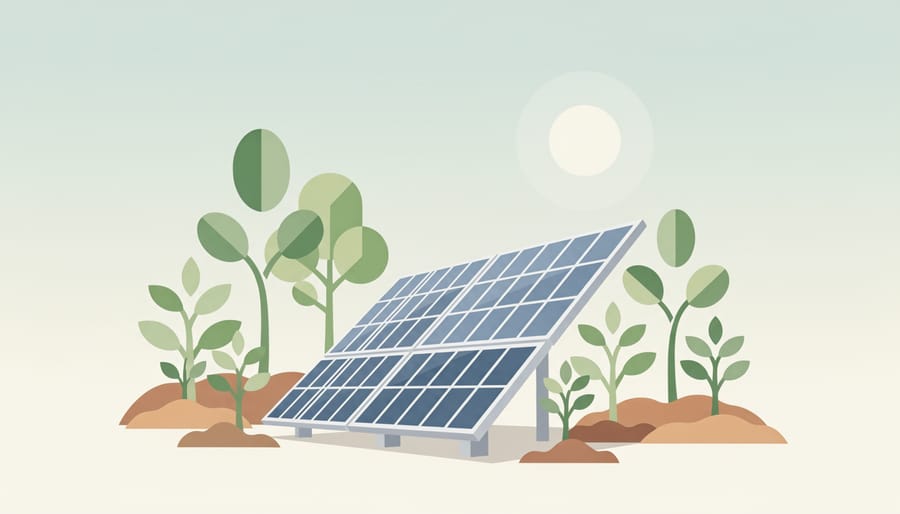
Across the country, young organizers are proving that climate posters spark meaningful conversations in unlikely places. In rural Texas, a high school environmental club created posters featuring local farmers who’ve cut costs by installing solar panels on their barns. The campaign framed renewable energy as economic opportunity rather than environmental sacrifice, attracting support from both conservative and progressive community members. By explaining how solar panels work in simple terms alongside job creation numbers, the posters opened doors for collaboration between youth activists and agricultural stakeholders who’d previously seen climate action as politically divisive.
In Michigan, a coalition of students from three neighboring school districts used poster templates to highlight manufacturing jobs in the wind turbine industry. Their designs emphasized community pride and economic revitalization, deliberately avoiding partisan climate rhetoric. The posters appeared in union halls, libraries, and local diners, reaching audiences who rarely engage with environmental messaging on social media. When students campaign climate efforts around shared economic interests rather than ideological positions, they build bridges that purely digital activism rarely achieves.
A Florida coastal community saw youth organizers create bilingual posters connecting climate resilience to property values and insurance costs. The campaign avoided apocalyptic imagery, instead featuring local business owners discussing flood mitigation and hurricane preparedness. By focusing on practical solutions and immediate community benefits, these young activists demonstrated that effective climate advocacy meets people where they are, using accessible visual tools to start conversations that transcend political divides.
The climate posters you create today will outlive any single news cycle. When you combine striking design with verified facts and language that welcomes everyone into the conversation, you build something more durable than outrage: you build trust. These free templates give you the foundation, but your voice and local insight make them powerful.
Your generation understands something older activists often miss. Climate action doesn’t require everyone to agree on everything; it requires shared goals like cleaner air, economic opportunity in renewable energy, and healthier communities. A well-designed poster in a library, classroom, or community center can start conversations that social media never will. It reaches your neighbor who doesn’t follow climate accounts, the business owner wondering about solar panels, the parent worried about their kid’s future.
You don’t need a design degree or a big budget to make a difference. You need curiosity, accuracy, and the willingness to speak to people where they are. Download a template, customize it with credible information, and put it where your community gathers. Every poster you create is a small act of leadership, a signal that the future is being built by people who care enough to show up with solutions instead of just complaints.