
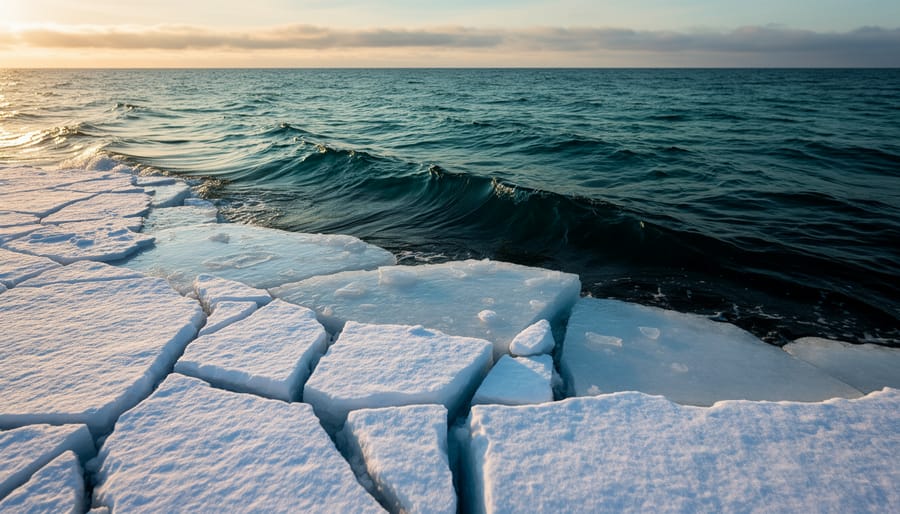

The albedo effect describes how different surfaces reflect sunlight back into space rather than absorbing it as heat. Light-colored surfaces like ice, snow, and clouds bounce solar radiation away from Earth, while darker surfaces like oceans, forests, and asphalt absorb it, warming the planet. This simple physical process plays a surprisingly powerful role in regulating global temperatures and is becoming central to climate conversations in 2026.
Understanding albedo matters because small changes in Earth’s reflectivity create cascading climate impacts. When Arctic ice melts, it exposes dark ocean water that absorbs more heat, which melts more ice in a self-reinforcing loop. Canada’s 2023 wildfire season, the worst on record, revealed how burned boreal forests lose their reflective snow cover, creating an albedo shift that warms regional climates by an estimated 2.3 watts per square meter compared to fire-cycled landscapes.
The growing interest in albedo reflects a shift in how we approach climate solutions. From white roofs that cool cities to debates about geoengineering strategies, people across the political spectrum are exploring how we might work with Earth’s natural cooling mechanisms. This explainer will walk you through how albedo works, the different surfaces that matter most, and the real-world applications being tested today. You’ll come away understanding both the potential and the limitations of albedo-based climate strategies.
What the Albedo Effect Means
The albedo effect describes how much sunlight a surface reflects back into space instead of absorbing it as heat. Think of it as Earth’s built-in brightness control: light-coloured surfaces like fresh snow act as mirrors that bounce solar energy away, while darker surfaces like oceans and forests soak up that energy and warm the planet. This reflectivity plays a crucial role in regulating temperature and driving global warming effects through feedback loops that either amplify or slow climate change.
Scientists measure albedo as a fraction or percentage from 0 to 1, where 0 means a surface absorbs all incoming light and 1 means it reflects everything. Fresh snow scores around 0.8 to 0.9, bouncing back 80 to 90% of sunlight, which is why snowy regions stay cold even under bright sun. Dark forests typically register between 0.1 and 0.2, absorbing most solar radiation to fuel photosynthesis and growth. Oceans fall even lower at roughly 0.06, making them powerful heat sinks that store energy and influence weather patterns worldwide.
- Albedo
- A measure of how much sunlight a surface reflects, expressed as a value between 0 (total absorption) and 1 (total reflection).
- Reflectivity
- The physical property that determines what fraction of incoming light bounces off a material rather than being absorbed as heat.
- Solar Radiation
- Energy from the sun that reaches Earth’s surface, where it’s either reflected back to space or absorbed and converted to heat.
- Radiative Forcing
- The change in energy balance in Earth’s atmosphere measured in watts per square metre, indicating whether a surface or process warms or cools the climate.
Understanding these numbers matters because small shifts in albedo create outsized climate consequences. When ice melts and exposes darker water beneath, the newly exposed surface absorbs more heat, which melts more ice in a self-reinforcing cycle. Even thin layers make a difference, research shows the albedo effect persists in snow thinner than 10 centimetres and ice thinner than 30 centimetres, meaning you don’t need vast ice sheets to influence local temperatures.
How the Albedo Effect Works
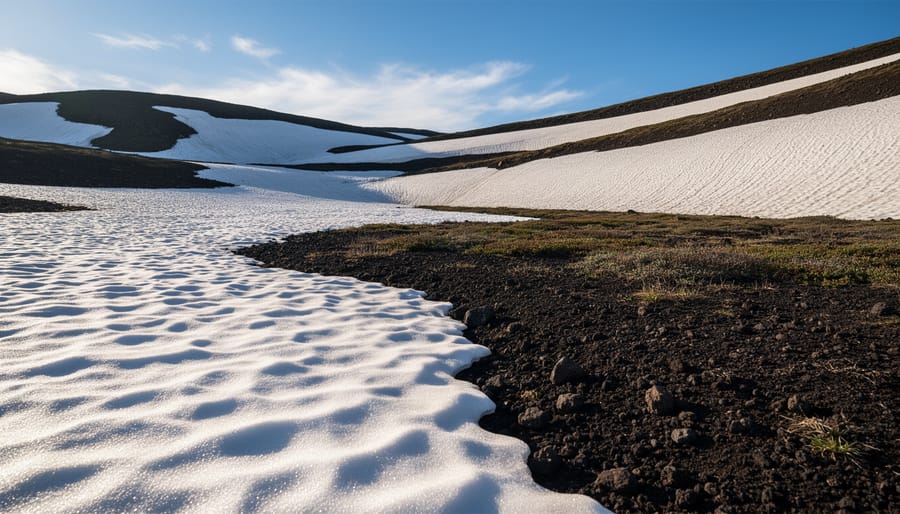
When sunlight reaches Earth’s surface, the outcome splits two ways: some of that energy bounces straight back to space as reflected light, while the rest gets absorbed and turns into heat. The proportion that reflects depends entirely on the surface it hits. Bright, smooth surfaces like fresh snow send most of the incoming solar radiation back to space, keeping the surface and surrounding air cooler. Dark surfaces like ocean water or exposed soil do the opposite, soaking up energy and warming the local environment.
This split creates a powerful climate mechanism. As temperatures rise and ice sheets or snow cover melt, they reveal darker surfaces underneath, open water in the Arctic, wet tundra soil, or bare rock. Those newly exposed dark areas absorb more sunlight than the ice they replaced, which heats the region further and accelerates more melting. Scientists call this the albedo feedback mechanism and it explains why polar regions warm faster than the rest of the planet.
The process runs both ways. Raise albedo by adding reflective surfaces, and you reduce absorbed heat. Lower albedo by removing bright cover or darkening a landscape, and warming intensifies. Research shows this dynamic persists even in thin layers: the albedo effect remains active in snow less than 10 cm deep and ice under 30 cm thick. The feedback isn’t purely theoretical. In Canada’s boreal forests, the albedo difference between mature, dark forest canopies and lighter, fire-cycled landscapes produces a radiative forcing gap of roughly 2.3 W/m², a measurable warming influence that varies with fire frequency and forest age.
Different Types of Albedo Across Earth’s Surfaces
Not all surfaces reflect sunlight equally, and those differences shape regional and global temperatures in ways that climate scientists are only beginning to fully map. A surface’s albedo depends on its color, texture, and composition, factors that vary dramatically across Earth’s landscapes and can shift with seasons, weather, and human decisions.
At the high end of the reflectivity scale sit bright surfaces that bounce most incoming solar energy straight back to space:
- Fresh snow and ice: 80-90% albedo, the planet’s most reflective natural surfaces
- White or light-colored roofs: 50-80%, depending on material and weathering
- Deserts and dry sand: 30-40%, moderate reflectors that still cool their regions
In the middle range, grasslands and agricultural fields typically reflect 15-25% of sunlight, varying with crop type and growing season. These surfaces offer a modest cooling influence but change character when plowed, irrigated, or harvested.
Low-albedo surfaces absorb most of the sun’s energy, converting it to heat. Forests reflect only 5-20% of incoming light, with dense canopies trapping more energy than sparse woodlands. Oceans, covering 71% of Earth’s surface, have an albedo around 6%, they absorb nearly all sunlight that hits them, making them powerful heat sinks. Dark urban areas, asphalt parking lots, black rooftops, roads, often fall below 10%, turning cities into heat islands.
These differences aren’t static. Snow cover expands in winter and shrinks in spring, swinging regional albedo by 50 percentage points or more. Even thin layers matter: research shows the albedo effect persists in snow thinner than 10 cm and ice thinner than 30 cm, meaning a dusting of white can still cool a landscape. Land-use choices, replacing forest with farmland, paving over grassland, or installing reflective roofing, directly alter how much solar energy a region traps, giving communities real influence over their local climate contribution.
Real-World Applications and Climate Implications
Albedo in Urban Climate Solutions
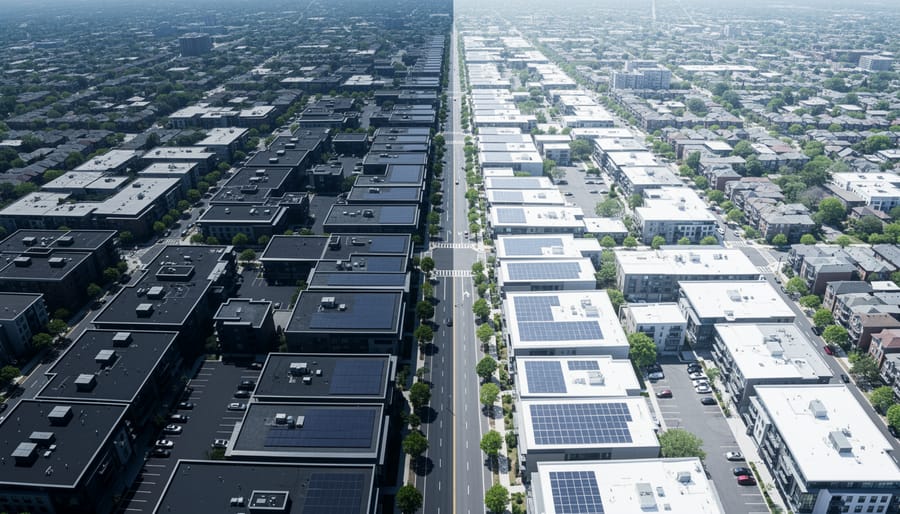
Cities offer some of the most practical opportunities to boost albedo through infrastructure upgrades that create jobs and cut cooling costs. Cool roofs coated with reflective white materials can lower building temperatures by several degrees, reducing air conditioning demand and urban heat islands, a win for both energy bills and public health. Research shows that even a global shift to white roofs cool about 0.02 K on average, a modest figure that underscores albedo’s role as one tool among many, not a silver bullet. Reflective pavements and parking lots further lift citywide albedo, especially in sprawling metros where asphalt covers vast areas. These upgrades appeal across the political spectrum because they improve livability, lower utility bills, and generate construction jobs without requiring new federal mandates. Urban planners increasingly integrate albedo management into resilience strategies, recognizing that cooler surfaces directly address climate change in cities while supporting local economies and community well-being.
Albedo and Natural Ecosystems
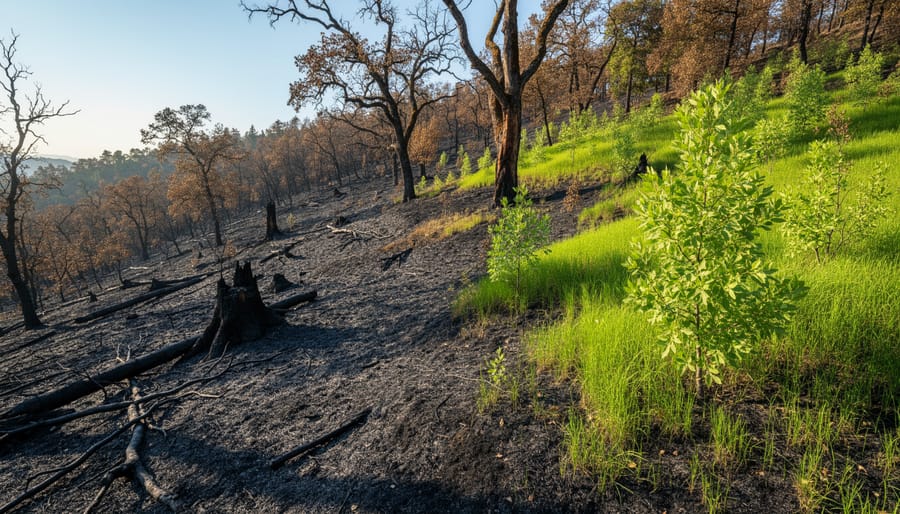
Natural ecosystems reveal surprising albedo trade-offs that complicate climate solutions. Canada’s boreal forests illustrate this complexity: mature forests, with their dark canopy, absorb more solar energy than fire-cycled landscapes where younger vegetation and exposed ground reflect more light. Research shows this difference produces a +2.3 W/m² radiative forcing warming effect from mature forests compared to recently burned areas. This means preventing all fires could paradoxically contribute a small warming influence through reduced albedo, even as forests sequester carbon.
Wildfire seasons dramatically shift regional albedo. Canada’s severe 2023 season demonstrated how wildfires can change albedo across vast landscapes, temporarily increasing reflectivity as dark forests give way to ash and regenerating vegetation. Understanding these dynamics helps climate advocates communicate the full picture: ecosystem management involves balancing carbon storage, albedo effects, and biodiversity, not single-variable solutions. This nuance matters when young people engage policymakers on forest conservation and wildfire adaptation strategies.
Common Questions About the Albedo Effect
How does increasing albedo affect temperature?
Increasing albedo means more sunlight bounces back to space instead of being absorbed as heat, which cools the surface and atmosphere. A worldwide conversion to white roofs would cool population-weighted temperatures by approximately 0.02 K based on the albedo effect alone, a measurable but modest impact that highlights why albedo changes work best as part of broader climate strategies.
Why isn’t the albedo effect considered a global solution on its own?
While albedo management can create localized cooling and support urban heat reduction, the scale of impact is limited compared to the warming from greenhouse gas emissions. The albedo effect also creates complex trade-offs: in Canada’s boreal forests, mature forests have an albedo effect estimated at +2.3 W/m² compared to fire-cycled landscapes, meaning they absorb more sunlight even as they store carbon, complicating simple “plant more trees” narratives.
How do thin layers of snow and ice still create albedo effects?
Even thin coverage can significantly boost reflectivity, the albedo effect persists in snow thinner than 10 cm and ice thinner than 30 cm. This matters during shoulder seasons when partial snow cover still slows warming, and it helps explain why early snowmelt or delayed freeze-up accelerates regional temperature changes.
Understanding these nuances empowers you to evaluate climate proposals critically and recognize that albedo is one piece of the global warming vs climate action toolkit. Canada’s severe 2023 wildfire season demonstrated how quickly albedo can shift at landscape scale, exposing darker ground and accelerating regional warming. By grasping both the potential and the limits of albedo interventions, young advocates can push for science-based solutions that combine reflectivity management with emissions cuts and ecosystem protection, building coalitions around practical measures rather than silver-bullet thinking.
Understanding the albedo effect gives you a scientific framework that cuts through political noise and centers climate conversations on measurable physics. Whether you’re talking to policymakers, community leaders, or peers across the political spectrum, albedo offers common ground: it’s not an opinion that dark surfaces absorb heat and light surfaces reflect it, and it’s not debatable that changing Earth’s reflectivity alters our climate.
This knowledge translates directly into action. When your city council debates cool roof ordinances, you can explain the energy savings and urban heat reduction without triggering partisan reflexes. When forest management plans come up for public comment, you understand the albedo trade-offs between mature stands and fire-cycled landscapes. When renewable energy infrastructure gets planned, you recognize how surface choices around solar farms and wind installations affect local albedo and temperature.
The albedo effect isn’t a silver bullet. Research shows that even converting all roofs worldwide to white would cool temperatures by just 0.02 K. But that modest number doesn’t diminish the principle’s power. Albedo awareness sharpens your ability to evaluate climate solutions honestly, distinguish meaningful interventions from greenwashing, and advocate for layered strategies that address emissions, land use, and surface reflectivity together.
Young people leading with science-based literacy and bipartisan framing create space for solutions that actually get implemented. You don’t need to catastrophize to drive change. You need to understand the mechanisms, communicate them clearly, and build coalitions around shared goals.