



Yes, global warming directly causes climate change. Global warming is the long-term heating of Earth’s atmosphere due to human activities, primarily burning fossil fuels. Climate change is the broader set of planetary changes that result from this warming: shifting weather patterns, rising sea levels, more intense storms, and ecosystem disruption.
Think of it this way: global warming is the cause, climate change is the effect. The relationship isn’t theoretical. Since the late 1800s, Earth’s average surface temperature has risen approximately 1.1°C, and that warming drives measurable changes everywhere from Arctic ice sheets to ocean chemistry to migration patterns.
The confusion between these terms is understandable because they’re often used interchangeably in headlines and conversation. But clarity matters for informed action. When you understand that reducing emissions addresses global warming at its source, which in turn slows the cascade of climate changes affecting communities today, the path forward becomes clearer.
This article breaks down the science behind the relationship, walks through the evidence connecting temperature rise to planetary changes, and shows how understanding this distinction empowers better decisions. Whether you’re engaging in climate conversations with friends, evaluating policy proposals, or choosing how to reduce your own footprint, knowing what drives what makes every choice more effective. The science is settled, bipartisan solutions exist, and your generation is leading the way forward.
Understanding the Confusion: Why People Ask This Question
The question “Does global warming cause climate change?” pops up constantly in search engines, classrooms, and online discussions, not because people lack intelligence, but because the two terms get tossed around interchangeably in news headlines, social media posts, and everyday conversations. You’ve probably heard politicians, journalists, and even scientists use both phrases to describe what’s happening to our planet, sometimes switching between them mid-sentence. This linguistic blur creates genuine confusion about whether we’re talking about the same phenomenon or two separate issues.
The symptom here isn’t ignorance. It’s that the relationship between these terms isn’t intuitive from how we hear them used. Some people wonder if global warming is the villain that causes climate change, as if one triggers the other in a simple cause-and-effect chain. Others assume they’re just different names for the same problem, like “soda” and “pop” describing the same fizzy drink. Both perspectives miss the actual connection: global warming is a specific component of climate change, not a separate force that causes it.
Think of it like diagnosing a fever. The elevated temperature is real and measurable, but it’s one symptom of an underlying condition affecting your entire body. Global warming is that rising temperature reading. Climate change is the full picture of what’s happening to Earth’s systems as a result. Once you understand this relationship, the terminology stops feeling confusing and starts making perfect sense.
What Global Warming and Climate Change Actually Mean
Let’s clear up what we’re talking about. When people ask whether global warming causes climate change, they’re often unsure how these terms relate to each other. The short answer: global warming is a specific symptom of climate change, and also a major driver of other climate changes. Think of global warming as one piece of a much larger puzzle.
- Global Warming
- The long-term rise in Earth’s average surface temperature. Since the Industrial Revolution, human activities have increased atmospheric carbon dioxide, trapping more heat and raising global temperatures.
- Climate Change
- Broader shifts in Earth’s climate system, including changes in temperature, precipitation patterns, sea levels, ocean currents, and extreme weather events. Global warming is one component driving these wider changes.
- Greenhouse Gases
- Atmospheric gases that trap heat, including carbon dioxide, methane, and nitrous oxide. Human activities have rapidly increased their concentrations, intensifying the natural greenhouse effect.
Here’s why the distinction matters. Global warming tells us the planet is getting hotter, Earth’s average temperature has risen about 1.1°C since pre-industrial times. Climate change describes everything that rising temperature sets in motion: ice sheets melting in Greenland, rainfall patterns shifting across Africa, hurricanes intensifying over warming oceans, ecosystems migrating toward the poles.
The confusion is understandable because these processes are tightly linked. As greenhouse gases from fossil fuel combustion, cement production, and deforestation accumulate in the atmosphere, they trap more heat. That warming then triggers cascading effects throughout Earth’s interconnected systems. Scientists describe the human role in this warming as unequivocal, nearly all actively publishing climate scientists agree humans are causing these changes.
So when someone asks if global warming causes climate change, they’re recognizing a real connection. The warming itself is one form of climate change, and it’s simultaneously driving many other changes across the planet’s weather, water, and ecosystems.
The Root Cause: How Global Warming Drives Climate Change
The Science Behind the Connection
The Earth’s atmosphere works like a greenhouse, trapping heat that would otherwise escape into space. When sunlight reaches our planet, some bounces back toward space as infrared radiation. Certain gases in the atmosphere absorb this outgoing heat and re-radiate it in all directions, warming the planet’s surface. This natural process keeps Earth habitable, but human activities have intensified it dramatically.
Carbon dioxide is the primary culprit. Since the Industrial Revolution, we’ve pumped unprecedented amounts of CO2 into the atmosphere through fossil fuel combustion, the effects of cement production, and widespread deforestation. These activities have increased atmospheric CO2 concentrations by roughly 50% compared to pre-industrial levels. Methane and nitrous oxide, though present in smaller quantities, also play significant supporting roles because greenhouse gases trap heat far more effectively than CO2 on a molecule-by-molecule basis.
The science isn’t controversial among experts. Nearly all actively publishing climate scientists agree that humans are causing climate change, with a 2019 review finding 100% human-caused warming consensus in peer-reviewed literature. Major scientific bodies worldwide describe the human role as unequivocal. The warming we’ve triggered doesn’t just make thermometers climb. It sets off cascading effects throughout Earth’s interconnected climate system, shifting weather patterns, ocean currents, and ecosystems in ways we’re witnessing now.
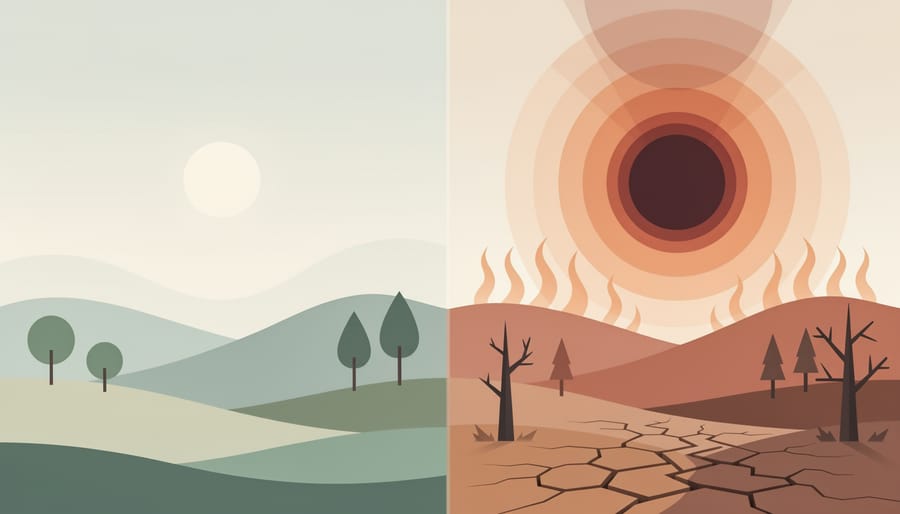
Recognizing the Evidence: What Climate Change Looks Like Today

The evidence of climate change is all around us, manifesting in ways that affect communities worldwide. Understanding these symptoms helps connect the science to lived experiences and reveals the urgency of addressing global warming’s cascading effects.
Rising temperatures are the most direct symptom. Since the Industrial Revolution, Earth’s average surface temperature has increased by approximately 1.1°C. Heat waves have become more frequent and intense, breaking temperature records in regions from the Pacific Northwest to South Asia. These aren’t isolated incidents, they’re part of a consistent warming pattern that scientists have documented across decades.
Precipitation patterns are shifting dramatically. Some areas experience heavier rainfall and flooding, while others face prolonged droughts. The western United States, for instance, has seen extended megadroughts, while other regions struggle with unprecedented rainfall that overwhelms infrastructure and damages crops.
Sea level rise from warming oceans and melting ice sheets threatens coastal communities globally. Oceans have risen about 21-24 centimeters since 1880, with the rate accelerating in recent decades. This forces communities to adapt through seawalls, relocation, or increased flood insurance costs.
| Impact Type | Observable Evidence | Regions Most Affected |
|---|---|---|
| Temperature Extremes | Record-breaking heat waves, earlier springs | Pacific Northwest, Mediterranean, South Asia |
| Precipitation Changes | Intensified droughts and flooding events | Western US, Sub-Saharan Africa, Southeast Asia |
| Sea Level Rise | Coastal erosion, saltwater intrusion | Pacific Islands, Bangladesh, Florida coast |
| Ecosystem Shifts | Species migration, coral bleaching, wildfire increase | Great Barrier Reef, Arctic regions, California |
Ecosystems are responding to these changes in visible ways. Coral reefs bleach from warmer ocean temperatures, Arctic sea ice shrinks, and species migrate to cooler areas or higher elevations. Wildfire seasons have lengthened, and forests face increased stress from heat and drought.
These impacts ripple through society, affecting agriculture, water resources, and climate and health outcomes. Recognizing these symptoms isn’t about fear, it’s about understanding what we’re facing and why action matters. The evidence shows that global warming is driving measurable, observable changes that affect real communities today.

Moving Forward: Prevention and Action
Understanding the connection between global warming and climate change clarifies the challenge ahead. We can’t undo past emissions overnight, but we can prevent further warming and adapt to changes already underway. The solutions aren’t just environmental necessities, they’re opportunities for innovation, economic growth, and building resilient communities that work for everyone.
Preventing additional warming requires reducing greenhouse gas emissions across every sector. Renewable energy sources like wind and solar have become cost-competitive with fossil fuels, creating jobs and lowering energy costs while cutting carbon pollution. Many states and regions are expanding clean energy regardless of political affiliation, recognizing that energy independence and economic development don’t require choosing sides. Meanwhile, cities adapting infrastructure to handle extreme heat and flooding protect both lives and property values. Farmers are adjusting practices to address agriculture impacts implementing water conservation and soil management techniques that increase yields while reducing emissions.
Young people are leading this transformation. Here’s how you can take action:
- Educate yourself and others using reliable sources and share what you learn with friends and family without judgment
- Engage in bipartisan dialogue by finding common ground on solutions like energy independence, job creation, and conservation
- Support renewable energy policies at local and state levels through voting, contacting representatives, and attending town halls
- Reduce your personal carbon footprint through transportation choices, energy use, and consumption habits
- Join youth climate movements or start initiatives in your school or community that focus on practical solutions
The path forward isn’t about perfection or political alignment. It’s about recognizing that we all benefit from clean air, stable weather patterns, and thriving ecosystems. Every action counts, and collective efforts from individuals, communities, and governments create momentum for meaningful change.
Common Questions About Global Warming and Climate Change
The questions around climate science often stem from genuine curiosity or confusion fueled by conflicting information online. Here’s what the evidence actually shows.
Do scientists agree that climate change is real?
Yes. There is scientific consensus that Earth has been consistently warming since the start of the Industrial Revolution, and the rate of recent warming is largely unprecedented in the historical record.
How many scientists agree humans are causing climate change?
Nearly all actively publishing climate scientists say humans are causing climate change. A 2019 review of scientific papers found the consensus on the cause of climate change to be at 100%, and the human role is described as unequivocal and incontrovertible.
What human activities are responsible for global warming?
The warming is mainly the result of a rapid increase in atmospheric carbon dioxide caused by fossil fuel combustion, cement production, and land use changes such as deforestation. Other greenhouse gases like methane and nitrous oxide play a significant supporting role.
Does climate change cause more frequent heat waves?
Yes. As global temperatures rise, heat waves become more frequent and intense. This is one of the clearest observable impacts of the warming that drives broader climate change.
Understanding these facts helps cut through misinformation and equips you to have informed conversations about climate action. The scientific evidence is clear, and that clarity makes it easier to focus on solutions rather than debating the fundamentals.
How to Fix It Step by Step
Understanding the problem is the first step, now let’s focus on the solution. Addressing climate change requires coordinated action at every level, from individual choices to global policy shifts.
Start by reducing your personal carbon footprint through daily decisions: choose renewable energy options when available, reduce car trips in favor of public transit or biking, and minimize food waste. These individual actions matter because they collectively shift market demand and demonstrate public support for climate solutions.
Next, amplify your impact through community engagement. Support businesses committed to sustainability, join local environmental groups, and participate in community initiatives like tree planting or renewable energy projects. Youth-led movements have already proven their power to drive change, joining these efforts multiplies your voice.
Engage with policy by contacting elected representatives to support bipartisan climate legislation. Policies promoting renewable energy create jobs while reducing emissions, making them economically and environmentally beneficial. Vote for candidates who prioritize evidence-based climate action, regardless of party affiliation.
Finally, stay informed and share accurate information. Counter misinformation by explaining the science clearly, as we’ve done here. The more people understand that global warming drives climate change through human activities, the stronger the foundation for collective action becomes.