
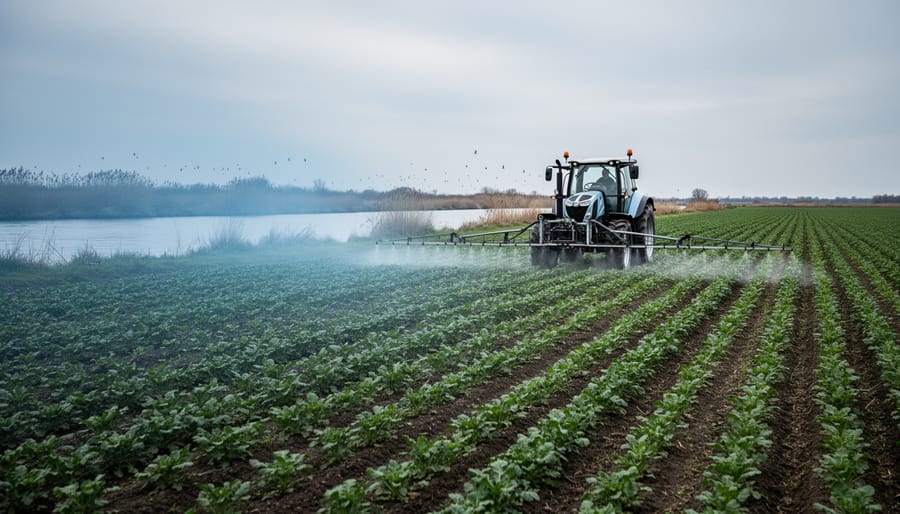

Every time you spray pesticides on a lawn or farm field, those chemicals begin a journey far beyond their intended target. They seep into groundwater, drift on the wind to neighboring ecosystems, and accumulate in the tissues of insects, birds, and aquatic life. What starts as a solution to protect crops becomes a cascade of unintended consequences that ripple through entire food webs.
The numbers tell a sobering story. Research from Agriculture and Agri-Food Canada in 2025 found pesticide residues in 87% of tested waterways across agricultural regions, with concentrations frequently exceeding safety thresholds for aquatic organisms. Neonicotinoid insecticides alone have been linked to declining bee populations that pollinate one-third of the food we eat. Meanwhile, runoff from treated fields creates algal blooms in lakes and rivers, choking oxygen supplies and creating dead zones where fish can’t survive.
But here’s what makes this challenge different from many environmental issues: we already have proven alternatives gaining traction. Integrated pest management combines biological controls, crop rotation, and targeted chemical use only when necessary. Farmers in Ontario reduced pesticide application by 34% between 2022 and 2025 while maintaining yields, proving that economic viability and environmental health aren’t mutually exclusive.
Young innovators and experienced growers are collaborating on solutions that previous generations didn’t imagine possible. From precision agriculture technology that applies chemicals only where needed to breeding naturally pest-resistant crop varieties, the path forward requires both cutting-edge science and time-tested ecological wisdom. Understanding how pesticides move through our environment is the first step toward systems that feed people without poisoning the planet.
From Cropland to Everywhere: How Pesticides Travel
When farmers spray pesticides on their fields, the chemicals rarely stay put. Within hours or days, these compounds begin journeys that stretch far beyond the original application site, moving through interconnected pathways that link farms to forests, streams to cities, and cropland to communities.
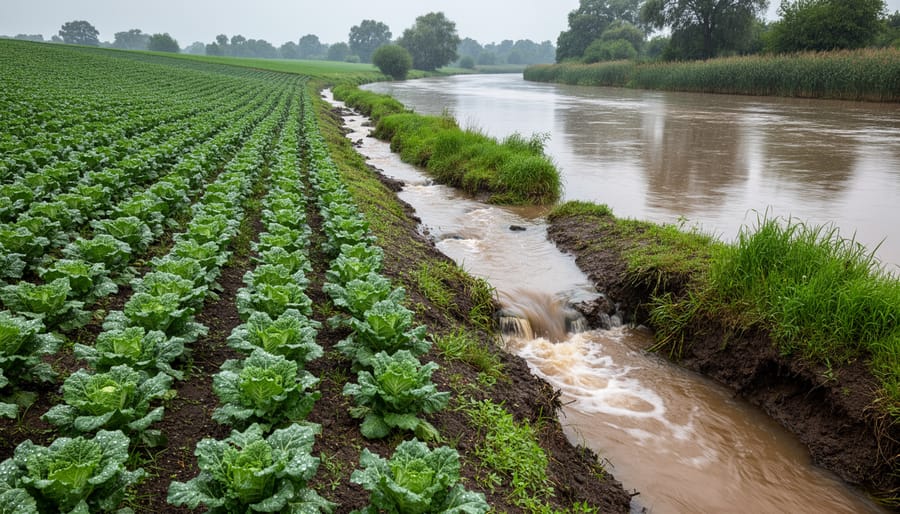
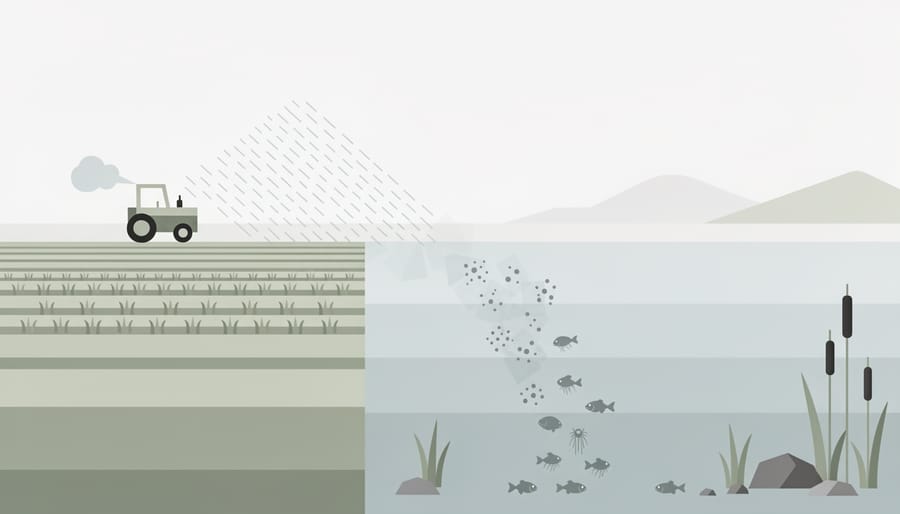
Soil acts as the first waypoint. Rain washes pesticides downward through soil layers toward groundwater, or carries them laterally across fields as runoff. Heavy rainfall events accelerate this movement, delivering concentrated doses of agricultural chemicals into nearby ditches, streams, and rivers. Once in waterways, these substances can travel for kilometers, affecting drinking water sources downstream and altering aquatic environments that depend on clean water.
Air becomes another highway. Wind carries pesticide particles and vapors away from application zones through a process called drift. Fine droplets can travel surprising distances, settling on neighboring properties, gardens, and natural areas. This airborne movement connects farm practices to broader air quality and health concerns, particularly in communities near intensive agricultural regions.
Ecosystems themselves facilitate pesticide spread. Insects pick up residues from treated plants and carry them to new locations. Birds consume contaminated prey. Water-dwelling organisms absorb chemicals from their surroundings. Each connection in the food web becomes a potential pathway, transforming local applications into landscape-level exposures.
Research tracking pesticide movement in Canada confirms these patterns aren’t theoretical. Agricultural runoff reaches water bodies with measurable frequency, and the risk of such contamination has demonstrably increased over time. Understanding these pathways matters because they reveal why pesticide management can’t focus solely on where chemicals are applied. The question becomes not just what happens on the farm, but what happens everywhere these substances travel afterward.
Water Under Watch: The Rising Risk to Our Shared Resources
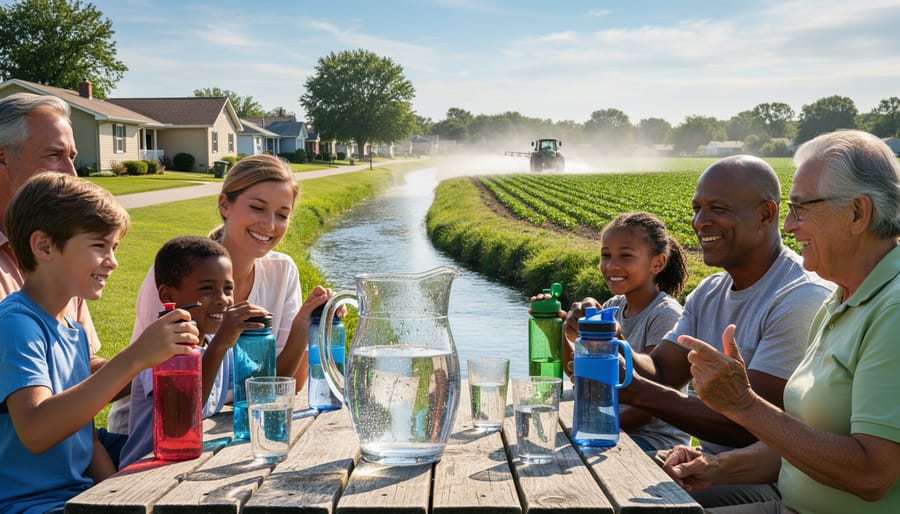
Water matters. For communities across the continent, clean water represents survival, health, and economic stability. Yet according to Agriculture and Agri-Food Canada, the risk of water contamination by pesticides on Canadian farmland has increased over time, a trend that demands our attention and collaborative action.
When pesticides move from application sites, they often travel through soil into groundwater or wash across fields during rainstorms, carrying residues into streams, rivers, and lakes. This runoff doesn’t recognize property boundaries or municipal limits. A chemical applied to protect a crop in one watershed can appear downstream in another community’s drinking water source. The Indicator of the Risk of Water Contamination by Pesticides tracks these patterns, measuring how farmland pesticides reach water bodies and how those risks change across different regions and years.
The implications extend beyond human communities. Aquatic ecosystems depend on clean water for survival, and contamination disrupts food webs that support fish, amphibians, and the species that rely on them. For young people inheriting these watersheds in 2026, water quality connects directly to global warming effects that already stress freshwater systems through droughts, floods, and temperature shifts. Pesticide contamination adds another layer of pressure to resources already stretched thin.
This isn’t about assigning blame. Farmers face genuine pest challenges that threaten crop viability and food security. The question becomes how we protect both agricultural productivity and water quality simultaneously. The good news? Solutions exist, proven on working farms today. Growers who adopt practices that reduce runoff and soil erosion significantly lower contamination risks. Targeted application timing, precise placement, and integrated pest management all contribute to keeping chemicals where they belong while maintaining crop protection.
Water connects us all, urban and rural, young and old, across every political perspective. Protecting it requires recognizing shared stakes and building partnerships that value both environmental health and agricultural success.
Beyond Water: Wildlife and Ecosystem Connections
When pesticides drift beyond farm fields, they enter ecosystems where countless species interact in ways scientists are still working to fully understand. We know that both land and aquatic wildlife encounter these chemicals through multiple pathways, contaminated water sources, treated vegetation, and prey species that have absorbed pesticides. What happens next depends on the specific chemical, the species exposed, and the broader web of connections that link one organism to another.
Birds feeding on treated seeds or insects from sprayed fields can experience direct exposure, while aquatic invertebrates in streams and wetlands face contamination when runoff carries pesticides into their habitats. Fish populations downstream may encounter altered water chemistry that affects reproduction and survival. These individual impacts ripple outward because ecosystems function as interconnected networks. When one species struggles, the animals that depend on it for food or the plants it pollinates face cascading effects.
Young researchers and citizen scientists are asking important questions about these connections in 2026, pushing for better data on how pesticide exposure moves through food webs and persists in different environments. While we lack complete answers on certain mechanisms, particularly long-term accumulation patterns and impacts on specific pollinator populations, this uncertainty itself drives innovation. University labs, conservation groups, and even high school students are designing studies to fill these knowledge gaps.
The emerging picture shows that habitat health depends on maintaining balance within these complex systems. Protecting wildlife means understanding not just individual chemical toxicity but how pesticides interact with climate stress, habitat loss, and other environmental pressures facing species today. That holistic perspective, championed by a new generation of environmental advocates, is reshaping how we approach agricultural chemicals and ecosystem protection.
Smart Solutions Already Working on the Ground
The good news is that farmers and agricultural innovators across North America are already using proven methods to reduce pesticide impacts while maintaining productive farms. These approaches recognize that protecting our environment and growing food aren’t competing goals, they’re interconnected challenges that demand practical, science-based solutions.
Beneficial Management Practices offer a framework for reducing pesticide movement into water and surrounding ecosystems. Rather than pointing fingers, these strategies invite collaboration between agriculture and climate advocates, bringing together farm communities, researchers, and young environmental leaders to tackle shared concerns. The practices focus on reducing runoff and soil erosion, which are the primary routes pesticides take when leaving fields.
- Beneficial Management Practices (BMPs)
- Science-backed farming techniques that reduce runoff and soil erosion to keep pesticides on fields where they’re needed. BMPs include buffer zones, cover cropping, and precise application timing.
- Integrated Pest Management
- A holistic approach that combines biological, cultural, and chemical tools to manage pests with minimal environmental impact. This strategy treats pesticides as one option among many, not the default solution.
- Precision Application Technology
- Modern equipment using GPS, sensors, and data analytics to apply pesticides only where needed, reducing total chemical use. These innovations cut costs for farmers while protecting surrounding land and water.
The framework guiding these solutions is straightforward: right amount, right place, right time, right pesticide type, right technology, and right application methods. This approach isn’t theoretical. Farmers using precision technology can target specific problem areas within a field rather than blanket-spraying entire acres. GPS-guided equipment maps pest pressure zones, allowing growers to reduce total pesticide use by 20 to 40 percent while maintaining yields.
Timing matters enormously. Applying pesticides when conditions favor quick plant uptake and minimal drift, calm winds, appropriate temperature, low rain probability, keeps chemicals on target crops instead of in waterways or air. Buffer strips of native vegetation between fields and streams act as natural filters, trapping sediment and pesticides before they reach aquatic habitats.
These methods create opportunities for cross-generational knowledge sharing. Veteran farmers bring decades of land observation, while young professionals contribute data science skills and fresh perspectives on sustainability metrics. Agricultural technology companies, many founded by entrepreneurs under 35, are developing sensor systems and predictive models that make precision application accessible to operations of all sizes.
The economic case strengthens the environmental one. Reduced pesticide use cuts input costs, and consumers increasingly reward producers who demonstrate environmental stewardship. This isn’t about choosing between farm profitability and ecosystem health, smart practices advance both, creating a foundation for truly sustainable food systems.
Regulation, Innovation, and the Path Forward
Protecting our environment from pesticide risks starts with strong science and transparent oversight. Canada’s Pest Management Regulatory Agency (PMRA) operates under the Pest Control Products Act, conducting rigorous science-based risk assessments before any pesticide reaches the market. These evaluations examine extensive toxicology data, exposure pathways, and cumulative risks to ensure registered products pose minimal danger to human health and ecosystems. The process specifically considers vulnerable populations and requires manufacturers to demonstrate safety across multiple scenarios before approval.
Yet regulation alone can’t solve the challenge. Effective environment policy requires ongoing public engagement and transparency. When communities understand how approval processes work and where gaps exist, they can push for stronger protections without shutting down necessary agricultural tools. This informed dialogue matters especially as the risk of water contamination has increased over time, signaling that current frameworks need continuous improvement rather than complacency.
Innovation offers parallel solutions that reduce our reliance on chemical interventions altogether. Precision agriculture technologies now enable farmers to target pest pressure with surgical accuracy, cutting application volumes dramatically. Biological controls, cover cropping systems, and soil health practices build resilience that makes crops less vulnerable in the first place. These sustainable agriculture advances don’t just protect ecosystems, they create green economy opportunities for young people entering fields from agronomy to environmental monitoring to agricultural technology development.
The path forward combines robust regulation, farmer innovation, and renewable energy systems that power sustainable food production. Young voices pushing for both environmental protection and economic opportunity are bridging traditional divides, proving that safer pest management and thriving farms aren’t opposing goals but shared investments in our collective future.
Understanding how pesticides move through our environment is the first step toward building a food system that protects both ecosystems and livelihoods. The challenge we face in 2026 isn’t choosing between agriculture and environmental health, it’s creating systems where both thrive together. Young people across the political spectrum are already driving this shift, recognizing that sustainable farming practices open doors to green jobs, innovative technologies, and resilient communities.
Your voice matters in shaping pesticide policy and agricultural innovation. Support farmers adopting integrated pest management. Ask questions about how your food is grown. Bridge conversations between environmental advocates and agricultural producers who share the goal of healthy land and water for future generations. The solutions exist, the science is advancing, and the economic opportunities are real. This isn’t someone else’s problem to solve, it’s our shared responsibility and our generation’s opportunity to lead.