
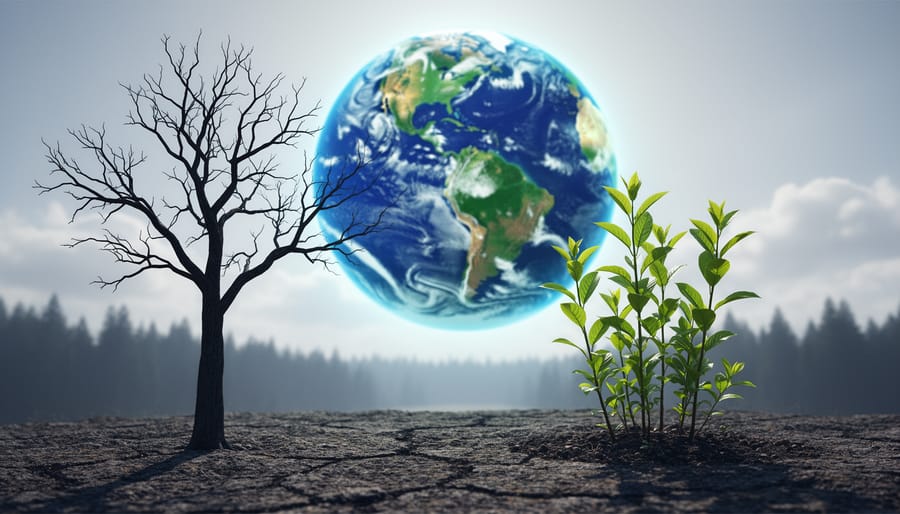


Climate change becomes irreversible when Earth’s natural systems cross critical thresholds called tipping points. These are moments where the climate shifts into a new state that cannot easily be undone, even if we stop emitting greenhouse gases entirely. The IPCC defines tipping points as “critical thresholds in a system that, when exceeded, can lead to a significant change in the state of the system, often with an understanding that the change is irreversible.”
Here’s what you need to know right now: recent IPCC assessments show these tipping points could be triggered between 1°C and 2°C of warming above pre-industrial levels. A three-year period ending in 2025 has already breached the 1.5-degree threshold for the first time, and the world is poised to overshoot this target. While this sounds alarming, irreversibility isn’t a single cliff we’ll fall off. It’s a spectrum of thresholds, some already crossed, others still preventable.
Understanding the timeline for irreversibility matters because it shapes what we can still protect and what requires adaptation. If you’re wondering whether it’s too late to act, the answer depends on which systems we’re discussing. The window for preventing some damaging, irreversible tipping points is rapidly closing, but keeping global warming below 2°C (then returning under 1.5°C as quickly as possible) can still limit the risk of triggering Earth’s most dangerous tipping points.
This article breaks down what irreversibility actually means in climate science, explains how tipping points work, identifies which thresholds we’ve approached or crossed, and outlines realistic timeframes for action. Whether you’re exploring global warming basics or looking to understand what your generation can still influence, clarity on irreversibility empowers smarter climate action rather than paralysis.
What Climate Irreversibility Really Means
When we talk about climate change becoming “irreversible,” we’re describing a point where certain changes to Earth’s climate system can no longer be stopped or undone, even if we immediately halt all greenhouse gas emissions. The IPCC defines tipping points as critical thresholds in a system that, when exceeded, lead to significant changes in the state of the system, often with an understanding that the change is irreversible. These aren’t abstract concepts. They represent real, measurable thresholds where fundamental shifts in Earth’s climate become self-sustaining.
- Tipping Points
- Critical temperature thresholds that, when crossed, trigger large, accelerating changes in the climate system that continue even without further warming. Recent IPCC assessments suggest these could be reached between 1°C and 2°C of warming.
- Irreversible Changes
- Climate impacts that cannot be reversed on human timescales, even with aggressive emissions cuts or carbon removal. These changes persist for centuries or millennia once triggered.
- Climate Thresholds
- Specific warming levels that mark the boundary between stable climate conditions and potentially unstoppable shifts in Earth’s systems.
- Earth System Feedback Loops
- Self-reinforcing cycles where initial warming triggers changes that cause additional warming, independent of the original drivers of warming. These loops can make climate changes self-perpetuating.
In practical terms, irreversibility means some consequences stick around far longer than the actions that caused them. A three-year period ending in 2025 breached the 1.5-degree threshold for the first time, underscoring how close we are to triggering permanent shifts. The window for preventing some damaging, irreversible tipping points is rapidly closing, making it essential to understand not just what these thresholds are, but what crossing them actually means for our planet’s future.
How Climate Tipping Points Work
The Domino Effect in Earth’s Systems
Earth’s climate operates as a web of interconnected systems where changes in one domain ripple through others with accelerating force. When Arctic sea ice melts beyond a critical threshold, it exposes dark ocean water that absorbs more sunlight than reflective ice, accelerating warming in the region. This warming then destabilizes nearby permafrost, releasing methane and carbon dioxide that further heat the atmosphere. That additional heat can weaken ocean currents like the Atlantic Meridional Overturning Circulation, which in turn disrupts rainfall patterns across continents, stressing ecosystems already pushed to their limits.
The danger lies in the cascade. A single tipped system does not stop there. It shifts the baseline conditions for neighboring systems, pushing them closer to their own thresholds. Greenland’s ice sheet collapse, for example, dumps massive volumes of freshwater into the North Atlantic, potentially triggering circulation changes that alter monsoon patterns in Africa and Asia. Those monsoon shifts can devastate forests and agricultural regions, releasing more stored carbon and eliminating natural carbon sinks just when they are most needed. Each fallen domino makes the next more vulnerable, creating momentum toward often irreversible change across the entire climate system.
Temperature Thresholds That Matter
The numbers matter more than most people realize. IPCC assessments indicate that tipping points could be triggered somewhere between 1°C and 2°C of global warming, a range we’re already inside. The three-year period ending in 2025 breached 1.5°C for the first time, and the world is now poised to overshoot that target entirely. This isn’t abstract modeling; we’re living in the temperature zone where critical thresholds can be crossed.
The Paris Agreement’s 1.5°C goal wasn’t arbitrary. It represents the upper boundary scientists identified as relatively safer, though not risk-free. At 2°C, the probability of triggering multiple tipping points rises sharply. Research shows that to limit irreversible damage, warming must peak below 2°C and back under 1.5°C as quickly as possible, meaning we need to reverse course, not just slow down.
Every tenth of a degree compounds risk. At 1.5°C, some ice sheets destabilize. At 2°C, coral reefs face near-total collapse and permafrost thaw accelerates dramatically. The difference between these thresholds determines whether changes unfold over centuries or lock in within decades, which is why the speed of emissions cuts directly translates to how much can still be prevented.
Types of Climate Tipping Points
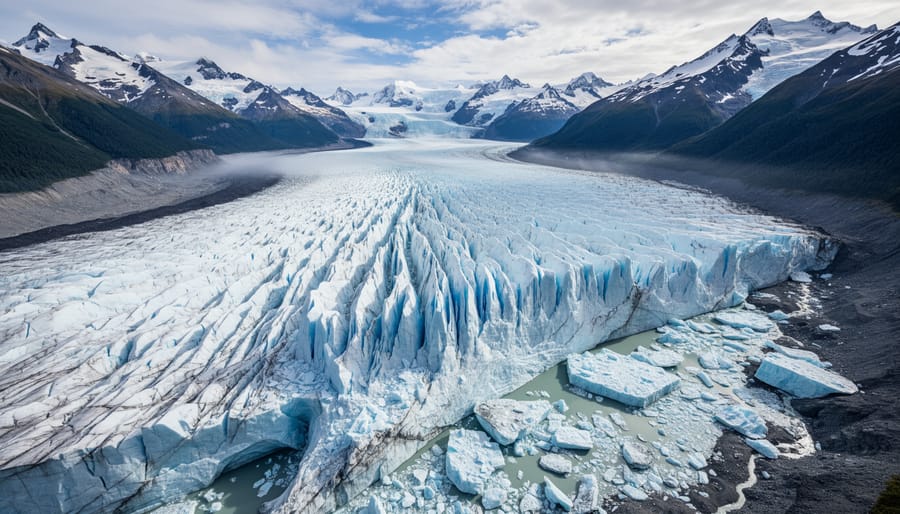
Scientists have identified several major categories of tipping points across Earth’s interconnected climate systems. Each operates differently, but all share the same dangerous characteristic: once crossed, they set off changes that can continue for centuries or longer, even if we stop emitting greenhouse gases entirely.
The physical ice systems represent some of the most visible and consequential tipping points. The Greenland and West Antarctic ice sheets sit on land, and their collapse would raise sea levels by meters over centuries. Smaller glaciers worldwide contribute to sea-level rise too, but the massive ice sheets pose the greatest long-term threat. Once melting accelerates past a certain point, the ice sheet’s own geometry, thinner ice, darker exposed rock absorbing more heat, drives further melting regardless of atmospheric conditions.
Ocean circulation patterns form another critical category. The Atlantic Meridional Overturning Circulation, which includes the Gulf Stream, redistributes heat around the planet. Freshwater from melting ice dilutes the ocean’s salinity, potentially slowing or stopping this conveyor belt. If that circulation collapses, it would dramatically alter weather patterns across Europe, Africa, and the Americas, with effects that could persist for millennia.
Major tipping point categories include:
- Ice sheets and glaciers, Greenland, West Antarctic, and mountain glaciers driving sea-level rise
- Ocean circulation, Atlantic currents that regulate global heat distribution
- Amazon rainforest, transition from carbon sink to carbon source through dieback
- Coral reefs, mass bleaching and ecosystem collapse affecting marine biodiversity
- Permafrost thaw, release of stored methane and carbon dioxide from frozen soils
- Boreal forests, shifting from carbon storage to sources through drought and wildfires and air quality impacts
Ecosystem transformations represent a third category where biological systems cross thresholds. The Amazon rainforest generates much of its own rainfall through evaporation. Deforestation and warming can push the forest past a point where it can no longer sustain itself, converting to savanna and releasing stored carbon instead of absorbing it. Coral reefs bleach and die when ocean temperatures rise just 1-2°C above normal for extended periods, destroying ecosystems that support a quarter of marine species.
Permafrost tipping points involve frozen Arctic and sub-Arctic soils that store twice as much carbon as the entire atmosphere currently holds. As temperatures rise, permafrost thaws and microbes break down organic matter, releasing methane and carbon dioxide. This creates a feedback loop where emissions drive warming, which causes more thaw and more emissions.
These categories don’t exist in isolation. A tipping point in one system increases stress on others, raising the risk that multiple thresholds get crossed in succession, a cascade that makes reversibility even harder to achieve.
Where We Stand Right Now
We’re living through a pivotal moment in climate history. The three-year period ending in 2025 breached the 1.5°C threshold for the first time since pre-industrial measurements began. That milestone matters because the IPCC has identified the range between 1°C and 2°C of warming as the zone where critical tipping points may be triggered.
Right now, global temperatures have crossed into territory where some Earth systems become vulnerable to permanent shifts. The world is poised to overshoot the 1.5°C goal that nations agreed to pursue under the Paris Agreement. We haven’t locked in catastrophe, but we’ve entered the danger zone where feedback loops can activate and self-reinforcing changes begin.
The window for 1.5°C is narrowing rapidly. To limit the risk of triggering tipping points in the Earth system, global warming must peak below 2°C then return under 1.5°C as quickly as possible. That’s a narrow path, but it remains physically achievable with aggressive action.
What makes this moment urgent is timing. The longer we delay cutting emissions and scaling renewable energy, the greater the risk of irreversible damage to the systems that sustain life on Earth. Some tipping points sit closer to current temperatures than others. Ice sheets, coral reefs, and permafrost regions are already showing signs of stress. Others won’t activate until higher temperatures, but once crossed, they can cascade.
This isn’t a reason for despair. It’s a call for speed. Young people today are inheriting a climate that’s warmer than any generation before has known, but the scope of future damage still depends on choices made in the next few years. The window is closing, not closed. That difference matters enormously for what’s still possible to protect.
When Reversibility Becomes Impossible
The Closing Window
The window for preventing certain tipping points is closing faster than many realize. Scientists emphasize that while we’ve already breached 1.5°C warming temporarily, what matters most is how quickly we can reverse that trajectory. The difference between peaking at 1.6°C and returning below 1.5°C within a decade versus overshooting to 2°C for decades determines whether critical thresholds remain preventable or become inevitable.
Time itself acts as a multiplier of risk. Each year of delayed action narrows the range of outcomes we can still choose. The atmospheric concentration of greenhouse gases continues rising, ocean heat content keeps climbing, and ice sheets lose mass, all processes with momentum that takes years or decades to reverse even after emissions stop. This means decisions made in the next few years will largely determine which tipping points we can still avoid and which we’ll be forced to adapt to.
The narrowing window doesn’t mean action is futile. It means the scale and speed of response must match the urgency. Rapid deployment of renewable energy, immediate emissions cuts, and coordinated global policy can still keep warming below the most dangerous thresholds, but the margin for gradualism has disappeared.
What Can and Cannot Be Undone
Some climate changes remain reversible if we act decisively, while others cross thresholds that lock in permanent damage. The distinction matters for setting realistic goals and priorities.
Short-term atmospheric warming can be reversed. If emissions drop sharply enough, global temperatures could stabilize and eventually decline over decades to a century. Carbon dioxide removal technologies and natural carbon sinks offer pathways to lower CO₂ concentrations, though the process is slow and expensive.
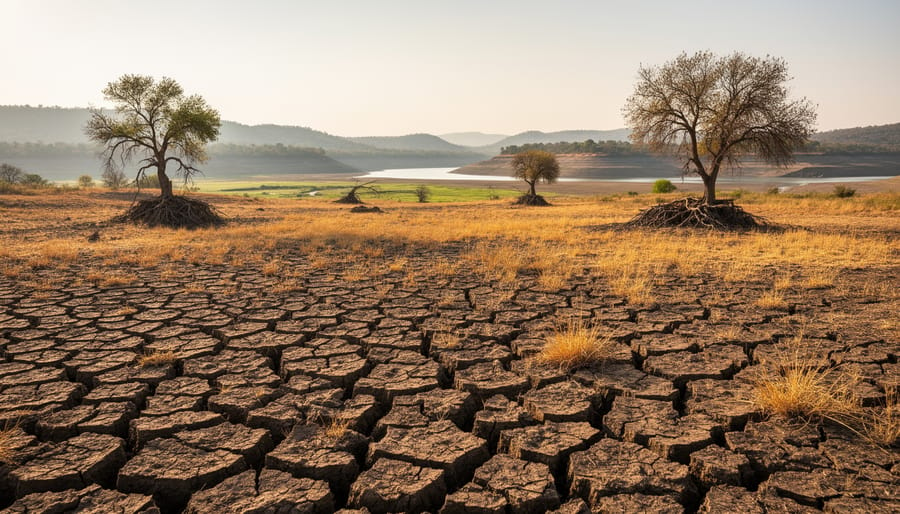
Ice sheet collapse, however, operates on a different timescale. Once major ice sheets in Greenland or West Antarctica reach their tipping points, melting continues for centuries even if temperatures stabilize. Sea level rise from ice sheet loss becomes effectively permanent on human timescales. Similarly, thawing Arctic permafrost releases stored carbon that cannot be easily recaptured.
Ocean acidification can gradually improve if atmospheric CO₂ falls, but coral reef ecosystems may not recover. Species extinction is irreversible. Disrupted ocean circulation patterns might restore themselves over centuries, or they might not, the science remains uncertain.
The practical reality is that aggressive emission cuts today preserve more reversible options. Delay shifts more impacts into the permanent category, narrowing what future action can undo.
How This Knowledge Shapes Climate Action
Understanding when climate change becomes irreversible isn’t just an academic question. It’s reshaping how governments, businesses, and communities make decisions right now. When policymakers know that warming must peak below 2°C and return under 1.5°C as quickly as possible to avoid triggering Earth system tipping points, it changes the urgency equation completely.
This knowledge directly influences renewable energy policy. Jurisdictions across the political spectrum are accelerating solar, wind, and battery storage deployment not just to reduce emissions eventually, but because the timeline for preventing irreversible tipping points demands speed. Conservative administrations focused on economic stability recognize that delaying action increases the risk of crossing thresholds that make future costs exponential. Progressive governments emphasize immediate justice but use the same tipping point science to justify investment timelines.
The economic case for rapid transition becomes clearer when you understand irreversibility. A power plant built today will operate for decades. If we’re in the window where preventing permanent ice sheet collapse is still possible, building another coal facility isn’t just an emissions problem, it’s locking in infrastructure that extends beyond the point where action matters most. Business leaders weighing clean energy investments increasingly factor in these thresholds, knowing that climate-related supply chain disruptions, insurance costs, and market shifts will accelerate as tipping points approach.
Urban planning has transformed in response to tipping point science, with cities adapting infrastructure to both reduce emissions and prepare for changes already locked in. Transportation networks, building codes, and green space design now incorporate both mitigation and adaptation strategies, recognizing that some warming impacts are unavoidable while others remain preventable.
Individual choices gain context too. Understanding that we’re in a closing window doesn’t mean your actions don’t matter, it means they matter more. Choosing renewable energy, supporting climate-focused candidates regardless of party, or shifting transportation habits contributes to keeping warming trajectories below critical thresholds. The health co-benefits matter immediately as well, with air quality impacts from fossil fuel reduction delivering tangible improvements today while helping prevent long-term tipping points.
The science of irreversibility creates shared urgency that cuts across political divisions, making collaborative climate action not just possible but necessary for protecting economic and environmental stability.
Common Questions About Climate Irreversibility
What are the tipping points of climate change?
Tipping points are critical thresholds in the climate system that, when crossed, trigger significant and often irreversible changes. These include ice sheet collapse, shifts in ocean circulation, permafrost thaw, and major ecosystem transformations that continue even after emissions stop.
How close are we to climate tipping points?
We’re closer than many realize. Recent IPCC assessments indicate tipping points could be reached between 1°C and 2°C of warming, and we’ve already breached 1.5°C temporarily during the three-year period ending in 2025. The window for preventing some damaging tipping points is rapidly closing.
Can climate tipping points be reversed?
Some changes might be slowed or partially reversed if warming peaks below 2°C and returns under 1.5°C quickly, but others become permanent once triggered. The speed and scale of action determine what remains reversible, which is why immediate emissions cuts matter so much.
When will climate change be irreversible?
There’s no single date when everything becomes irreversible. Different tipping points have different thresholds, and some systems are already experiencing changes that will persist for centuries. However, the longer we delay cutting emissions, the more systems cross into permanent change, making the next few years critical for limiting irreversible damage.
Understanding these realities helps clarify what’s at stake without falling into fatalism. The science shows we haven’t crossed every threshold yet, but we’re in a narrow window where our choices directly determine how much irreversible change occurs. Young people asking these questions are right to seek specifics, because precision about what can and cannot be prevented shapes smarter action.
The distinction between what’s already locked in and what remains preventable matters for both policy and personal decisions. Knowing that global warming must peak below 2°C then return under 1.5°C as quickly as possible to limit tipping point risks gives clear targets for renewable energy expansion, emissions cuts, and bipartisan climate solutions. This isn’t about achieving perfection or preventing all change. It’s about minimizing permanent damage to the systems that sustain life.
These answers also reveal why speed matters more than many realize. Every fraction of a degree and every year of delay shifts more Earth systems from “still preventable” into “irreversible.” That reality creates urgency, but it also clarifies the power of immediate action across political divides and economic sectors.
The question of when climate change becomes irreversible isn’t about finding an exact date on the calendar. It’s about recognizing that every action taken today, or delayed until tomorrow, shapes how much change becomes permanent. The window for preventing some damaging tipping points is closing rapidly, but that reality should fuel determination, not despair.
Young people inherit the highest stakes in this challenge, but you also bring the clearest vision for solutions. This isn’t a burden to carry alone. Effective climate action crosses political boundaries because the physics of tipping points doesn’t care about party affiliation. Communities across the political spectrum are already building renewable energy infrastructure, creating jobs, and securing energy independence. These aren’t partisan goals; they’re shared interests that become stronger when people work together rather than retreat to opposing corners.
Understanding irreversibility means grasping both the urgency and the power you hold. The scope of permanent change hasn’t been written yet. Accelerating the transition to clean energy, supporting policies that reduce emissions quickly, and demanding accountability from leaders on both sides of the aisle, these actions matter precisely because the outcome isn’t predetermined. The science shows where the thresholds lie and how quickly they’re approaching. What happens next depends on whether this generation chooses to act with the speed and scale the moment requires. The next decade will determine what future generations inherit, and that’s a responsibility worth rising to meet.