
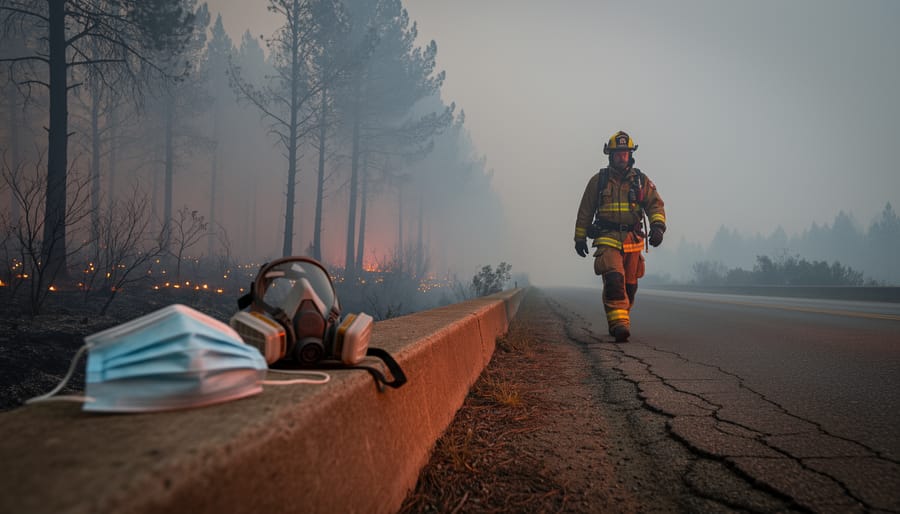

Climate change is intensifying wildfire behavior through longer fire seasons, hotter temperatures, prolonged droughts, and drier vegetation that ignites more easily and burns more severely. What once defined California’s fire risk from mid-April through October has expanded into a year-round threat, fundamentally altering how communities prepare for and respond to wildfire smoke exposure.
The numbers tell a striking story. California has seen a fivefold increase in annual burned area since 1972, according to NASA research. In 2026 alone, CAL FIRE has already documented 3,838 wildfires across 195,439 acres, with incidents like the Biscar Fire in Lassen County reminding us that wildfire season now stretches well into summer and beyond traditional boundaries. These fires don’t just threaten homes and forests. They release massive plumes of particulate matter and toxic compounds that travel hundreds of miles, degrading air quality for millions and creating serious public health consequences, especially for young people, outdoor workers, and anyone with respiratory conditions.
Understanding the climate-wildfire connection matters because it shapes everything from emergency preparedness to long-term policy decisions. This isn’t a problem confined to one political perspective or region. Communities across the ideological spectrum face the same smoke-filled skies and evacuation orders. The good news? Young leaders and bipartisan coalitions are driving solutions that address both the root causes through renewable energy transitions and the immediate health impacts through better air quality monitoring and community resilience programs. This article breaks down how climate change accelerates wildfire intensity, the specific health pathways that wildfire smoke affects, and the practical steps we can all take to protect ourselves and prevent future disasters.
What the Wildfire-Climate Connection Means
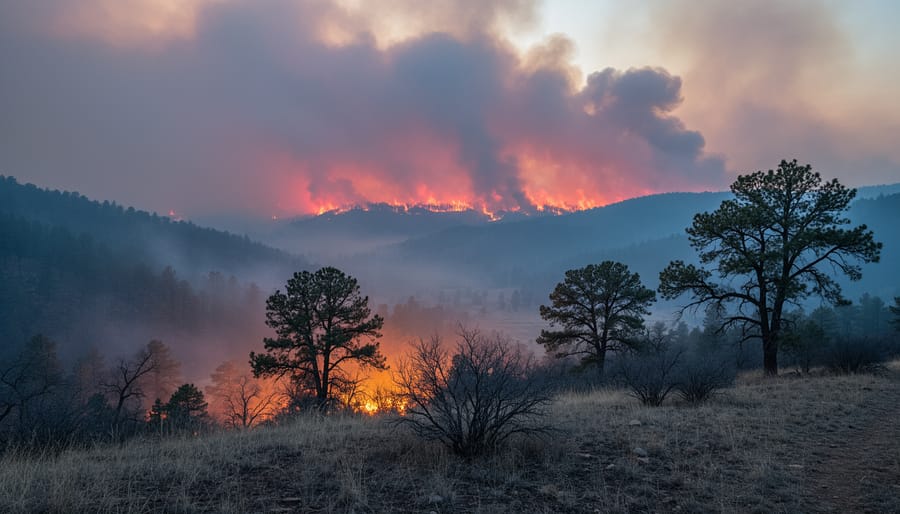
The wildfire-climate connection describes how a warming atmosphere fundamentally alters the conditions that control when, where, and how intensely fires burn. When global temperatures rise, they trigger a cascade of changes that make landscapes more flammable and keep them that way for longer stretches of the year. Higher temperatures pull moisture from vegetation and soil faster, creating drier forests and grasslands that ignite more easily and burn more aggressively. Meanwhile, shifting precipitation patterns mean less winter snow and rain in many fire-prone regions, leaving plants starved of water during the growing season.
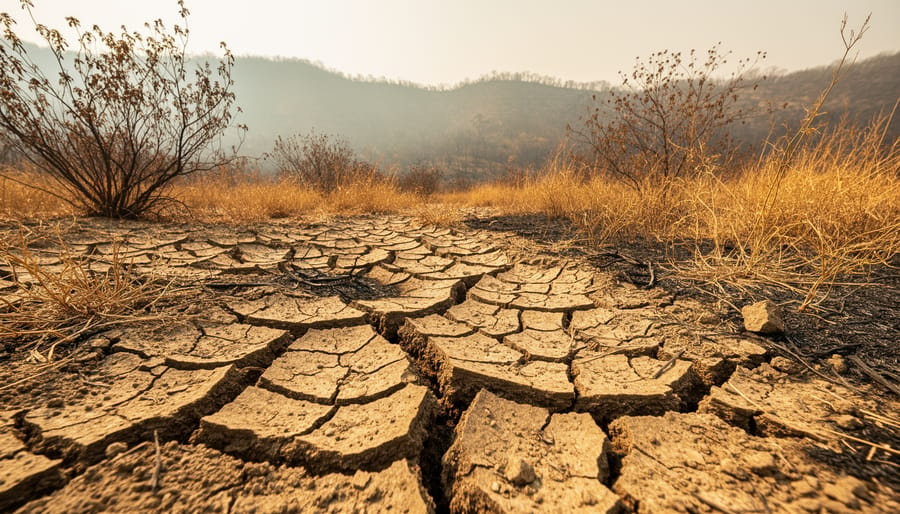
This relationship works through several interconnected mechanisms. Warmer air holds more moisture, which means it draws water out of living and dead plants more efficiently, a process that turns forests into tinderboxes. Extended droughts compound the problem by killing trees and shrubs, creating vast stands of dead vegetation that act as fuel. Heat waves dry out this material even further while also creating the hot, windy conditions that help fires spread rapidly once they start. Together, these factors stretch California’s traditional fire season beyond its historical boundaries and amplify fire behavior when blazes do ignite.
- Fire Season Extension
- The lengthening of the period when weather and vegetation conditions support wildfire ignition and spread, pushing fires into months that were historically too cool or wet for significant burning.
- Fuel Dryness
- The moisture content of vegetation and organic material on the forest floor, which decreases as temperatures rise and drought persists, making plants more combustible and fires harder to control.
- Heat Waves
- Prolonged periods of abnormally high temperatures that accelerate vegetation drying, create unstable atmospheric conditions, and provide the thermal energy that drives aggressive fire behavior.
- Atmospheric Moisture Deficit
- The difference between the amount of water vapor the air currently holds and the maximum it could hold at a given temperature, with larger deficits pulling moisture from plants and soil more aggressively.
The evidence for this connection appears clearly in California’s fire data. The state has seen a fivefold increase in annual burned area since 1972, a change that researchers directly link to climate-driven temperature increases and altered precipitation patterns. This isn’t just about occasional extreme years, it’s a fundamental shift in baseline conditions that makes every fire season more dangerous than comparable seasons from decades past.
How Climate Change Makes Wildfires More Severe
Longer Fire Seasons Across California
California’s wildfire season used to follow a predictable calendar. Southern California historically faced peak fire danger from mid-April through October, while Northern California’s season ran mid-June to October. These traditional boundaries offered communities a clear window to prepare and periods of relative safety.
Climate change has shattered that predictability. Rising temperatures and persistent drought now create fire-ready conditions that refuse to respect the old calendar. The 2026 season demonstrates this shift clearly. By mid-July, fires were already burning across the state, including the Biscar Fire that ignited in Lassen County on July 18. This northern fire erupted during what should have been the early weeks of peak season, yet conditions were already severe enough to support significant wildfire activity.
The five-year average tells an even starker story. A recent study documented by NASA shows California has experienced a fivefold increase in annual burned area since 1972. That expansion reflects not just bigger individual fires, but a lengthening season that gives fires more time to ignite and grow.
For young Californians, this means fire season is becoming year-round reality rather than seasonal concern. The compression of safe periods creates cascading challenges for public health, outdoor activities, and community planning. Understanding this extension helps explain why renewable energy transitions and aggressive climate action matter so urgently. Shorter fire seasons won’t return without addressing the warming that drives them.
More Acres Burned, More Frequently
California’s fire landscape has fundamentally shifted in scale. As of mid-2026, CAL FIRE recorded 3,838 wildfires in 2026 that consumed 195,439 acres across the state. While that number alone might seem abstract, context reveals the transformation: research from NASA shows California has experienced a fivefold increase in annual burned area since 1972.
This isn’t just about more acres blackened each year. The number of individual fire ignitions is climbing alongside the total area consumed, creating a compounding crisis. When fire seasons lengthen, the statistical probability of ignition increases simply because conditions favorable to fire persist longer. Lightning strikes don’t decrease, but the window when those strikes land on tinder-dry vegetation expands dramatically.
The simultaneous rise in both metrics matters because it overwhelms resources. Firefighting agencies built capacity for historical norms, when fires clustered in predictable months and rarely exceeded manageable acreage. Now multiple large fires can burn concurrently across different regions, stretching personnel, equipment, and budgets beyond design limits. Each additional week of fire season creates more opportunities for human-caused ignitions too, a discarded cigarette or malfunctioning power line becomes catastrophic when vegetation moisture drops to historic lows.
Climate change drives this dual escalation by extending the danger window and intensifying fire behavior once ignition occurs. Hotter temperatures dry fuels faster and more completely, meaning fires that do start spread more aggressively across larger landscapes before containment becomes possible.
Types of Air Quality Impacts from Wildfire Smoke
Wildfire smoke carries a dangerous cocktail of air pollutants, each with distinct health implications. When forests, grasslands, and structures burn, the smoke plume contains dozens of chemical compounds and particles that travel hundreds of miles from the fire source, degrading air quality across entire regions.
The most dangerous component is fine particulate matter, known as PM2.5. These microscopic particles measure 2.5 micrometers or smaller, about 30 times finer than a human hair, allowing them to bypass the body’s natural defenses and penetrate deep into the lungs and bloodstream. During active wildfire events, PM2.5 concentrations can spike to levels 20 times higher than EPA health standards, turning daytime skies orange and creating hazardous breathing conditions even for healthy adults.
The major air pollutants released by wildfire smoke include:
- PM2.5 particulates: penetrate deep into lungs and bloodstream, causing respiratory and cardiovascular stress
- Carbon monoxide: reduces oxygen delivery to organs and tissues, particularly dangerous for people with heart disease
- Nitrogen oxides: irritate airways and contribute to ground-level ozone formation days after the fire
- Volatile organic compounds: trigger asthma attacks and react with sunlight to create secondary pollutants
Carbon monoxide presents an invisible threat because it binds to hemoglobin more effectively than oxygen, reducing the blood’s capacity to deliver oxygen to vital organs. While outdoor concentrations rarely reach acutely dangerous levels during wildfires, prolonged exposure can cause headaches, dizziness, and strain on the cardiovascular system.
Nitrogen oxides and volatile organic compounds create a delayed impact. These pollutants react with sunlight to form ground-level ozone, extending the air quality crisis for days after smoke clears. This secondary pollution can affect regions far downwind from the original fire, creating unhealthy air quality across state lines. The combination of these pollutants explains why wildfire smoke poses more severe health risks than many other forms of air pollution, and why climate-driven increases in fire severity translate directly into expanding public health emergencies.
How Wildfire Smoke Affects Public Health
Immediate Health Effects
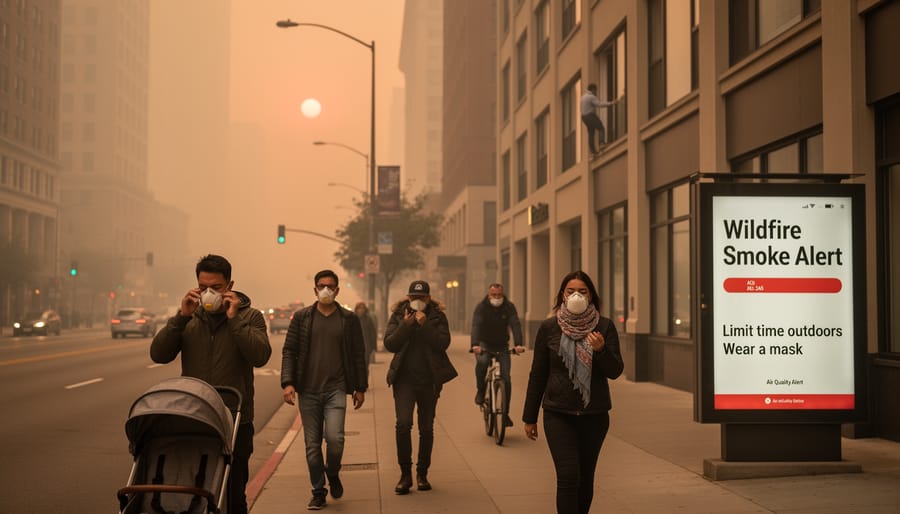
When wildfire smoke rolls through a community, the health consequences appear almost immediately. The most common short-term impacts affect the respiratory system and eyes, with symptoms often emerging within hours of exposure. Breathing difficulty tops the list, even healthy individuals may notice tightness in the chest, shortness of breath, or persistent coughing as fine particles penetrate deep into the lungs. Eye irritation manifests as redness, burning, and watering, making it uncomfortable to spend time outdoors or even look at screens.
For people with asthma, chronic obstructive pulmonary disease, or other respiratory conditions, wildfire smoke acts as a powerful trigger that can rapidly escalate symptoms. Asthma attacks become more frequent and severe during smoke events, often requiring increased medication use or emergency medical care. Children and older adults face heightened vulnerability, their developing or aging respiratory systems struggle more to filter out the microscopic particles that carry toxic compounds.
The connection between air quality and health becomes starkly visible during fire season, when emergency room visits for breathing problems spike in affected areas. Even brief exposure can cause throat irritation, sinus congestion, and headaches that persist for days after the smoke clears, underscoring why monitoring air quality and limiting outdoor activity during smoke events protects immediate well-being.
Long-Term Health Consequences
Repeated exposure to wildfire smoke creates health risks that extend far beyond fire season. Unlike the immediate symptoms that resolve when air clears, chronic exposure can trigger lasting changes in the body’s cardiovascular and respiratory systems.
The cardiovascular system faces particular vulnerability. Studies tracking populations in fire-prone regions show increased rates of heart disease, stroke, and hypertension among those experiencing multiple seasons of heavy smoke exposure. Fine particulate matter from wildfires penetrates deep into the bloodstream, where it can promote inflammation, accelerate arterial plaque buildup, and increase blood clotting risk, effects that compound over years of exposure.
Lung function also declines measurably with repeated smoke exposure, especially in children whose respiratory systems are still developing. Research following young people through multiple fire seasons documents reduced lung capacity and increased asthma severity that persists between fire events. Adults show similar patterns, with accelerated age-related lung function decline in areas experiencing frequent wildfire smoke.
Emerging evidence points to cognitive effects as well. Preliminary studies suggest that sustained wildfire smoke exposure may affect memory, attention, and processing speed, though researchers are still working to understand these mechanisms fully. The connection between climate and health grows clearer as scientists track populations through California’s lengthening fire seasons, revealing that protecting air quality requires addressing the climate drivers making severe fires more frequent.
Where Wildfire Air Quality Solutions Fit in Climate Action
Prevention Through Climate Mitigation
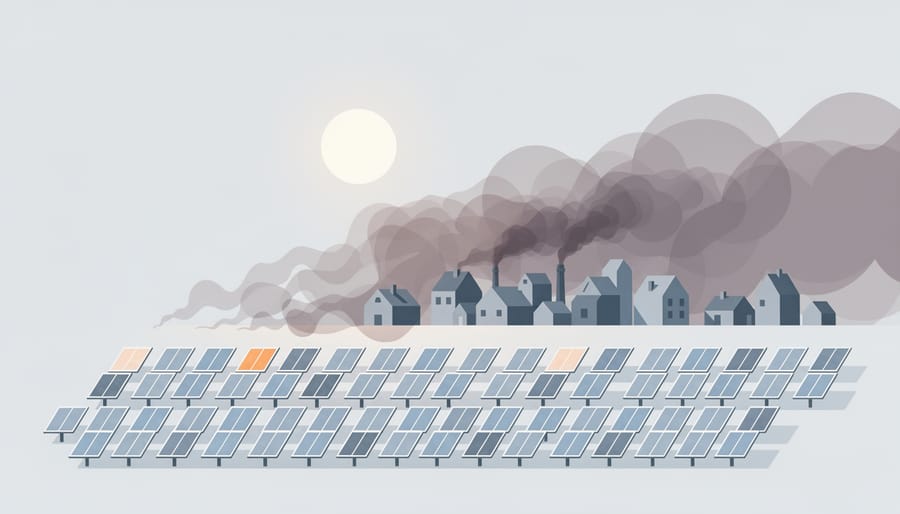
Addressing the climate-driven wildfire crisis requires tackling its root cause: greenhouse gas emissions that trap heat and create the hotter, drier conditions fueling more intense fires. Transitioning from fossil fuels to renewable energy directly reduces the emissions warming our planet and lengthening California’s fire seasons. Solar, wind, and battery storage technologies have matured to the point where they now represent both climate solutions and economic opportunities, creating jobs in installation, maintenance, and manufacturing while stabilizing energy costs.
The renewable energy sector already employs hundreds of thousands of workers nationwide, with significant growth potential as states and communities accelerate their clean energy transitions. These aren’t abstract future promises. They’re present-day careers in construction, engineering, and skilled trades that pay competitive wages while addressing the climate conditions making wildfires more destructive.
Young people understand this connection instinctively, which is why they’re driving change through youth action campaigns and community organizing. Parents and educators can strengthen this momentum by helping the next generation explain climate to kids in ways that emphasize solutions rather than despair. When families discuss renewable energy as wildfire prevention, they connect daily choices to tangible outcomes.
Climate mitigation isn’t partisan. Conservatives and progressives alike benefit from cleaner air, stable energy prices, and reduced wildfire destruction. Every ton of carbon dioxide we avoid releasing slows the warming that extends fire seasons and dries vegetation, protecting communities regardless of political affiliation.
Adaptation and Community Resilience
While communities pursue long-term climate mitigation through renewable energy transitions, immediate protective measures save lives today. California’s 2026 fire season, with over 195,000 acres burned and ongoing wildfire activity, demonstrates why adaptation strategies can’t wait for emissions reductions to take full effect.
Effective air quality monitoring creates the foundation for community protection. Real-time sensors placed throughout fire-prone regions detect particulate matter spikes hours before smoke becomes visible, giving residents crucial lead time. When paired with mobile alerts and accessible public dashboards, these systems help vulnerable populations, children, elderly residents, and those with respiratory conditions, take protective action before air quality deteriorates dangerously.
Public health preparedness transforms passive warnings into active defense. Communities establish clean-air shelters in libraries and community centers, equipped with HEPA filtration systems that maintain safe indoor environments during extended smoke events. Schools develop clear protocols for adjusting outdoor activities based on air quality readings, protecting young lungs while maintaining education continuity. Healthcare facilities stockpile medications and prepare surge capacity for respiratory emergencies that spike during major fire events.
Forest management practices reduce fuel loads that feed catastrophic fires. Strategic prescribed burns during favorable conditions, mechanical thinning in overgrown areas, and restoration of natural fire regimes all decrease the intensity of inevitable wildfires. These interventions protect both air quality and communities downstream.
Early warning systems integrate weather forecasting, vegetation monitoring, and fire behavior modeling to predict dangerous conditions days in advance. When these systems connect seamlessly to evacuation plans and public communication networks, they transform crisis response into coordinated community resilience that saves both lives and property.
Common Questions About Wildfires and Climate Change
California fire season traditionally runs from mid-April through October in the southern part of the state and mid-June through October in the north. However, climate change is reshaping these boundaries, with fires now igniting earlier and burning later into the year. The 2026 season demonstrates this shift, with fires like the Biscar Fire starting in mid-July in Lassen County, and overall activity producing 3,838 wildfires across 195,439 acres. Understanding how climate change intensifies these patterns helps us prepare, protect our health, and drive meaningful solutions.
When does California fire season typically occur?
Historically, California’s fire season runs from mid-April to October in Southern California and mid-June to October in Northern California. Climate change is now extending these windows beyond their traditional boundaries.
How is climate change making wildfire season worse?
Rising temperatures dry out vegetation faster and for longer periods, creating more fuel for fires. California has seen a fivefold increase in annual burned area since 1972, driven primarily by climate drivers that warm the atmosphere and extend dry conditions.
What can individuals do to help address this crisis?
Support renewable energy policies in your community, participate in local air quality monitoring programs, and join youth-led climate organizations pushing for bipartisan solutions. Every action toward clean energy reduces the greenhouse gases intensifying fire seasons.
How can I protect my health during wildfire smoke events?
Monitor local air quality indexes, stay indoors with windows closed when smoke is heavy, use HEPA air filters if available, and wear N95 masks if you must go outside. People with respiratory conditions should follow their healthcare provider’s guidance closely.
Young people hold particular power in this moment. Your generation will experience the full trajectory of climate change, but you also have the tools, creativity, and political voice to reshape that trajectory. Whether you’re advocating for renewable energy expansion in your city council meetings, organizing campus climate campaigns, or simply making informed choices about energy use, your actions compound across time. The connection between climate change and wildfire severity isn’t abstract, it’s visible in the 2026 data, measurable in the air you breathe, and solvable through the clean energy transition that creates jobs, stabilizes the climate, and protects public health simultaneously.
How The Link Between Wildfires and Climate Change Works
Climate change acts as a force multiplier for wildfires through three interconnected processes that feed on each other. First, rising global temperatures heat the land surface and atmosphere, pulling moisture out of vegetation and soil faster than seasonal rainfall can replace it. Trees, shrubs, and grasses become drier and more flammable, turning forests and grasslands into tinderboxes waiting for a spark.
Second, warming alters precipitation patterns across regions like California. Droughts last longer and dig deeper, while rain arrives in shorter, more intense bursts that don’t adequately recharge soil moisture. Snowpack melts earlier in the spring, shortening the window when mountain vegetation stays hydrated. This creates a longer stretch of dry conditions each year when fires can ignite and spread.
Third, these changes shift the timing and behavior of weather systems. Hot, dry winds blow more frequently during traditionally safer months, pushing fire seasons beyond their historical boundaries. What used to be occasional extreme fire weather now happens regularly, and the conditions that allow fires to grow large and fast arrive earlier and last later in the year. Together, these processes explain why California’s burned area has increased fivefold since 1972 and why 2026 has already seen fires like the Biscar Fire burning in mid-July in Lassen County.
The evidence is undeniable: climate change is driving longer, more severe wildfire seasons in California, and the health consequences are felt in every community affected by degraded air quality. California’s fivefold increase in burned area since 1972 isn’t just an environmental statistic; it represents millions of people exposed to hazardous smoke, children missing school days with asthma flare-ups, and vulnerable populations facing heightened cardiovascular risks. The connection between rising temperatures, extended drought, and intensifying fires creates a public health crisis that demands urgent action.
Yet this challenge also presents a clear opportunity. The same renewable energy solutions that address climate change simultaneously protect our health by reducing the conditions that fuel catastrophic fires. Transitioning to clean energy isn’t a partisan issue when every community breathes the same air and shares the same stake in preventing future fire seasons from becoming even more destructive.
Young people hold tremendous power to accelerate these solutions. Whether advocating for renewable energy policies in your community, pursuing careers in climate science and clean technology, or simply making informed choices about energy use, your voice and actions matter. The climate-wildfire-health connection is no longer theoretical; it’s burning through California right now. The question isn’t whether we need to act, but how quickly we can scale the bipartisan solutions that will safeguard both our climate and our communities. The future depends on starting today.