
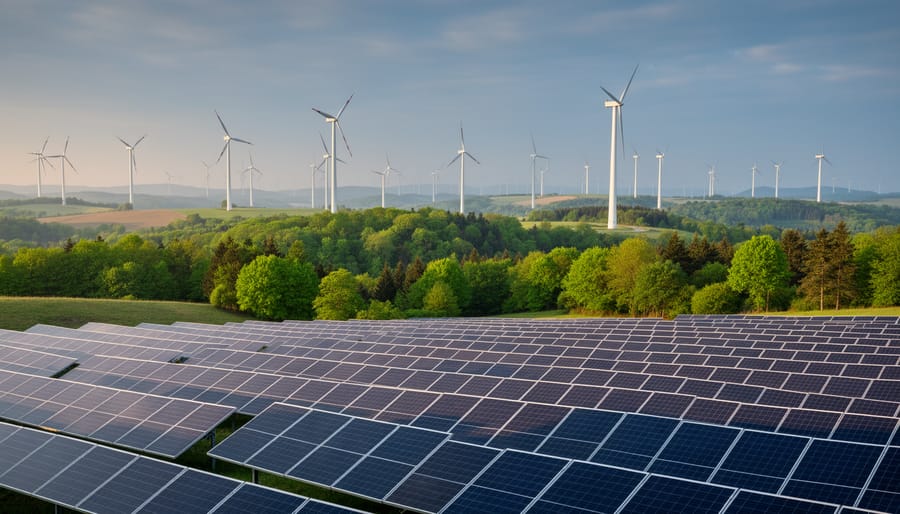

Mitigation, in the climate context, means taking action to reduce or prevent greenhouse gas emissions that cause global warming. While the term appears across fields from law to emergency management, climate mitigation specifically targets the root cause of rising temperatures by cutting the carbon dioxide, methane, and other heat-trapping gases we release into the atmosphere.
Understanding mitigation matters because it represents our most powerful tool for limiting how severe climate change becomes. Every ton of emissions we avoid today translates to less warming, fewer extreme weather events, and reduced pressure on communities and ecosystems down the line. The difference between 1.5°C and 3°C of warming isn’t abstract; it determines whether coastal cities can adapt, whether crop failures become routine, and whether tipping points in our climate system get triggered.
This article breaks down what climate mitigation actually involves, from renewable energy deployment and forest protection to industrial efficiency and carbon capture. You’ll learn how mitigation differs from adaptation (which focuses on adjusting to climate impacts already locked in), explore the main strategies countries and communities use to cut emissions, and see how young people are driving mitigation efforts in 2026 through technology, advocacy, and local action.
Whether you’re trying to grasp the basics or looking for ways to contribute, mitigation offers a foundation for climate solutions that crosses political divides. Conservatives and progressives alike recognize the value of energy independence, economic innovation, and protecting what we’ve built. The path forward requires all of us.
Definition: What Mitigation Means in Climate Science
At its core, climate mitigation refers to human interventions designed to reduce or prevent greenhouse gases from entering the atmosphere. Rather than managing the symptoms of a warming planet, mitigation tackles the root problem: the excess carbon dioxide, methane, and other heat-trapping gases that drive global temperature rise. When we talk about mitigation in climate science, we’re describing any action that lowers emissions or removes existing greenhouse gases from the air.
This approach differs fundamentally from waiting to see what happens. Mitigation means acting now to prevent the most severe climate scenarios by cutting emissions at power plants, factories, farms, and transportation networks. It also includes enhancing natural systems that absorb carbon, like forests and wetlands, and developing technologies that capture carbon directly.
- Greenhouse Gases
- Heat-trapping atmospheric gases, primarily carbon dioxide and methane, that cause global warming when concentrations increase.
- Carbon Reduction
- The process of decreasing the amount of carbon dioxide released into the atmosphere through efficiency improvements, fuel switching, or behavioral changes.
- Emission Sources
- Activities or systems that release greenhouse gases, including fossil fuel combustion, industrial processes, agriculture, and land use changes.
- Net-Zero
- The state achieved when greenhouse gas emissions released are balanced by an equivalent amount removed from the atmosphere, resulting in no net increase.
Within the broader climate action framework, mitigation sits alongside adaptation as one of two essential strategies. While adaptation helps communities prepare for climate impacts already locked in, mitigation works to limit how severe those future impacts become. Financial institutions now assess transition risks related to the shift toward a low-greenhouse gas economy, recognizing that mitigation efforts reshape entire sectors. Even international climate finance categorizes projects by whether their principal objective centers on mitigation, adaptation, or both, underscoring mitigation’s distinct role in global climate strategy.
Understanding this meaning equips young advocates to identify genuine climate solutions and push for policies that address causes, not just consequences.
How Climate Mitigation Works
Climate mitigation works by interrupting the cycle that drives global warming: it reduces the greenhouse gases we release and strengthens the planet’s ability to absorb what remains. At its core, mitigation tackles emissions where they start, before they enter the atmosphere, rather than waiting to manage the consequences later.
The most direct approach is cutting emissions at the source. When we replace coal power plants with wind farms or switch gasoline vehicles to electric ones, we eliminate the carbon dioxide that would otherwise be released. Understanding how solar works shows this principle in action: photovoltaic cells convert sunlight directly to electricity without burning anything. Energy efficiency improvements follow the same logic, insulating buildings or upgrading to LED lighting means less energy needed, which translates to fewer emissions from power generation.
The second mechanism involves increasing the planet’s capacity to absorb carbon. Forests, wetlands, and oceans already capture massive amounts of carbon dioxide naturally. Mitigation strategies work to protect existing carbon sinks and create new ones through reforestation, wetland restoration, and changes in agricultural practices that lock carbon in soil. Emerging technological approaches aim to enhance carbon sinks through direct air capture and other engineered solutions, though these remain smaller in scale compared to nature-based methods.
Common mitigation mechanisms include:
- Deploying renewable energy sources like solar, wind, and geothermal to replace fossil fuel generation
- Improving energy efficiency in buildings, appliances, and industrial processes
- Capturing and storing carbon from industrial facilities before it reaches the atmosphere
- Shifting to electric or hydrogen-powered transportation systems
- Conserving and expanding forests, wetlands, and other natural carbon sinks
These mechanisms often work together. A factory that switches to renewable electricity, upgrades its efficiency, and captures remaining process emissions demonstrates how layered mitigation strategies multiply their impact. The key is that each approach addresses the fundamental problem: too much greenhouse gas moving from earth and human systems into the atmosphere.

Types of Mitigation Strategies
Energy and Industrial Mitigation
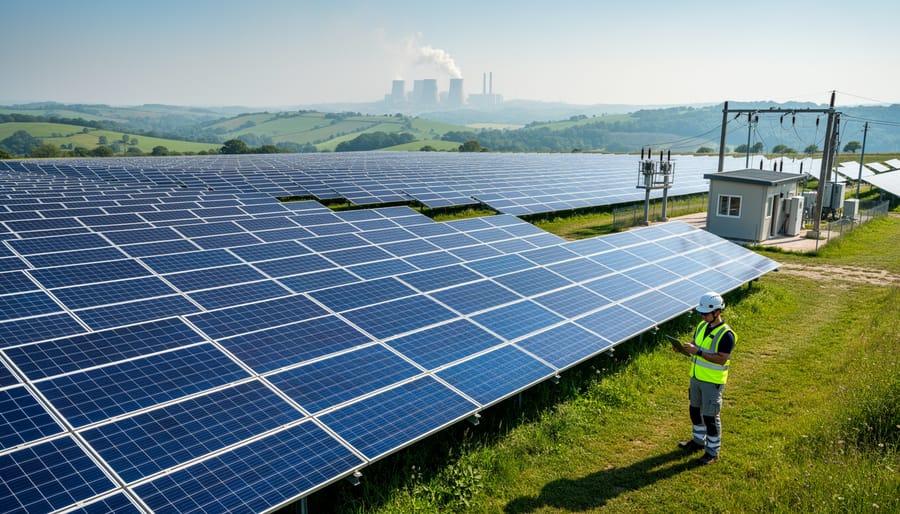
Energy represents the single largest source of greenhouse gas emissions globally, making this sector the most critical target for mitigation efforts. Transitioning from fossil fuels to renewable sources like solar, wind, and hydroelectric power directly cuts emissions at their source. In 2026, this shift is accelerating as renewable energy costs continue to fall and grid-scale battery storage makes intermittent sources more reliable.
Industrial mitigation focuses on reducing emissions from manufacturing processes themselves. Heavy industries like steel and cement emissions production are developing carbon capture technologies and alternative production methods that slash emissions per unit produced. Energy efficiency improvements in factories and buildings yield double benefits: lower emissions and reduced operating costs.
Electrification of transportation and heating systems previously dependent on fossil fuels represents another powerful mitigation lever. Electric vehicles charged with renewable electricity produce far fewer lifetime emissions than combustion engines. Heat pumps powered by clean electricity can replace natural gas furnaces in buildings. These transitions reduce demand for fossil fuels while creating economic opportunities in new industries, making them politically viable across the spectrum.
Natural and Nature-Based Mitigation
Nature offers some of our most powerful mitigation tools, ones that have been removing carbon from the atmosphere for millions of years. Trees, wetlands, grasslands, and healthy soils naturally absorb and store carbon dioxide, turning these ecosystems into carbon sinks that work alongside technological solutions. Protecting and restoring these natural systems forms the backbone of nature-based mitigation strategies now recognized in climate policies worldwide.
Reforestation and afforestation projects create new carbon sinks while providing biodiversity benefits and local economic opportunities. When trees grow, they pull CO2 from the air and lock it in their biomass and in the soil beneath them. Wetland restoration works similarly, marshes, peatlands, and mangroves store massive amounts of carbon in waterlogged soils where organic matter breaks down slowly. Protecting existing forests, especially old-growth systems, prevents massive carbon releases while maintaining these ongoing absorption processes.
Sustainable agriculture mitigation practices transform farming from a net emissions source into part of the solution. Cover cropping, reduced tillage, and rotational grazing build soil organic matter, sequestering carbon underground where it improves fertility and water retention. These regenerative approaches cut emissions from industrial agriculture while making farms more resilient, a win that appeals across the political spectrum since it strengthens rural economies and food security alongside climate benefits.

Mitigation vs. Adaptation: Understanding the Difference
Mitigation and adaptation are the two essential pillars of climate action, each addressing a different dimension of the climate challenge. Mitigation tackles the root cause by reducing greenhouse gas emissions and slowing the pace of warming itself. Adaptation, by contrast, adjusts systems and communities to cope with climate impacts that are already happening or locked in due to past emissions. Think of mitigation as preventing a fire from spreading, while adaptation is building fireproof structures and evacuation routes for areas already in the fire’s path.
Both approaches are necessary because some degree of warming is unavoidable given emissions already in the atmosphere, but mitigation determines how severe future impacts will be. Without strong mitigation, adaptation needs will escalate beyond what many communities can manage. Without adaptation, vulnerable populations suffer avoidable harm from climate impacts we couldn’t prevent. The two strategies work together: effective mitigation reduces the adaptation burden over time, while successful adaptation buys communities time to implement mitigation solutions.
Financial institutions and policymakers increasingly recognize this dual framework. Canada’s Office of the Superintendent of Financial Institutions now requires federally regulated financial institutions to assess physical and transition risks in their climate risk management, with physical risks tied to adaptation needs and transition risks linked to the shift toward low-emission systems that mitigation drives. This integration shows how understanding both concepts shapes real-world decisions, from infrastructure investments to insurance pricing. For young climate advocates, grasping this distinction clarifies how different actions contribute to the overall solution and why comprehensive climate policy must advance both fronts simultaneously.
Real-World Applications: Where Mitigation Matters in 2026
Mitigation strategies operate across every level of society, from personal choices to international agreements. In 2026, renewable energy installation has become a neighborhood-level decision in many communities, with solar co-ops and local wind projects bringing down household emissions and utility bills simultaneously. These initiatives demonstrate that mitigation delivers both climate and economic benefits, a combination that appeals across political divides.
Climate action in cities shows mitigation at scale. Municipal governments now routinely electrify public transit fleets, retrofit buildings for efficiency, and redesign streets to prioritize walking and cycling over car dependence. Youth-led advocacy has driven many of these shifts, with student organizers successfully pushing for green infrastructure bonds and zero-emission targets that create local jobs while cutting emissions.
Corporate commitments have matured beyond pledges to actual implementation. Companies across sectors now publish transition plans detailing how they will shift operations away from fossil fuels, and financial institutions assess these plans as part of lending and investment decisions. The Office of the Superintendent of Financial Institutions notes that federally regulated financial institutions in Canada evaluate transition risks, which refer to financial risks related to the process of adjustment towards a low-greenhouse gas economy, as a standard part of climate risk management as of March 2025.
National policy frameworks provide structure for these efforts. Canada’s international climate finance uses mitigation objectives coding to track how development projects reduce emissions, ensuring that climate goals integrate with poverty reduction and economic development work. In the United States, bipartisan infrastructure legislation has funded grid modernization and clean energy manufacturing, proving that emission reduction can align with job creation and energy independence priorities that resonate across the political spectrum.
This multilevel approach matters because effective mitigation requires simultaneous action everywhere, from kitchen appliances to international finance.
Frequently Asked Questions About Mitigation
What are climate-related risks and how does mitigation address them?
Climate-related risks fall into two main categories: physical risks from extreme weather events and gradual climate shifts, and transition risks from the economic adjustment toward a low-greenhouse gas economy. Mitigation directly reduces both types of risk by cutting emissions at the source, which lessens future physical climate impacts while smoothing the transition to cleaner systems.
Can individual actions really count as mitigation?
Yes, but with important context. Individual choices like biking instead of driving or choosing renewable energy do reduce emissions and model better practices. The biggest mitigation gains, however, come from systemic changes in energy grids, transportation infrastructure, industrial processes, and land use, which is why your voice in policy and community action matters as much as your personal footprint.
What mitigation opportunities exist for young people in 2026?
You can engage in mitigation through career paths in renewable energy, sustainable agriculture, or green technology, by joining local climate advocacy groups pushing for stronger emission reduction policies, or by supporting businesses and candidates committed to climate action. Many youth-led initiatives focus on community solar projects, campus decarbonization campaigns, and bipartisan coalitions around energy innovation, all of which directly advance mitigation goals.
How does mitigation differ from other climate terms I hear?
Mitigation means reducing greenhouse gas emissions to prevent worse climate change, while adaptation means preparing for climate impacts we can’t avoid. You might also hear about resilience, which overlaps with adaptation, or net-zero, which describes a mitigation target where any remaining emissions are balanced by removal. Understanding these distinctions helps you identify which solutions address root causes versus which manage consequences.
These questions reflect what comes up most often when young advocates dive into climate work. The distinction between individual and systemic mitigation matters because it frees you from climate guilt while directing energy toward the leverage points that actually shift emission trajectories. Federally regulated financial institutions in Canada now assess both physical and transition risks as part of their climate risk management, which shows how mitigation has moved from environmental advocacy into the core of economic planning. When you understand mitigation’s meaning and scope, you can evaluate which actions and policies will deliver real emission reductions versus which just sound good on paper.
Types or components
# Core Components of Climate Mitigation
Climate mitigation encompasses three fundamental components that work together to reduce greenhouse gas emissions and limit global warming. Understanding these building blocks helps clarify how different mitigation efforts contribute to the same essential goal.
Emission Reduction at Source represents the most direct mitigation component: preventing greenhouse gases from entering the atmosphere in the first place. This includes transitioning from fossil fuels to renewable energy, improving energy efficiency in buildings and transportation, and redesigning industrial processes to eliminate emissions. When a community switches its power grid from coal to solar, or a manufacturer redesigns production to eliminate methane leaks, they’re practicing source reduction.
Carbon Removal and Sequestration involves actively taking carbon dioxide out of the atmosphere or preventing stored carbon from being released. Natural solutions like reforestation and wetland restoration accomplish this by enhancing ecosystems’ carbon absorption capacity. Technological approaches include direct air capture systems and carbon capture at emission points. Protecting existing forests and peatlands also falls here, preventing massive carbon releases.
System Transformation ties these components together through fundamental changes in how societies operate. This means shifting entire energy systems, redesigning cities for lower emissions, and creating circular economies that minimize waste. It’s the structural change that makes emission reduction and carbon removal sustainable long-term rather than temporary fixes.
Understanding the meaning of mitigation equips you to contribute to the most powerful climate solutions available today. Rather than feeling overwhelmed by climate change, recognizing mitigation as the reduction of greenhouse gas emissions at their source transforms abstract concern into concrete action. You can now evaluate which efforts genuinely address root causes versus those that merely respond to symptoms.
The bipartisan appeal of mitigation strategies creates broad opportunities for engagement regardless of your political background. Renewable energy expansion generates jobs across rural and urban communities. Energy independence reduces reliance on foreign fuel sources. Economic innovation in clean technologies positions regions for competitive advantage. These shared priorities unite diverse constituencies around effective climate action.
Your generation will shape how aggressively societies pursue mitigation over the coming decades. Start by making informed choices in your daily life, from transportation to energy consumption. Pursue careers in emerging mitigation sectors like renewable energy development, sustainable agriculture, or climate finance. Engage civically by supporting mitigation policies at local and national levels. Demand that institutions from universities to corporations adopt meaningful emission reduction targets.
The most impactful climate solutions begin with understanding what mitigation means and recognizing where you can drive change. Every informed choice, career path, and civic action contributes to the collective effort to stabilize our climate.