
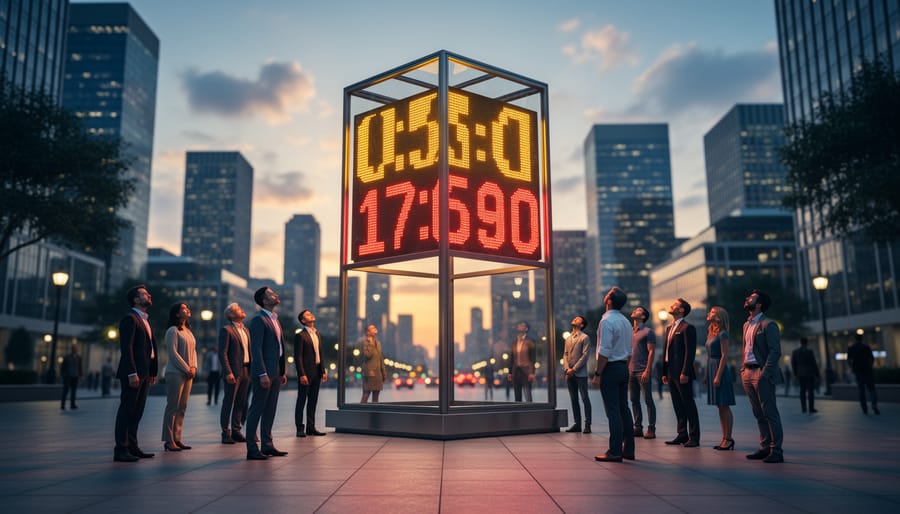


A climate change clock is a public countdown displaying the time remaining until global temperature rise becomes irreversible based on current emission trends, designed not to paralyze viewers with fear but to transform urgency into action. These digital installations, which have appeared in major cities worldwide, calculate the years, days, hours, and seconds left before we cross critical temperature thresholds, typically 1.5°C above pre-industrial levels. Rather than serving as doomsday devices, they function as accountability tools and rallying points for solutions already within reach.
The concept is straightforward: scientists convert carbon budget data into a ticking clock that anyone can understand at a glance. When you see seven years or three years counting down, you’re looking at how long humanity can continue current emissions before exhausting our atmospheric capacity for greenhouse gases. The number shrinks every second, but here’s what matters most: it doesn’t have to.
These clocks represent the most democratic form of climate communication we have. No advanced degree required. No partisan filter needed. Just a clear visual reminder that the window for action remains open, and what we do collectively in these years will define the next century. For young people watching these numbers tick down, the message isn’t “give up.” It’s “your generation has the smallest window and the biggest toolkit in history.”
The real power of climate change clocks lies in their ability to unite people across political divides around a simple truth: time-limited challenges require time-bound solutions, and renewable energy transitions create opportunities whether you approach climate through an environmental lens, an economic one, or both.
What Exactly Is a Climate Change Clock?
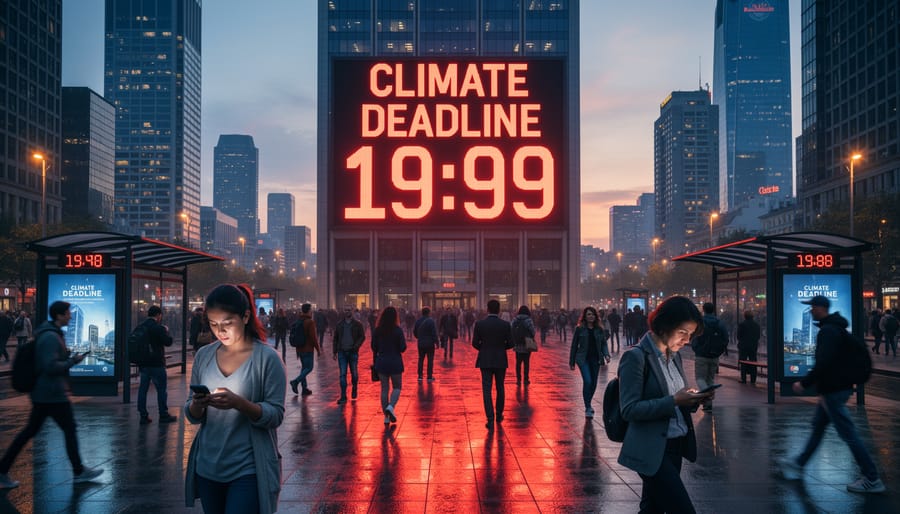
A climate change clock does exactly what it sounds like, it counts down the time we have left to prevent catastrophic warming. But unlike your phone’s timer, this countdown is rooted in hard climate science, not guesswork.
At its core, a climate change clock translates the concept of a carbon budget into something we can all understand: time. Scientists know roughly how much more carbon dioxide and other greenhouse gases we can emit before we lock in dangerous temperature increases. This remaining “budget” of allowable emissions gets converted into years, months, and days based on current emission rates. The most widely referenced clocks typically count down to when we’ll exhaust the budget for limiting warming to 1.5°C above pre-industrial levels, the threshold identified by the Intergovernmental Panel on Climate Change as a critical guardrail against severe climate impacts.
These clocks exist in two main forms. Physical installations, like the massive digital display that appeared in New York City, function as public art and awareness tools, impossible to ignore, designed to spark conversation. Digital versions live on websites and apps, updating in real time as global emissions data comes in. Both formats serve the same purpose: making abstract climate science concrete and immediate.
The calculations behind these clocks combine several data streams. They factor in current global emission rates, the total carbon budget scientists have calculated for different temperature scenarios, and the rate at which we’re adopting clean energy solutions. As renewable energy deployment accelerates or emissions spike, the numbers adjust. This isn’t prophecy, it’s applied math based on atmospheric physics and monitoring data.
What makes climate clocks powerful is their ability to distill thousands of pages of climate reports into a single, glanceable metric. They answer the question young people ask constantly: how much time do we actually have? The answer keeps changing, which is exactly the point.
From Times Square to Your Phone: How Climate Clocks Are Everywhere
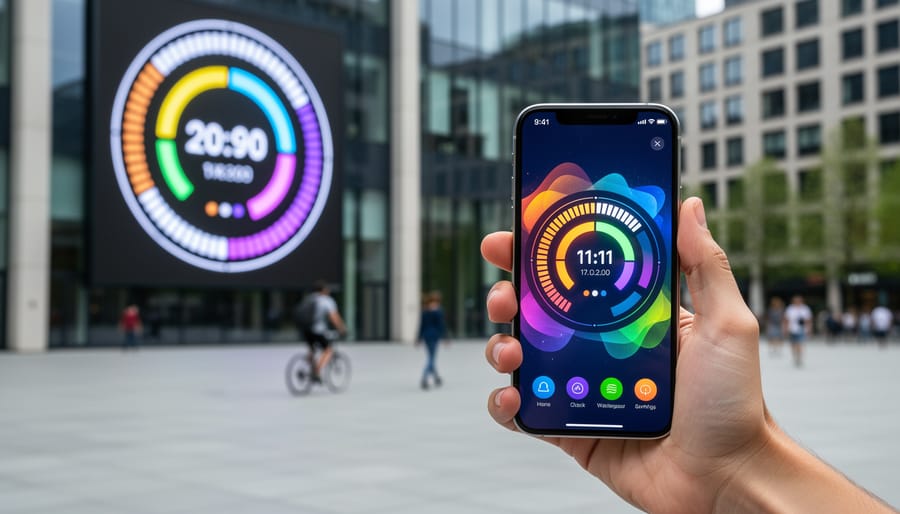
The Climate Clock installation in Manhattan’s Union Square might be the most famous countdown in the world right now, but it’s far from alone. What started as a grassroots art project has sparked a global movement of climate timekeepers appearing everywhere from city centers to your smartphone screen.
Public installations have popped up in Berlin, Glasgow, Seoul, and dozens of other cities worldwide. These displays, sometimes repurposed billboards, sometimes purpose-built LED screens, broadcast the same urgent message in different languages and time zones. Universities have mounted climate clocks on campus buildings. Museums have incorporated them into exhibitions. Even some city halls have adopted official countdown displays, transforming what began as activist messaging into institutional acknowledgment.
The digital revolution has made climate clocks even more accessible. Apps like Climate Clock Official bring the countdown directly to your home screen, sending periodic notifications about the time remaining. Websites embed countdown widgets that visitors can watch tick down in real time. Browser extensions replace your new tab page with climate data. Social media accounts share daily updates, keeping the deadline in feeds alongside everything else competing for attention.
This evolution from protest tool to mainstream fixture matters because visibility shapes urgency. When climate clocks appear in physical spaces, especially in discussions about climate in cities they become impossible to ignore during daily routines. When they live on your phone, they transform abstract future deadlines into present-moment awareness. The proliferation of these countdowns reflects growing recognition that keeping climate timelines visible isn’t alarmism, it’s accountability. These clocks serve as constant reminders that the window for action remains open, but it won’t stay that way forever.
Why the Countdown Matters More Than the Fear
Climate clocks don’t exist to scare you. They exist to keep us honest. While that countdown might feel ominous at first glance, these tools actually serve a crucial psychological and practical purpose: they transform abstract climate threats into concrete accountability measures. Think of them less like a doomsday countdown and more like a project deadline that reminds everyone, governments, corporations, communities, that progress needs to happen now, not someday.
Here’s why that matters: deadlines create urgency without creating helplessness. When you know exactly how much time you have to solve a problem, you can work backward from that endpoint to figure out what needs to happen this year, this quarter, this month. Climate clocks do exactly that for tracking renewable energy adoption rates, emissions reduction targets, and policy implementation. Instead of vague promises about “net zero by mid-century,” these timelines force specificity. Are solar installations accelerating fast enough? Is methane reduction on track? The clock answers these questions with uncomfortable clarity.
For young people especially, these timelines become organizing principles rather than sources of anxiety. If you’re choosing a college major or career path, understanding the urgency timeline helps you identify where your skills will matter most. Renewable energy sectors aren’t just growing, they’re racing against specific deadlines, which means demand for engineers, policy analysts, project managers, and skilled tradespeople will only intensify. Understanding the drivers of climate change alongside these timelines helps you target your efforts where they’ll have maximum impact.
The countdown also creates a shared frame of reference across political divides. Economic development timelines, infrastructure investment cycles, and workforce transition planning all benefit from clear deadlines. When everyone’s watching the same clock, accountability becomes bipartisan. You can’t claim progress without measurable results, and you can’t delay action without everyone noticing.
What Happens When the Clock Hits Zero?

When the clock hits zero, we don’t fall off a cliff into instant catastrophe. Instead, we cross a threshold where we’ve exhausted our remaining carbon budget for limiting warming to 1.5°C above pre-industrial levels. Think of it like a bank account: zero doesn’t mean the world ends, but it means we’ve spent our allowance for staying within the safest temperature guardrails that scientists have identified.
Here’s what actually happens. Beyond these temperature targets, we increase the likelihood of triggering tipping points in Earth’s climate system. These are thresholds where feedback loops begin accelerating warming on their own. When Arctic permafrost thaws, it releases methane that warms the atmosphere further, which thaws more permafrost. When ice sheets melt, they reduce Earth’s reflectivity through changes in the albedo effect absorbing more heat and accelerating melting. These cascading effects can push us past the point where our actions have the same level of control.
Every fraction of a degree genuinely matters. The difference between 1.5°C and 2°C of warming translates to hundreds of millions more people facing water scarcity, significantly more frequent extreme weather events, and substantially higher risks to coral reefs and coastal communities. At 1.5°C, roughly 70% of coral reefs face severe threats. At 2°C, that jumps to over 99%.
But crossing zero on a climate clock doesn’t mean giving up. It means the window for the easiest, least disruptive solutions has closed, and we need to work harder and faster. We can still limit damage, adapt communities, and build resilience. The clock creates urgency, not futility. What we do in response to that urgency determines the actual outcome.
How Climate Clocks Can Unite, Not Divide Us
Time works the same for everyone, regardless of political affiliation. Climate clocks tap into something universal: the human response to deadlines. When you’re racing against time to complete a project, secure funding, or launch a business, the countdown becomes a powerful motivator. The same principle applies to climate action, and it’s creating unexpected alliances across the political spectrum.
Economic timelines align remarkably well with climate deadlines. The renewable energy sector needs to scale rapidly over the next decade, which means job creation opportunities in manufacturing, installation, and grid modernization. Conservative communities focused on economic growth and energy independence can see climate clocks as countdowns to capture these economic opportunities before other regions do. Progressive communities focused on environmental justice can view the same timelines as deadlines for equitable transitions. Different values, same urgency.
Infrastructure investments follow similar logic. Upgrading power grids, building resilient communities, and modernizing transportation systems all require long-term planning horizons that happen to match climate action timelines. When a coastal town needs to protect its harbor from rising seas, the conversation shifts from abstract climate science to concrete engineering deadlines and budget cycles. That’s something city councils of all political leanings understand.
The countdown framework also creates accountability that transcends partisan talking points. Numbers don’t negotiate. When renewable energy installations fall behind schedule or emissions reductions miss targets, the clock keeps ticking for everyone. This shared reality can cut through ideological debates and focus attention on what actually works.
Young people especially recognize that climate deadlines don’t care about voting patterns. Your zip code’s political lean won’t shield you from economic disruption or opportunity. This generation is building coalitions around timeline-driven solutions, finding common ground in pragmatic action rather than political identity.
Turn the Countdown Into Your Call to Action
The climate clock shows we have work to do, but that deadline also reveals exactly where your energy matters most. Instead of spiraling into anxiety, treat this countdown as a strategic map that shows which actions align with the most urgent timelines for climate solutions.
Start by connecting timeline awareness to decisions you’re making right now. If renewable energy deployment needs to accelerate dramatically in the next seven years, that tells you where opportunity lives. Research universities and technical programs strong in solar engineering, wind technology, battery storage, or grid modernization. Look at community colleges offering fast-track certifications in HVAC efficiency or electric vehicle maintenance. These aren’t just climate-friendly choices, they’re career paths positioned at the center of a massive economic transition already underway.
Use the urgency framing to build advocacy skills that create real pressure for change. Local organizing becomes more effective when you can frame climate action around concrete timelines. City council members respond differently when you present renewable energy proposals alongside the specific years their constituents will face increased insurance costs or infrastructure failures. Learn to translate countdown awareness into budget meetings, zoning discussions, and school board presentations. The posters that act as conversation starters only work when someone shows up prepared to turn attention into policy.
Here are specific ways to channel climate timeline awareness into meaningful action:
- Audit your current educational or career path against the industries projected to grow fastest in the next decade, renewable energy installers, efficiency consultants, climate adaptation planners, and sustainable agriculture specialists all face worker shortages.
- Join or start a local climate advocacy group focused on tangible municipal goals with clear deadlines, like transitioning your school district’s bus fleet to electric or establishing community solar programs.
- Build financial literacy around climate timelines by researching how timeline-aware investing works, understanding renewable energy tax credits, and learning which career paths offer stability as the economy shifts.
- Connect with both progressive and conservative climate groups in your area to understand how different values lead to the same timeline-driven solutions, resilience, economic opportunity, and energy independence all require action on the same schedule.
The countdown creates urgency, but your response determines whether that urgency leads to paralysis or power. Choose the latter, and help others do the same.
Climate clocks aren’t counting down to catastrophe. They’re counting up the urgency for solutions that are already within reach. These timelines give you something precious: clarity about when action matters most, and a shared framework that transcends political divides. Whether you prioritize economic innovation, energy independence, or environmental stewardship, the clock creates common ground for building the renewable energy infrastructure that serves everyone’s values.
Understanding these deadlines transforms anxiety into direction. They show you exactly when to make education choices that lead to growing careers in solar, wind, and grid modernization. They tell you when local policy decisions matter most. They reveal windows of opportunity for organizing, investing effort, and aligning your future with solutions that scale.
You’re living through the exact years when the trajectory changes. The generation watching these clocks tick isn’t the one that runs out of time, you’re the one with enough time left to rewrite the ending. Every decision you make about your career, your community involvement, and your voice in the climate conversation moves the needle. The clock is ticking, but the hands are in your control.