
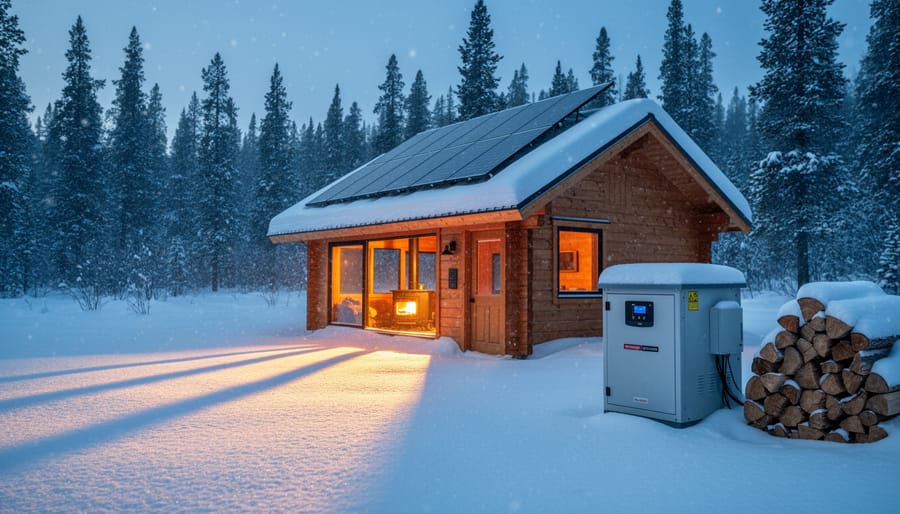

Off-grid living in Canada means disconnecting from municipal utilities and generating your own power, water, and heat independently, typically in rural or remote locations where traditional infrastructure is costly or unavailable. For Canadians pursuing energy independence, this lifestyle has evolved from a fringe survival choice into a viable path toward personal sustainability, especially as solar technology improves and the renewable energy movement gains momentum.
Canada’s geography makes off-grid living both challenging and uniquely rewarding. Winter temperatures regularly plunge below -30°C across much of the country, demanding heating systems and insulation far beyond what warm-climate homesteaders require. Yet the same northern latitude provides surprisingly strong solar potential in summer months, when long daylight hours compensate for winter scarcity. This seasonal contrast shapes every decision, from battery bank sizing to wood stove selection.
The appeal cuts across political lines. Some seek freedom from rising utility costs and grid dependence. Others embrace off-grid life as a direct response to climate concerns, reducing their carbon footprint through renewable energy systems. Young Canadians, particularly those frustrated by urban housing costs, increasingly view off-grid properties as affordable entry points to homeownership while aligning their daily lives with environmental values.
This guide explains how off-grid systems function in Canadian climates, what components you’ll need to stay warm and powered year-round, and which setup types match different budgets and skill levels. Whether you’re exploring a weekend cabin or planning permanent relocation, understanding the fundamentals helps you assess if disconnecting from the grid fits your goals and resources.
What Off-Grid Living Means in the Canadian Context
Off-grid living means disconnecting from municipal utility services and producing your own electricity, sourcing your own water, and managing your own waste systems. In Canada, this goes beyond simply installing solar panels, it’s about creating a self-sufficient home that functions independently from the electrical grid, water mains, and sewage infrastructure that most Canadians rely on daily.
What makes off-grid living distinctly Canadian is the challenge of maintaining year-round comfort and functionality in a climate with harsh winters, variable sunlight, and vast geographic diversity. A solar setup that works perfectly in southern Ontario faces different demands than one in northern British Columbia or the Yukon, where winter days are short and temperatures plummet. Canadian off-gridders must design systems robust enough to handle months of snow cover, freeze-thaw cycles, and the heating loads that come with cold-climate living.
- Off-grid
- Complete disconnection from municipal utilities, with all power, water, and waste systems managed independently on-site.
- Grid-tied with battery backup
- A home connected to the electrical grid but equipped with solar panels and batteries that provide backup power during outages while reducing grid dependence.
- Partial off-grid
- Selective independence from certain utilities, for example, generating your own electricity while remaining connected to municipal water, or vice versa.
- Energy autonomy
- The capacity to meet all your energy needs through on-site generation and storage without relying on external power sources.
- Net-zero homestead
- A property that produces as much energy as it consumes over a year, often through a combination of efficiency measures and renewable generation, sometimes while remaining grid-connected.
Canada’s regulatory landscape also shapes the off-grid experience. Building codes, land-use regulations, and permitting requirements vary significantly across provinces and municipalities. Some regions embrace alternative building methods and renewable energy systems, while others maintain stricter requirements that can complicate off-grid projects. Understanding these regional differences is essential before committing to an off-grid lifestyle.
The spectrum of off-grid commitment is wide. Full off-grid living means total independence from all municipal services, while partial approaches might involve producing your own electricity but connecting to a well-regulated septic system, or remaining grid-connected with substantial battery backup for resilience. Many Canadians start with partial independence and expand their self-sufficiency over time as they develop skills and invest in additional systems.
How Off-Grid Systems Work in Canada
Energy Generation and Storage
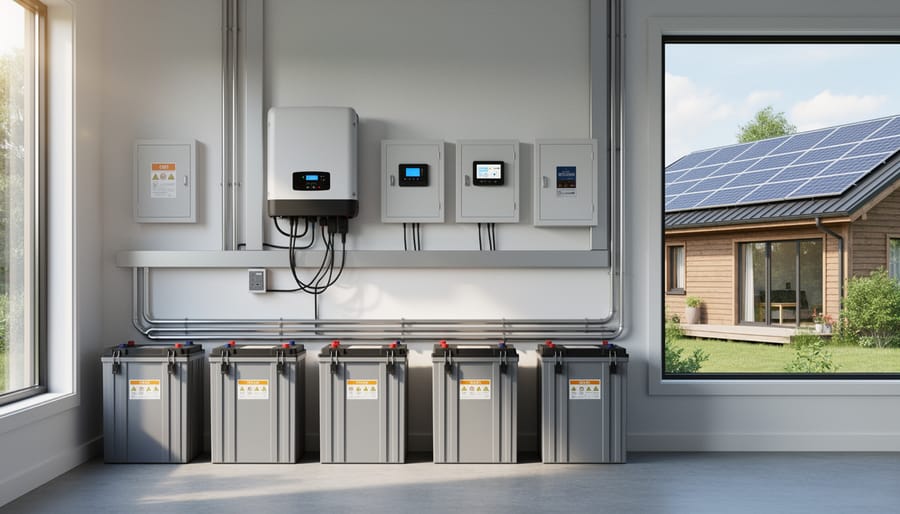
Off-grid power in Canada relies on combining multiple energy sources to balance seasonal extremes. Solar panels generate most electricity during long summer days, but their output drops sharply in winter when days shorten and snow cover can block panels. Wind turbines help fill this gap, since Canada’s coldest months often bring stronger winds. Micro-hydro systems, where terrain and water flow permit, provide the most consistent year-round generation, running continuously regardless of weather or daylight.
Battery banks store surplus energy for nights and low-production periods. Lithium-ion batteries have become the standard for off-grid systems, offering better cold-weather performance than older lead-acid options, though they still require insulated battery rooms in harsh climates. Proper solar integration with battery storage allows households to capture peak summer production and manage winter scarcity through careful load planning.
Most Canadian off-gridders size their systems around winter needs rather than summer abundance, accepting that they’ll generate excess power in warmer months. Backup propane or diesel generators cover extended cloudy periods and extreme cold snaps when demand spikes for heating. The key is building redundancy into the system so no single failure leaves you without power.
Water and Waste Solutions
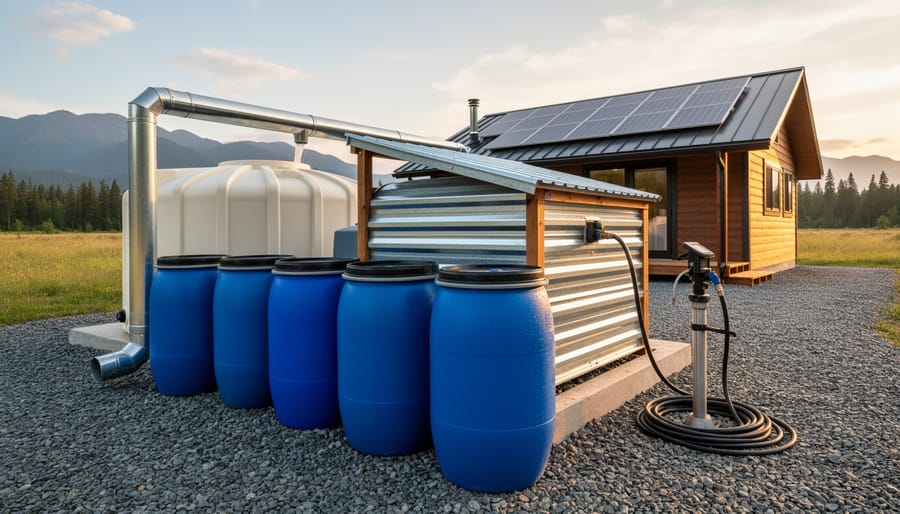
Water independence starts with a reliable source. Most off-grid Canadians drill wells, which provide year-round access but require upfront investment and testing to confirm potability. Rainwater collection offers a supplementary or primary option in regions with adequate precipitation, though winter freezing and spring melt timing demand careful system design. Some use natural sources like lakes or streams, pairing them with robust filtration to remove contaminants and pathogens.
Treatment matters as much as sourcing. Multi-stage filtration, sediment filters, activated carbon, UV sterilization, ensures safe drinking water regardless of origin. Regular testing keeps systems trustworthy, especially after seasonal changes or heavy use.
Waste management closes the loop. Composting toilets eliminate water use and turn human waste into soil amendment, ideal for remote sites without septic infrastructure. Traditional septic systems work where soil conditions allow, handling both toilet and greywater. Many off-gridders separate greywater from sinks and showers, filtering it through constructed wetlands or simple gravel beds for garden irrigation, reducing overall water demand.
The combination you choose depends on climate, soil type, and how much maintenance you’re willing to handle, but redundancy, backup filters, alternative water sources, builds resilience into every season.
Heating in Cold Climates
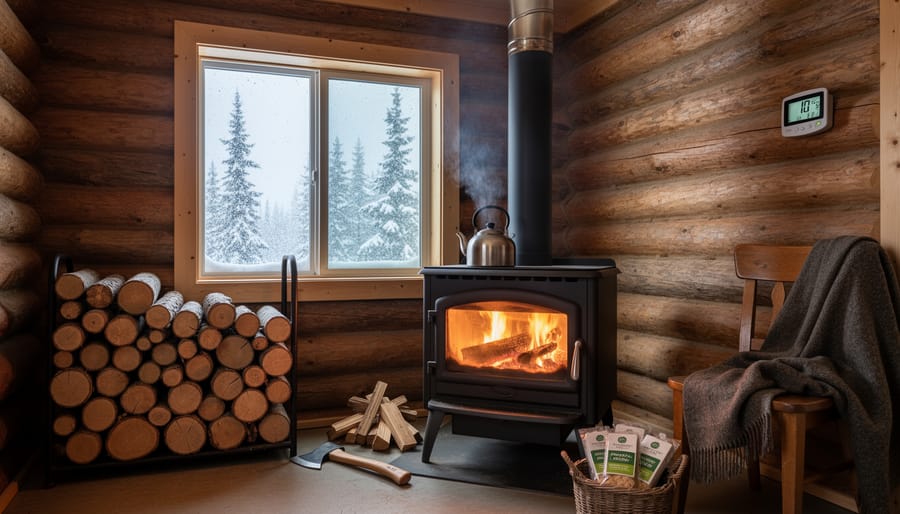
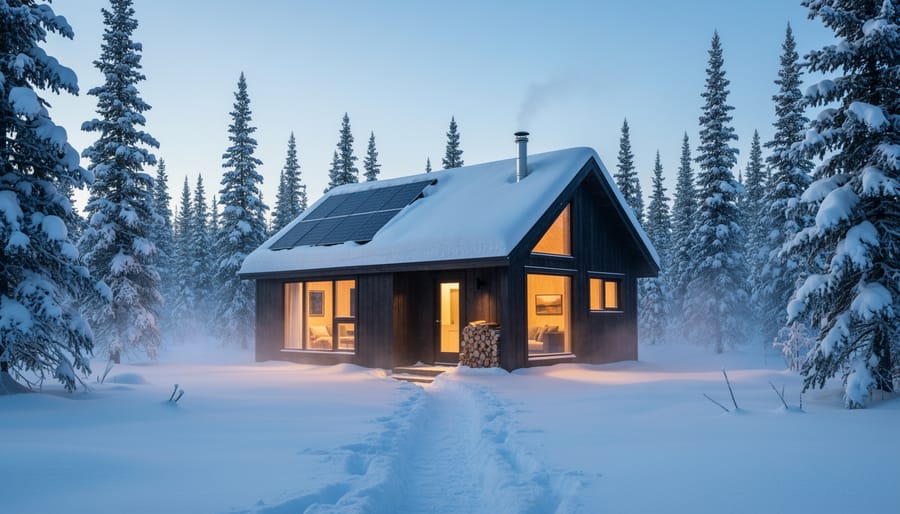
Canada’s heating season can stretch six months or longer, making efficient warmth a cornerstone of off-grid survival. Wood stoves remain the workhorse for most off-grid homes, burning locally sourced cordwood to deliver reliable heat independent of any grid. High-efficiency models now convert up to 80% of wood’s energy into usable warmth, far surpassing older designs that wasted heat up the chimney.
Passive solar design works alongside active heating by positioning large south-facing windows to capture winter sun, while deep overhangs prevent summer overheating. The sunlight warms thermal mass, concrete floors, stone walls, or water barrels, that absorbs heat during the day and radiates it slowly through cold nights, smoothing temperature swings without burning fuel.
Super-insulation takes standard building codes further, using thicker wall assemblies, triple-pane windows, and meticulous air sealing to trap every BTU generated inside. Many off-grid builders aim for R-40 walls and R-60 ceilings, creating homes so tight that a small wood stove or even body heat and appliances can maintain comfort during deep cold snaps.
Together, these strategies slash heating demand to manageable levels, turning Canada’s harsh winters from an obstacle into a design challenge off-gridders routinely solve with smart materials and renewable fuel.
Types of Off-Grid Living Setups in Canada
Off-grid living in Canada exists along a spectrum, from weekend getaways to full-time lifestyles, with each approach demanding different levels of commitment, investment, and technical capability. Understanding these options helps you identify what matches your current situation and long-term goals.
At one end sits the seasonal recreational property: a cabin or cottage used primarily during warmer months, disconnected from the grid but equipped with basic solar panels, a composting toilet, and water from a lake or well. These setups appeal to people testing off-grid systems without abandoning urban conveniences entirely. Initial costs might range from modest solar kits to more elaborate installations, but seasonal use means you sidestep the toughest challenge, keeping systems functional through harsh Canadian winters.
Year-round remote homesteads represent the fullest commitment. These properties require robust energy generation (often combining solar, wind, and backup generators), winterized water systems, serious insulation, and reliable heating solutions. People living this way year-round develop deep technical knowledge and self-reliance skills, maintaining equipment themselves and planning carefully for every season. The investment, both financial and in lifestyle adjustment, is substantial, but so is the independence gained.
Mobile off-grid living has grown increasingly popular, particularly among younger Canadians. Converted school buses, vans, and RVs offer flexibility to move with the seasons, chase sunlight for better solar generation, or explore different regions before settling. These setups minimize land costs and allow you to test off-grid living without committing to a single location, though they come with space constraints and the need for portable, efficient systems.
Common off-grid setup types include:
- Seasonal recreational properties for weekend and summer use
- Year-round remote homesteads with comprehensive off-grid systems
- Converted school buses, vans, and RVs for mobile living
- Tiny homes on private land combining minimalism with energy independence
- Eco-villages and intentional communities sharing resources and infrastructure
Tiny homes on private land bridge minimalism and sustainability, using compact footprints to reduce energy needs while maintaining year-round livability. These structures often incorporate cutting-edge insulation, passive solar design, and highly efficient appliances, proving that off-grid doesn’t require a large property or massive system.
Intentional communities and eco-villages represent a collaborative approach, where multiple households share infrastructure costs, knowledge, and labour. Residents might pool resources for a larger renewable energy installation, share tools and maintenance responsibilities, or combine efforts for water treatment and waste management. This model reduces individual financial barriers while building the support networks that make off-grid life more sustainable long-term.
The right setup depends on your budget, available time, technical comfort, and whether you view off-grid living as a weekend escape, a gradual transition, or a complete lifestyle shift. Many Canadians start small, a solar setup on a cabin, a summer in a converted van, before scaling up as they gain confidence and clarity about what works for them.
Why People Choose Off-Grid Living in Canada
Young Canadians are choosing off-grid living for reasons that range from deeply personal to broadly political, and the motivations often overlap. Energy independence sits at the top for many. Breaking free from utility bills and volatile electricity prices means controlling your own power supply, whether through solar panels catching summer sun or a micro-hydro setup fed by a nearby creek. That independence becomes resilience: when winter storms knock out the grid for days, off-grid homes keep running.
Environmental impact drives another large group. Generating power from renewable sources directly reduces reliance on fossil fuels. For people aware of climate change’s health impacts and ecological consequences, off-grid living is a tangible way to shrink their carbon footprint. Every kilowatt-hour produced from the sun or wind is one less drawn from a system still heavily dependent on natural gas and coal in many provinces.
Cost savings matter, though the timeline is longer than people expect. The upfront investment in solar arrays, batteries, and water systems can be substantial, but monthly utility bills disappear entirely. Over ten or twenty years, that equation shifts favorably, especially as energy prices climb and renewable technology costs drop. For young people planning long-term, the math increasingly makes sense.
Then there’s the pull of nature itself. Living off-grid often means remote land, quiet mornings, wildlife at the doorstep. That connection appeals to people exhausted by urban noise and yearning for something slower. It’s not romantic isolation, it requires hard work and problem-solving, but many find the trade-off worthwhile.
Climate action values tie these motivations together. Choosing off-grid living is a personal vote for the kind of energy future you want to see. It’s hands-on engagement with renewable systems rather than abstract support. For young Canadians who want their daily lives to reflect their environmental convictions, few choices feel more direct or more empowering than generating clean power in their own backyard.
Regional Considerations Across Canada
Canada’s vast geography creates dramatically different conditions for off-grid living across regions. Where you choose to set up determines which renewable energy sources work best, how much energy storage you’ll need, and what challenges you’ll face year-round.
Southern Ontario and Quebec offer strong solar potential during long summer days, but winter months bring reduced sunlight and higher heating demands. These provinces have relatively accessible land prices near urban centres, making weekend or seasonal off-grid properties popular first steps. Dense forests provide abundant firewood, though recent concerns about wildfires and air quality have made some off-gridders more conscious of smoke impacts during dry seasons.
The Prairies, Manitoba, Saskatchewan, and Alberta, offer excellent wind resources and wide-open spaces with lower land costs. Solar performs surprisingly well here despite cold winters, thanks to clear skies and high-altitude sunlight. Extreme temperature swings require robust insulation and heating solutions, but the flat terrain simplifies construction and system installation.
British Columbia’s coastal regions provide moderate climates that reduce heating demands, while interior mountainous areas offer micro-hydro potential from flowing streams. Land availability varies dramatically by region, with remote properties more affordable but requiring longer supply chains for materials and equipment.
Northern territories face the toughest conditions, limited winter sunlight, extreme cold, and high transportation costs for supplies. However, these regions also have strong cultural traditions of self-sufficiency and existing off-grid communities that offer invaluable knowledge. Wind and diesel-backup hybrids often prove more reliable than solar-only systems above certain latitudes.
Atlantic provinces balance moderate climates with variable weather patterns. Coastal wind resources are strong, but salt air accelerates equipment corrosion. Forested land remains relatively affordable, and tight-knit rural communities often support newcomers learning off-grid skills.
Each region rewards different system designs and requires local knowledge to succeed.
Getting Started: What to Know Before Going Off-Grid
Before you sell everything and head for the bush, a few reality checks will save you from costly mistakes and serious frustration.
Start by researching local regulations where you plan to settle. Provincial building codes, municipal zoning bylaws, and permit requirements vary dramatically across Canada, some rural areas welcome off-grid builds, others impose strict conditions or don’t allow them at all. Contact the local planning department early; you’ll need to understand setback requirements, septic approvals, and whether your intended power system meets code. Don’t assume “remote” means “no rules.”
Land acquisition deserves serious homework. Beyond the purchase price, investigate water rights, road access (especially winter access), soil conditions for septic systems, and whether the property can legally support a dwelling. A cheap lot might be cheap for good reason, no well potential, seasonal flooding, or landlocked status can turn a bargain into a liability. If possible, spend time on the land through different seasons before committing.
System costs add up faster than most beginners expect. A basic off-grid setup, solar panels, batteries, inverter, well, septic, heating, typically starts around twenty to thirty thousand dollars for a small cabin, and scales quickly for year-round comfort. Budget for both initial installation and ongoing maintenance. Batteries need eventual replacement, pumps fail, and backup generators require fuel and service. Plan conservatively and include a contingency fund.
Skill development matters as much as money. You don’t need to become an electrician or plumber overnight, but understanding how your systems work, how to troubleshoot common issues, and how to perform basic repairs prevents expensive service calls and dangerous fumbling during emergencies. Take workshops, watch experienced off-gridders work, read manuals thoroughly, and practice skills before you depend on them.
Community connections provide the support network that turns struggle into success. Find mentors who’ve navigated the learning curve, join online forums where people share practical solutions, and connect with neighbours even if they’re kilometres away. Off-grid living rewards self-reliance, but nobody does it entirely alone. The people who thrive are those who ask questions, share knowledge, and build relationships before they desperately need help at minus thirty degrees.
Off-Grid Living and the Renewable Energy Movement
When you choose off-grid living in Canada, you’re not just making a personal lifestyle decision. You’re joining a growing movement that’s reshaping how we think about energy, demonstrating that individuals can take meaningful action toward fixing climate change through their everyday choices.
Every off-grid system installed creates real-world demand for better solar panels, more efficient batteries, and smarter inverters. Manufacturers respond to this demand by investing in research and development, which drives down costs and improves performance for everyone. The solar panels available today are dramatically better and cheaper than those from just a decade ago, partly because early adopters proved the market existed.
Off-grid living also supports local economies in ways that matter for climate action. Installing and maintaining these systems creates jobs for electricians, plumbers, builders, and renewable energy technicians in communities across Canada. These aren’t abstract future jobs, they exist now, offering young Canadians career paths in the growing green economy.
Perhaps most importantly, off-grid homes serve as living proof that renewable energy works in real conditions. When your neighbor heats their home and powers their life entirely from sun and wind through a Canadian winter, it challenges assumptions about what’s possible. That example spreads.
Energy independence appeals across the political spectrum. Conservatives appreciate self-reliance and freedom from utility bills. Progressives value environmental benefits and climate action. Off-grid living bridges these perspectives, showing that sustainability and independence aren’t opposing values but complementary goals.
You don’t need to move to a remote property to participate in this shift. Every step toward renewable energy, whether full off-grid or adding solar panels to a grid-connected home, contributes to the transition. Your choices signal to policymakers, utilities, and manufacturers that clean energy matters to young Canadians ready to build a different future.
Common Questions About Off-Grid Living in Canada
Off-grid living sparks plenty of questions, especially for young people weighing the leap from conventional living. Here are straight answers to the most common concerns.
Is off-grid living legal everywhere in Canada?
Off-grid living itself is legal, but local building codes, zoning bylaws, and minimum standards for dwellings vary significantly by province and municipality. Some areas welcome off-grid homes, while others require grid connection for occupancy permits or impose strict septic and water system requirements.
Can you actually live off-grid year-round in Canadian winters?
Yes, thousands of Canadians do it successfully, even in northern regions. The key is proper insulation, adequate heating capacity, sufficient energy storage for shorter winter days, and realistic expectations about seasonal lifestyle adjustments.
How much does setting up an off-grid home cost?
Initial costs range widely depending on location, system size, and whether you build new or retrofit existing structures. A basic setup might start around the cost of a new vehicle, while comprehensive year-round systems can require investment comparable to a down payment on a conventional home, though ongoing utility costs drop dramatically.
Do you need special skills or can anyone do this?
You don’t need to arrive with all skills mastered, but willingness to learn is essential. Many successful off-gridders started as beginners and developed skills through research, workshops, mentorship, and hands-on experience. Basic home maintenance ability and problem-solving mindset help more than any specific credential.
Can you have internet and modern technology off-grid?
Absolutely. Satellite internet, cellular boosters, and increasingly available rural broadband options make connectivity possible almost anywhere. Modern energy-efficient devices run easily on well-designed solar or wind systems, and many off-gridders work remotely, stream content, and stay fully connected to digital life.
Beyond these basics, people often wonder about social isolation. Off-grid doesn’t mean hermit life. Many off-gridders live near small communities, participate actively in local networks, and find that reduced commute time actually increases social connection. Others join intentional communities where multiple households share knowledge and resources.
The learning curve concerns some newcomers, but most find it less steep than feared. You can start small with a cabin or tiny home, test systems part-time, and scale up gradually. Mistakes happen, but the off-grid community is remarkably generous with advice and support, and online forums connect you with experienced voices across the country.
Financial viability varies by individual circumstances. While upfront costs run higher than simply renting an apartment, long-term savings on utilities, combined with potential for growing your own food and reduced consumer spending, shift the math considerably. For young people priced out of urban housing markets, off-grid can offer an alternative path to property ownership and financial independence.
Off-grid living in Canada represents more than a lifestyle choice, it’s a tangible way to participate in the renewable energy transition. Whether you pursue a fully independent homestead, a weekend retreat with solar power, or grid-tied systems that reduce your utility dependence, each step toward energy autonomy contributes to a larger movement reshaping how we think about power, resources, and resilience.
For young Canadians concerned about climate change, off-grid solutions offer immediate agency. You don’t need to wait for policy shifts or corporate commitments to reduce your carbon footprint and demonstrate viable alternatives. The systems powering off-grid homes today, solar arrays, battery storage, efficient water management, are the same technologies driving the broader clean energy economy. Your choices create demand for better equipment, support emerging green industries, and prove these technologies work in real Canadian conditions.
The path forward looks different for everyone. Some will embrace full independence on rural land. Others will install rooftop solar in cities or advocate for community renewable projects. Both matter. Energy independence appeals across political perspectives because it offers practical benefits: lower costs over time, protection against grid failures, reduced environmental impact, and personal autonomy.
Start where you are. Research what’s possible in your region, connect with others who’ve made the transition, and take steps that align with your circumstances and values. Off-grid living isn’t about perfection, it’s about progress. Each person who chooses renewable energy over conventional utilities moves us collectively toward a more sustainable, resilient future.