
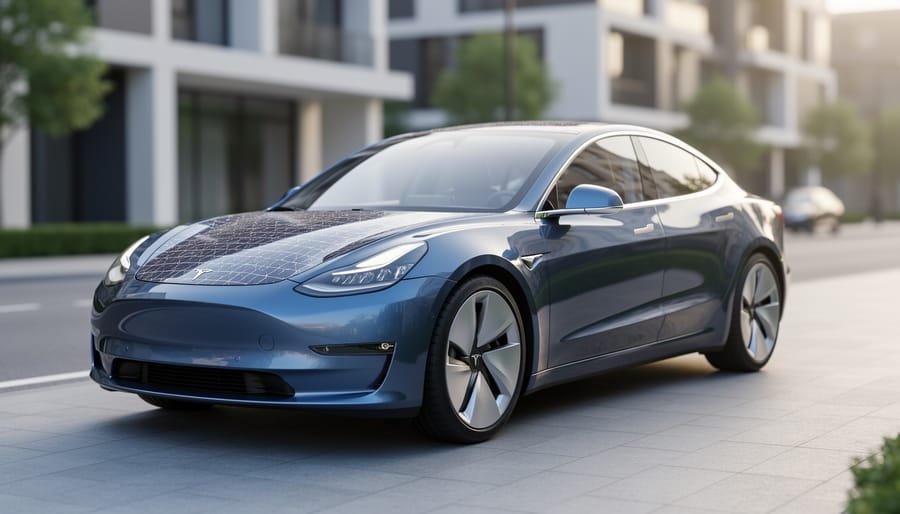

Solar integration in electric vehicles means embedding photovoltaic cells into the body, roof, or windows of a car to generate electricity that supplements or extends the battery’s charge. Rather than relying solely on grid power or combustion fuels, these vehicles harvest energy from sunlight as they drive or park, turning surfaces into small power plants. It’s a practical step toward reducing the root causes of climate change by cutting emissions and fossil fuel dependence.
For young people passionate about renewable energy and climate solutions, solar integration represents a bridge between two technologies already reshaping transportation and power generation. The appeal is straightforward: every sunbeam captured is one less kilowatt drawn from the grid, reducing both costs and carbon footprints. But the technology isn’t magic. Solar panels on vehicles face real limitations, from weather conditions to the finite surface area of a car roof, and understanding what they can and can’t do matters if we’re serious about scalable climate action.
This guide explains how solar integration actually works in electric vehicles, what types are currently available, and where the technology delivers genuine value versus where it still falls short. Whether you’re an EV enthusiast exploring next-generation features or a climate-conscious individual weighing practical renewable solutions, you’ll find a clear-eyed look at what solar-equipped cars can accomplish today and what innovations might unlock tomorrow.
What Solar Integration Means for Electric Vehicles
Solar integration in electric vehicles refers to the incorporation of photovoltaic panels into or onto a vehicle’s design to harness sunlight and convert it into usable electricity. These solar panels work the same way residential rooftop installations do: they capture photons from sunlight and transform them into electrical energy that can either charge the vehicle’s main battery or power onboard systems directly.
This technology exists on a spectrum. At one end are solar-assisted EVswhere panels supplement the main battery by adding a modest amount of range or powering accessories like air conditioning, infotainment systems, or interior lighting. At the other end are full solar EVswhich aim to rely primarily on solar energy for propulsion, though these remain largely experimental due to the physical limits of how much energy current solar panels can generate from a vehicle-sized surface.
- Photovoltaic Panels
- Devices that convert sunlight directly into electricity using semiconductor materials. They are the core technology enabling solar integration in electric vehicles.
- Solar-Assisted EV
- An electric vehicle where solar panels provide supplemental power to extend range or run auxiliary systems, but the vehicle still relies primarily on grid charging. This is the most common and practical form of solar integration today.
- Full Solar EV
- A vehicle designed to operate primarily or entirely on solar-generated electricity. These vehicles remain largely experimental due to current technological limitations in panel efficiency and surface area.
- Auxiliary Systems
- Non-propulsion components of a vehicle such as climate control, navigation, lighting, and electronics. Solar panels can power these systems without draining the main battery, preserving range for driving.
The practical goal of solar integration is straightforward: reduce dependency on external charging infrastructure and maximize the energy efficiency of the vehicle. Even adding five to ten miles of range per day through solar panels can make a meaningful difference for daily commuters, while powering auxiliary systems with solar energy helps preserve battery capacity for driving. This approach represents a tangible step toward energy independence and lower operating costs, two benefits that appeal across the political spectrum and align with climate-conscious innovation.
How Solar Integration in EVs Works
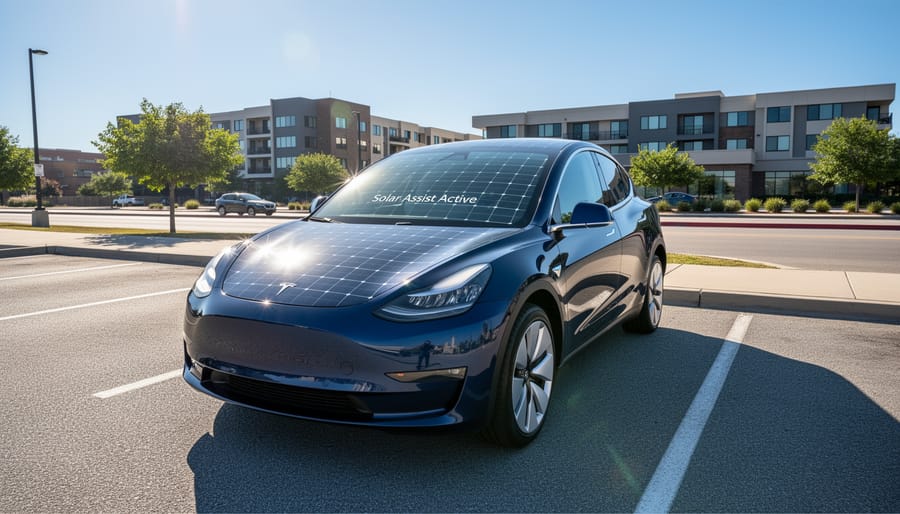
Solar panels on electric vehicles operate on the same fundamental principle as rooftop solar installations, but they’re adapted to work on the move. The process begins when sunlight strikes the photovoltaic cells embedded in the panels. These cells contain semiconductor materials, typically silicon, that release electrons when exposed to light. This flow of electrons creates direct current (DC) electricity, the same type of power stored in EV batteries.
Once generated, this electricity travels through the vehicle’s electrical system. A charge controller regulates the incoming power, ensuring it doesn’t overwhelm the battery or damage sensitive electronics. The electricity can take two paths: it either flows directly to the vehicle’s battery for storage, or it powers auxiliary systems like the climate control, infotainment display, and headlights in real time. This dual capability means even when the main battery is full, solar panels can still reduce the overall energy demand.
The battery management system plays a crucial role here. It monitors the incoming solar charge, balances it with power from wall outlets or public charging stations, and determines the optimal way to distribute energy throughout the vehicle. Think of it as a traffic controller directing electricity where it’s needed most at any given moment.
Energy conversion efficiency varies based on several factors. Modern automotive solar panels typically convert 15 to 22 percent of sunlight into usable electricity. That might sound modest, but it adds up over time. On a sunny day, a well-positioned panel can generate enough power to add several miles of range or run the air conditioning without touching the main battery. Cloud cover, shade, and the angle of the sun all affect performance, which is why solar integration works best as a supplementary energy source rather than the primary one.
The beauty of this system lies in its simplicity. There are no moving parts, no fuel to burn, and no emissions. The sun hits the panel, electrons flow, and your vehicle captures free energy from a renewable source. It’s passive charging that happens whether you’re driving down the highway or parked at work, gradually extending your range and reducing your reliance on the grid.
Different Approaches to Solar-Powered Electric Vehicles
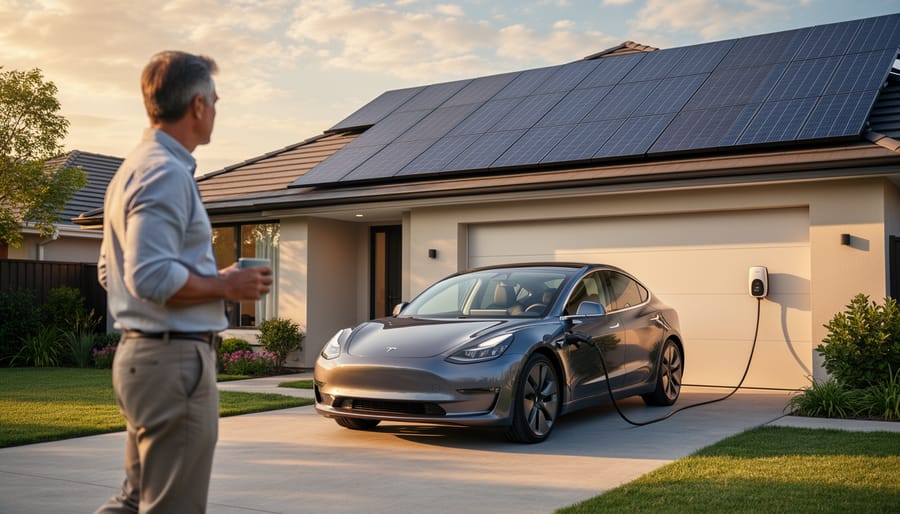
Rooftop Solar Panels
Rooftop solar panels represent the most straightforward and widely adopted approach to solar integration in electric vehicles. These systems typically consist of a thin photovoltaic array mounted flush to the roof surface, designed to capture sunlight during parking and driving. In real-world conditions, a rooftop solar panel can add anywhere from 3 to 30 miles of range per day, depending on panel size, efficiency, and sun exposure. While this won’t replace charging entirely, it’s enough to cover daily commutes for some drivers or power climate control systems without draining the main battery. The configuration appeals to automakers because it requires minimal design changes and doesn’t compromise aesthetics or aerodynamics. For drivers in sunny climates, rooftop panels offer a practical way to reduce grid dependence and lower operating costs over time.
Body-Integrated Photovoltaics
Body-integrated photovoltaics represent a more ambitious approach to solar integration, embedding thin-film solar cells directly into the vehicle’s body panels rather than mounting them as separate units. Companies like Sono Motors and Lightyear have pioneered designs where photovoltaic material covers the hood, trunk lid, fenders, and even doors, turning the entire vehicle surface into a power generator. This method offers two advantages: it captures sunlight from multiple angles throughout the day as the sun moves, and it maintains sleek styling without bulky rooftop panels. However, body-integrated cells currently face efficiency trade-offs since vertical or curved surfaces receive less direct sunlight than horizontal roofs, and manufacturing costs remain higher than conventional panel installations.
Deployable and Aftermarket Solutions
Portable solar panels and aftermarket kits give EV owners a flexible way to experiment with solar power without buying a new vehicle. These systems, often foldable or rollable, can be deployed when parked to charge the battery or power accessories. Some models mount temporarily on the roof or trunk, while others plug directly into a charging port. They’re especially useful for camping, road trips, or emergency backup when grid access is limited. The trade-off? Efficiency is lower than factory-integrated systems, and you’ll need to manually set them up. Still, they democratize solar integration, letting anyone add renewable charging to their current EV at a modest cost.
Real-World Applications and Benefits
Solar integration turns EVs into mobile power generators, capturing free energy from the sun to extend their range and reduce reliance on traditional charging infrastructure. On a typical sunny day, rooftop solar panels can add anywhere from 15 to 40 miles of driving range, depending on the vehicle’s efficiency and local weather conditions. That might not sound revolutionary, but it translates to thousands of miles per year for commuters who park outdoors, enough to cover many daily trips without plugging in at all.
Beyond range extension, solar panels can independently power climate control systems, keeping cabins cool in summer heat without draining the main battery. This matters for comfort and battery longevity, since extreme temperatures stress lithium-ion cells. Entertainment systems, navigation displays, and USB charging ports can all run on solar electricity, preserving driving range for what matters most: getting where you need to go.
The environmental case is straightforward. Every mile powered by sunlight instead of grid electricity reduces carbon emissions, particularly in regions where fossil fuels still dominate the energy mix. Over a vehicle’s lifetime, solar panels can offset tons of CO2, contributing meaningfully to solutions that address climate change health impacts in communities nationwide. Economically, drivers save on charging costs, solar energy is free once the panels are installed, and some utility programs offer credits for excess power fed back into the grid.
Solar EVs also enhance energy resilience. In emergencies or remote locations, they provide off-grid mobility that doesn’t depend on charging stations or fuel deliveries. This appeals across the political spectrum: conservatives appreciate the self-sufficiency and reduced government dependence, while progressives value the climate and public health benefits. Meanwhile, the growing solar-automotive industry generates manufacturing and installation jobs in both urban and rural areas, supporting cities adapting to climate challenges and small-town economies transitioning toward clean energy.
For young people entering the workforce, this convergence of solar and transportation technologies represents tangible opportunities to build careers while advancing climate solutions everyone can support.
Challenges and Limitations
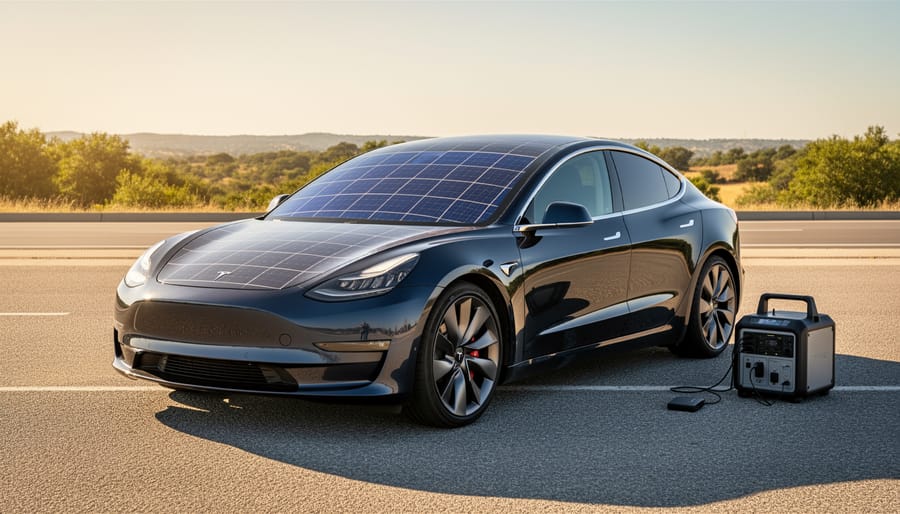
Solar integration in electric vehicles holds immense promise, yet several practical challenges remain. Understanding these limitations helps set realistic expectations and highlights where continued innovation is most needed.
Current solar panels typically convert only 15 to 22 percent of sunlight into usable electricity. On a vehicle’s limited surface area, roughly 1 to 2 square meters for a rooftop installation, this translates to modest power generation. Under ideal conditions, most solar-equipped EVs add only 3 to 10 miles of range per day, far less than what drivers consume during typical commutes. Compare that to standard grid charging, which can replenish hundreds of miles in an hour, and the gap becomes clear.
Weather and geography compound the issue. Solar panels perform best in sunny, cloudless climates, but drivers in regions with frequent rain, snow, or heavy cloud cover see substantially reduced output. Latitude matters too, vehicles in northern regions receive less intense sunlight year-round than those near the equator. This variability makes solar integration less reliable as a primary power source.
Added weight and cost present further obstacles. Integrating solar panels increases manufacturing expenses by several thousand dollars, and the extra weight, though often minimal, can slightly reduce overall efficiency. For budget-conscious consumers, these trade-offs can be difficult to justify when grid electricity remains cheaper and more consistent.
Despite these hurdles, engineers, policymakers, and advocates, including voices like the Ontario environment minister supporting renewable energy mandates, are driving progress. Advances in photovoltaic materials, lighter panel designs, and supportive policies promise to overcome today’s limitations. These challenges aren’t roadblocks; they’re opportunities for collaboration across industries and political perspectives to refine a technology that can meaningfully reduce transportation emissions.
The Future of Solar-Integrated EVs
The trajectory of solar-integrated electric vehicles is accelerating as innovation meets urgency in the climate fight. Next-generation photovoltaic cells promise efficiency gains that could double or triple energy capture compared to today’s panels, transforming solar from a supplementary feature into a primary power source for daily commuting. Researchers are developing ultra-thin, flexible solar materials that conform to curved vehicle surfaces without compromising aerodynamics, while breakthroughs in tandem and perovskite cells could push conversion rates beyond 30 percent within the next few years.
Integration with vehicle-to-grid systems represents another frontier. Solar-equipped EVs could become mobile energy hubs, storing renewable power during the day and feeding it back to homes or the grid during peak demand. This bidirectional flow supports energy resilience while creating economic opportunities for vehicle owners.
Policy momentum is building across partisan lines. Federal tax incentives for clean vehicle technology, state-level renewable energy mandates, and bipartisan infrastructure investments are lowering barriers to adoption. These frameworks recognize solar EVs as tools for energy independence and economic growth, not just environmental goals.
Young innovators are driving much of this progress. Student engineering teams, climate-focused startups, and youth advocacy groups are pushing boundaries in design and deployment. Parents and educators who explain climate change to the next generation are nurturing the problem-solvers who will scale these solutions. The future of solar integration depends on empowering this cohort to lead with creativity, collaboration, and conviction.
Common Questions About Solar Integration in Electric Vehicles
How much extra range can solar panels realistically add to an EV?
Most rooftop solar panels on production EVs add between 15 and 40 miles per week in ideal sunny conditions, though this varies widely based on climate, driving patterns, and panel efficiency. That translates to roughly 700 to 2,000 miles per year, a modest but meaningful boost for daily commuters.
Can a car run entirely on solar power?
Not yet for mainstream use. Current solar panel technology can’t generate enough power to sustain highway speeds or long-distance travel on sunlight alone. However, solar energy can supplement battery charging and power auxiliary systems like air conditioning, reducing reliance on grid electricity.
Is the added cost of solar integration worth it?
It depends on your driving habits and location. If you drive short distances daily in a sunny region, solar panels can offset electricity costs over time and reduce charging frequency. The environmental benefits and energy independence appeal to many drivers even when the financial payback period stretches several years.
Are there tax credits or incentives for solar-integrated EVs?
Yes, many regions offer federal or state tax credits for EVs, and some jurisdictions provide additional rebates for vehicles with renewable energy features. Check local and federal programs, incentives vary by location but can significantly reduce upfront costs.
These questions reflect the genuine curiosity and practical concerns of people considering solar-integrated vehicles. The technology remains in its growth phase, which means expectations need grounding in current capabilities rather than science fiction promises. Solar integration won’t replace charging stations or eliminate range anxiety overnight, but it represents a tangible step toward vehicles that generate part of their own energy.
The real value often shows up in unexpected ways. A solar roof might not double your range, but it can keep your battery topped off during a workday, prevent phantom drain while parked at the airport, or maintain climate control without depleting your charge. For environmentally conscious drivers, knowing their car captures sunlight even while sitting idle offers psychological rewards beyond the kilowatt-hours saved. As panel efficiency improves and costs decline, these benefits will grow more compelling for a broader range of drivers across different climates and use cases.
Solar integration in electric vehicles represents more than just a technological advancement, it’s a tangible example of how innovation can bridge the gap between environmental responsibility and practical energy independence. By harnessing sunlight to power transportation, we’re taking meaningful steps toward reducing emissions, lowering energy costs, and building a more resilient grid. This technology appeals across the political spectrum because it embodies values we all share: self-sufficiency, economic opportunity, and smarter use of natural resources.
The path forward depends on continued innovation, thoughtful policy support, and informed public engagement. Young people have a crucial role to play in this transition. Whether you’re studying renewable energy, advocating for clean transportation policies in your community, or simply making conscious choices as a consumer, your voice matters. Support companies pushing solar-EV technology forward. Engage with local and national leaders about incentives that make renewable energy accessible to everyone, not just early adopters with deep pockets.
Solar integration won’t solve every challenge facing electric mobility or climate change, but it’s a proven piece of the puzzle. The technology exists. The benefits are real. What we need now is collective commitment, from engineers and entrepreneurs to policymakers and everyday citizens, to scale these solutions and make clean transportation the norm rather than the exception. The future of sustainable mobility is being written today, and you have the power to help shape it.