Climate Change
Climate Change

Why California Still Burns Coal Despite Leading the Clean Energy Revolution

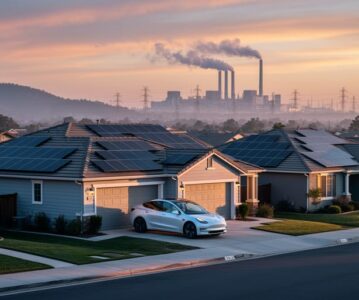
California leads the nation in solar power and electric vehicles, yet coal-fired plants in distant states still power part of our grid. This contradiction isn’t about hypocrisy. It’s about infrastructure, interstate agreements, and the complex reality of how electricity actually reaches your home.
Coal energy remains one of the world’s largest electricity sources, despite aggressive renewable targets in progressive states. The fuel that powered the Industrial Revolution now accounts for roughly 16% of electricity in the Western grid that serves California, down from over 50% two decades ago. That decline represents…


How to Explain Climate Change to Kids (And Spark a Lifelong Passion)

Picture Earth wrapped in an invisible blanket. This blanket, made of gases like carbon dioxide and methane, keeps our planet warm enough for life to thrive. But here’s the problem: humans have been making this blanket thicker and thicker since we started burning coal, oil, and gas to power our cars, heat our homes, and run our factories. That thicker blanket traps extra heat, causing temperatures to rise around the world. This is climate change, and it’s already affecting weather patterns, ocean levels, and ecosystems in ways that touch every corner of the planet.
You’ve probably noticed extreme weather events …

The 5 Primary Drivers of Climate Change—And How They’re Affecting Your Health

Climate change isn’t some distant threat appearing in computer models. It’s unfolding right now, reshaping our world through forces we’ve set in motion. Understanding what drives these changes matters because the connection between climate change and health affects every breath we take, every meal we eat, and every community we call home.
The science is clear: human activities have fundamentally altered Earth’s climate system. Burning fossil fuels releases carbon dioxide that traps heat in our …

How Does Light Pollution Affect The Environment (And What We Can Do About It)

Every night, artificial light floods the sky above our cities, suburbs, and even rural areas. What most people don’t realize is that this glow isn’t just blocking our view of the stars. It’s fundamentally disrupting ecosystems, throwing off wildlife behavior, and contributing to broader environmental challenges that affect us all.
Light pollution has tripled in some regions since 2000, and in 2026, roughly 80% of the global population lives under light-polluted skies. This isn’t merely an aesthetic problem for astronomers. Artificial light at night interferes with natural cycles that countless species have …

How Pesticides Move Beyond the Farm and Into Our Shared Environment

Every time you spray pesticides on a lawn or farm field, those chemicals begin a journey far beyond their intended target. They seep into groundwater, drift on the wind to neighboring ecosystems, and accumulate in the tissues of insects, birds, and aquatic life. What starts as a solution to protect crops becomes a cascade of unintended consequences that ripple through entire food webs.
The numbers tell a sobering story. Research from Agriculture and Agri-Food Canada in 2025 found pesticide residues in 87% of tested waterways across agricultural regions, with concentrations frequently exceeding safety thresholds for aquatic organisms…

Why Canada’s Environment Minister Role Has Become Climate Action’s Biggest Roadblock

Canada’s federal environment minister position stands at a crossroads in June 2026, with recent ministerial transitions reshaping the country’s climate leadership at a critical moment. For young Canadians who’ve grown up with climate anxiety as a constant companion, understanding who holds this role matters less than grasping why the position itself keeps falling short of what science demands.
The minister’s office controls billions in climate funding, sets emissions regulations that touch every sector of the economy, and represents Canada in international negotiations where our credibility has taken repeated…

Featured

How Property Buying Companies Can Actually Help Save the Planet

Evaluate property buying companies by examining their carbon offset programs, renewable energy commitments, and transparent reporting on environmental impact before engaging their services. If you need to sell your property quickly while minimizing environmental harm, click here to explore options that prioritize sustainability alongside speed.
The property sector accounts for nearly 40% of global carbon emissions, making your choice of buyer more consequential than ever. Traditional property transactions generate significant environmental costs through inefficient renovations, …

Single-use Plastic to Be Fully Banned in Ottawa by the End of 2021

By the end of 2021, the federal government plans to implement a core pledge to ban single-use plastics in Ottawa.
Environment Minister Jonathan Wilkinson revealed the proposal to ban single-use plastics, saying that we are living in exceptional times. The minister listed six single-use plastic items that the governments believe are toxic to the environment. The items, which include six-pack rings, plastic straws, Styrofoam plates, cutlery, stir sticks, and takeout containers are to be banned by 2021.
However, this has…

Planned Ban on Plastic Industry in Canada

An industry group has said that the federal government’s proposal to ban certain single-use is detrimental and defamatory to the businesses that manufacture them. According to the federal government, these products that include; plastic straws, carry-out bags, cutlery, styrofoam plates, six-pack rings, and stir sticks are “toxic” to the ecosystem. 
Climate Minister Jonathan Wilkinson said that the six single-use plastic products will be banned because of their impact on the environment. He said that they will be added to the list of toxic …

Climate Change in Cities

Almost everything about how we plan, create, and live in our cities is influenced by the weather. Basically, how we live our lives is determine by the climate. The infrastructure we use including streets, roads, sidewalks, parking lots, public transit, and establishments have all been designed to best suit the climate.
Climate change is taking place and there is a need to be prepared for that change. This is according to Sadhu Johnston, the city manager of Vancouver, who has spent several years working in the field of urban planning in the United States and …