
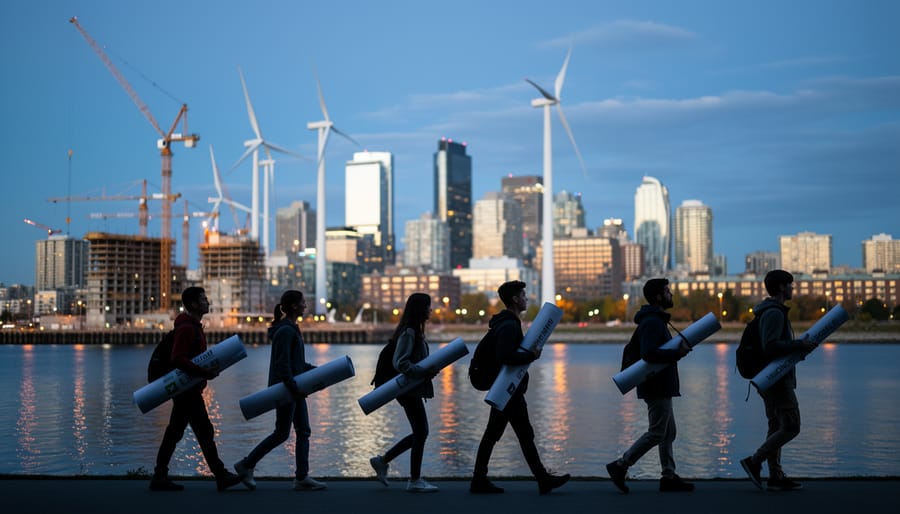


Prime Minister Carney’s government is facing a two-front youth uprising over climate policy in 2026. On June 16, three young Canadians joined forces with the Canadian Association of Physicians for the Environment and Environmental Defence to file a federal court case alleging the government rolled back its 2030 climate plan, while a separate campaign is pushing Carney to make last November’s $40 million Youth Climate Corps pilot permanent in the 2027 budget. The dual movements reflect a generation unwilling to wait for incremental change, particularly as climate-driven health impacts grow more urgent. Young people across the political spectrum are demanding accountability, recognizing that renewable energy transitions and bold climate commitments will define their future. Whether through courtrooms or grassroots organizing, youth advocates are reshaping the national conversation about what climate action should look like and who gets to decide.
What Changed Under Prime Minister Carney

Prime Minister Carney’s government introduced significant shifts to Canada’s climate policy landscape in 2026, sparking both hope and concern among environmental advocates. Last November’s federal budget brought a two-year $40 million Youth Climate Corps pilot, a program designed to put young Canadians to work on climate solutions and renewable energy projects. The Corps represents a tangible investment in youth engagement, offering hands-on experience in environmental restoration, clean energy installation, and community resilience work.
At the same time, the government’s broader federal climate plan drew sharp criticism. Three young Canadians filed a court case on June 16, 2026, challenging what they see as a weakening of Canada’s 2030 commitments. The applicants, Sophia Mathur, Marie Maltais, and Shirley Barnea, supported by the Canadian Association of Physicians for the Environment and Environmental Defence through Ecojustice, argue that policy roadblocks are undermining the country’s climate trajectory. This tension between forward-looking youth programs and perceived backward steps on national targets has become the defining feature of Carney’s climate legacy so far.
Key Developments in Youth Climate Action
1. Three Young Canadians Launch Federal Court Case
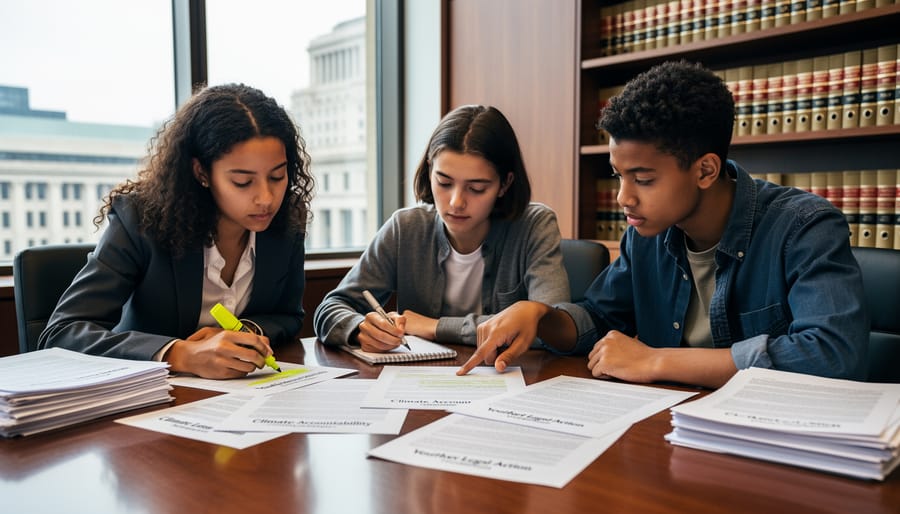
On June 16, 2026, three young Canadians took their climate concerns to Federal Court, challenging what they describe as rollbacks in the government’s 2030 climate plan. Sophia Mathur, Marie Maltais, and Shirley Barnea filed the case alongside two prominent organizations, the Canadian Association of Physicians for the Environment (CAPE) and Environmental Defence, with legal representation from Ecojustice. The June 16, 2026 lawsuit filing represents a strategic escalation in youth climate advocacy, moving beyond protests and petitions to formal legal action that could reshape Canada’s federal climate policy.
The applicants in the case are:
- Sophia Mathur, youth climate advocate
- Marie Maltais, youth climate advocate
- Shirley Barnea, youth climate advocate
- Canadian Association of Physicians for the Environment (CAPE)
- Environmental Defence
The lawsuit targets specific changes made under Prime Minister Carney’s government, arguing that weakening the 2030 climate targets undermines Canada’s commitments and puts future generations at risk. By partnering with health and environmental organizations, the three young applicants bring both scientific credibility and personal urgency to the case. CAPE’s involvement connects climate policy directly to public health outcomes, while Environmental Defence brings decades of legal and policy expertise. Ecojustice, known for landmark environmental cases, is handling the litigation.
This legal challenge signals a shift in how young Canadians are holding government accountable. Rather than waiting for electoral cycles or relying solely on public pressure, they’re using the courts to demand adherence to climate science and long-term planning. The case could set a precedent for how climate commitments are enforced in Canada, potentially requiring governments to justify any weakening of targets with rigorous evidence.
2. Youth Climate Corps Campaign Pushes for Permanence

The $40 million Youth Climate Corps pilot that Prime Minister Carney announced last November has sparked a campaign to make it a cornerstone of Canada’s climate strategy. Young activists and environmental groups are now pressuring the government to transform this two-year program into a permanent, well-resourced initiative in the 2027 budget.
The pilot represents a significant but limited investment. Over two years, it aims to put young Canadians to work on climate solutions, planting trees, retrofitting buildings, installing solar panels, and supporting community-led renewable energy projects. For many participants, it offers hands-on experience in the growing green economy while addressing urgent environmental needs.
But organizers argue that two years is not enough time to build the infrastructure, partnerships, and scale required for meaningful impact. A permanent Youth Climate Corps would provide stable funding, long-term job pathways, and the capacity to train thousands of young people in climate-related skills every year. Supporters point to the economic benefits beyond emissions reduction: creating jobs in rural and urban communities, upskilling workers for renewable energy careers, and building a pipeline of talent for Canada’s clean technology sector.
The campaign crosses political lines. Conservative youth see job creation and economic opportunity. Progressive activists emphasize climate justice and meaningful action. Both groups agree that short-term pilots create uncertainty and limit the program’s potential to drive real change.
The 2027 budget will reveal whether Prime Minister Carney views youth climate action as a temporary experiment or a strategic investment in Canada’s economic and environmental future.
3. Bipartisan Youth Movement Gains Momentum
One of the most striking features of the current youth climate movement in Canada is its appeal across traditional party lines. Young Conservatives are joining young New Democrats and Liberals in calling for stronger climate action, united not by ideology but by a shared recognition that renewable energy represents economic opportunity. This isn’t about left versus right anymore, it’s about jobs, innovation, and building the industries that will define Canada’s economy for decades to come.
The shift in framing matters. When youth activists talk about solar installations creating local employment, wind farms revitalizing rural communities, or retrofit programs training the next generation of skilled workers, they’re speaking a language that resonates regardless of political background. A young person in Alberta concerned about energy sector jobs and a young person in Ontario worried about extreme weather events can both see themselves in a future powered by clean energy that creates paycheques, not just reduces emissions.
This pragmatic approach is changing the conversation at the federal level. Youth Climate Corps supporters, for instance, pitch the program not as environmental charity but as workforce development, an investment that pays dividends through economic growth, not a cost to be minimized. The court case launched by Sophia Mathur, Marie Maltais, and Shirley Barnea similarly frames climate action as protecting Canada’s future prosperity, not constraining it.
What makes this bipartisan momentum powerful is its focus on solutions rather than blame. Young Canadians are less interested in relitigating past climate debates and more interested in ensuring their generation has access to the green jobs and stable climate conditions they’ll need to thrive.
Why It Matters
These youth-led campaigns mark a pivotal shift in how climate policy accountability works in Canada. The June 16 court case and the Youth Climate Corps mobilization together send a clear message: young people will hold government promises to account through both legal channels and organized advocacy. When three individuals can partner with medical and environmental organizations to challenge federal climate rollbacks in court, it demonstrates that youth voices carry weight in shaping the policies that will define their futures.
The significance extends beyond any single court ruling or budget decision. These movements are accelerating Canada’s renewable energy transition by keeping climate investment at the center of national conversation. The Youth Climate Corps push, for example, isn’t just about funding, it’s about creating a pipeline of skilled workers for the clean energy economy. A permanent, well-resourced program would train thousands of young Canadians in retrofit work, ecosystem restoration, and renewable installations, directly addressing the labor shortage in green industries while cutting emissions.
The economic case matters too. Sustained climate investment drives job creation in every region, from solar installations in suburban communities to energy efficiency upgrades in cities adapting their infrastructure. When young people organize around climate action as an economic opportunity rather than a sacrifice, they’re reframing the entire debate. That shift makes climate progress politically durable, because it’s no longer framed as a cost, it’s an investment in prosperity, public health, and competitive advantage in the global clean energy market.
What to Watch in 2027 and Beyond
The most immediate milestone to track is the 2027 federal budget, when Prime Minister Carney’s government will decide whether to make the Youth Climate Corps a permanent fixture or let the two-year pilot expire. That decision will signal how seriously the administration takes youth engagement in climate work and whether it sees renewable energy jobs as a long-term economic strategy. If the program becomes permanent and well-resourced, it could channel thousands of young Canadians into conservation, restoration, and clean energy projects each year.
Simultaneously, the June 16 court case filed by Sophia Mathur, Marie Maltais, Shirley Barnea, CAPE, and Environmental Defence through Ecojustice will move through the Federal Court. Legal proceedings typically unfold over months, so expect motion hearings, evidence submissions, and potentially a trial date set sometime in 2027. The outcome could establish whether the government’s climate rollbacks violate young people’s constitutional rights and set precedent for future climate litigation in Canada.
Beyond these formal processes, opportunities for involvement are everywhere. Young people who care about jobs in solar installation, forest management, or coastal protection can advocate for the Youth Climate Corps by contacting their MPs, regardless of party. Those concerned about health impacts, particularly wildfires & air quality, can amplify the court case through social media or join local climate groups. The bipartisan nature of these campaigns means conservative-leaning youth focused on economic growth and progressive-leaning youth focused on environmental justice can find shared ground in advocating for renewable energy investment.
How can young people join these climate campaigns?
Contact your MP to advocate for a permanent Youth Climate Corps, follow the organizations involved in the court case for action alerts, or connect with local climate groups regardless of your political background. Many campaigns need volunteers for outreach, research, and organizing.
What’s the timeline for the Federal Court case?
The case was filed June 16, 2026, and will likely progress through hearings and evidence phases over several months. A trial date could be set in 2027, though exact timing depends on court schedules and procedural motions.
How does the Youth Climate Corps create jobs?
The program funds positions in conservation, renewable energy installation, environmental monitoring, and community resilience projects. If made permanent, it could offer stable entry-level work in the growing clean economy.
What does bipartisan climate action look like in practice?
It means focusing on shared goals like job creation, economic opportunity, and energy security rather than partisan talking points. Youth from all political backgrounds can support renewable energy investment because it delivers tangible benefits to communities.
Watch for provincial governments to respond as well. If youth climate action gains traction federally, provinces may launch their own corps programs or join the constitutional challenge, multiplying the pressure on Ottawa. The next year will clarify whether 2026 marks a temporary surge in youth climate organizing or the start of sustained, cross-partisan momentum that reshapes Canada’s climate policy for the decade ahead.
The shifts in climate policy under Prime Minister Carney have sparked something remarkable: young Canadians stepping up to demand accountability, taking the government to court, and building campaigns that transcend traditional political divides. From the June 16 federal court case launched by Sophia Mathur, Marie Maltais, and Shirley Barnea to the push for a permanent Youth Climate Corps in the 2027 budget, these movements prove that the next generation isn’t waiting for permission to shape Canada’s climate future.
What makes these campaigns powerful is their refusal to treat climate action as a partisan issue. Young people across the political spectrum recognize that renewable energy means jobs, economic growth, and opportunity. When youth from different backgrounds find common ground on sustainability, they create momentum that’s harder for any government to ignore.
You don’t need to be an activist or a policy expert to be part of this shift. Follow the campaigns, share their messages, contact your representatives, or simply start conversations with friends and family about why climate action matters to your generation. The Youth Climate Corps could become a permanent pathway for young Canadians to build careers in the green economy, but only if enough voices push for it.
The vision here is hopeful: a sustainable economy built through collaboration, not division. Young Canadians are showing us how to get there, one campaign and one court case at a time. The question now is whether the rest of us will join them.