



The MIT Solar Electric Vehicle Team is a student-led research and engineering group pushing the boundaries of how solar energy can directly power transportation, designing high-efficiency vehicles that compete internationally while advancing renewable technology with real-world applications. Since their founding in 1985, these students have built some of the world’s most efficient solar cars, capturing sunlight through onboard photovoltaic panels and converting it into usable power with minimal energy loss. Their work matters because it demonstrates that solar integration in electric vehicles isn’t just a futuristic concept but a practical solution being refined right now on college campuses.
What sets this team apart is their focus on efficiency and innovation under real competition constraints. Members design, build, and race vehicles across thousands of miles, testing solar charging systems, aerodynamics, battery management, and lightweight materials in conditions that mirror the challenges facing the broader EV industry. Every race becomes a laboratory for breakthroughs that could eventually influence mainstream electric vehicle design.
This kind of hands-on problem solving addresses the root causes of climate change by accelerating our transition away from fossil fuels. Young engineers at MIT prove that renewable energy solutions don’t require waiting for top-down policy shifts. Instead, grassroots innovation and student-driven projects are already reshaping what’s possible in clean transportation. Their success offers a blueprint for how technical expertise, collaboration, and determination can turn ambitious climate goals into tangible progress.
From Campus Project to Innovation Leader
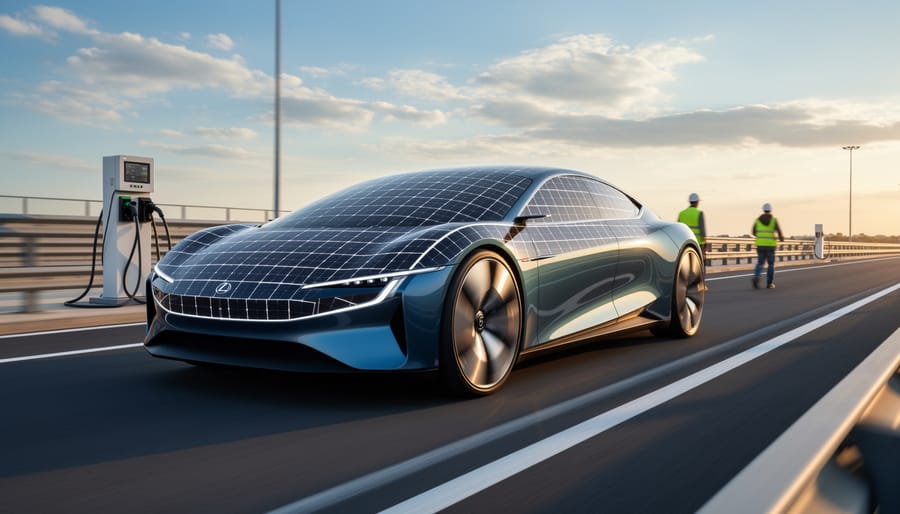
The MIT Solar Electric Vehicle Team emerged in 1985 when a small group of undergraduate students decided to tackle an ambitious challenge: building a car powered entirely by the sun. What started as a handful of engineering students tinkering in a campus workshop has grown into a sophisticated organization of 40-60 students from multiple disciplines, including mechanical engineering, electrical engineering, computer science, business management, and industrial design.
This evolution wasn’t accidental. The team’s early successes in the World Solar Challenge, a grueling race across the Australian Outback, proved that student innovation could compete with professional engineering firms. After placing third in their 1993 debut, the team refined their approach, bringing in expertise from across MIT’s campus. Finance students began modeling project costs and seeking sponsorships. Materials science researchers contributed lightweight composite knowledge. Even urban planning students joined to strategize charging infrastructure scenarios.
The collaborative structure mirrors real-world renewable energy development, where technical solutions require business viability and policy understanding. Team members don’t just design vehicles; they manage budgets, negotiate with suppliers, mentor younger students, and present findings to industry professionals. A sophomore electrical engineering major might work alongside a graduate business student to balance solar panel efficiency against production costs.
This hands-on experience creates a pipeline of talent ready to tackle climate challenges beyond campus. Alumni have founded solar technology startups, joined major automakers’ sustainability divisions, and shaped energy policy. The team demonstrates that young people don’t need to wait until graduation to contribute meaningfully to the renewable energy transition. They’re solving complex problems now, learning through iteration and failure, and proving that student-led innovation can influence commercial development paths in solar transportation.

How Solar Integration Works in Electric Vehicles
Solar panels mounted on electric vehicles capture sunlight and convert it into electricity that either powers the motor directly or charges the onboard battery. The process begins with photovoltaic cells, typically thin, lightweight panels arranged across the roof, hood, or other exposed surfaces, that absorb photons from the sun. When sunlight strikes these cells, it knocks electrons loose, creating a flow of direct current electricity. An inverter then converts this DC power into a form the vehicle’s systems can use, directing it either to the battery pack for storage or straight to the electric motor when conditions are right.
The beauty of solar integration in EVs lies in its passive nature. Unlike traditional charging that requires you to seek out a station and wait, solar panels work continuously whenever there’s daylight, even on overcast days, though at reduced efficiency. A vehicle parked outside during a workday can generate several miles of range without any user intervention. Teams like MIT’s focus on maximizing this energy capture through careful panel placement, selecting high-efficiency cells that balance power output with weight, and optimizing the angle and surface area available.
Battery storage plays a crucial role because solar generation is intermittent. The vehicle’s lithium-ion battery acts as a buffer, storing excess solar energy when the car isn’t moving and releasing it when needed. Most solar EVs use the same battery system for both solar-generated and grid-charged electricity, with smart management systems prioritizing solar power first to maximize free energy use. This supplemental charging won’t replace plugging in entirely for most drivers, but it meaningfully extends range and reduces how often you need to find an outlet, a practical advantage that becomes more valuable as battery technology improves and solar cell efficiency climbs.
The MIT Team’s Design Philosophy and Competition Success
The MIT Solar Electric Vehicle Team treats every design decision as a puzzle with competing demands. They must maximize the surface area available for solar cells while keeping the vehicle light enough that those panels can actually power meaningful distance. Engineers on the team spend months running simulations to find the sweet spot where aerodynamic drag, structural weight, and energy capture align. A vehicle that’s too heavy requires more power to move, negating the efficiency gains from additional solar panels. One that’s too streamlined might sacrifice panel placement that would have delivered crucial extra wattage during long-distance events.
This balancing act crystallizes in competitions like the American Solar Challenge and World Solar Challenge, where teams traverse hundreds or thousands of miles relying almost entirely on solar power. The MIT team has competed in multiple international events, using each race as a testing ground for innovations that push beyond lab theory. During the 2023 American Solar Challenge, their vehicle demonstrated how real-time battery management systems can adjust power distribution based on weather conditions and terrain, a capability that informs commercial EV development.
The team’s design philosophy centers on four core principles:
- Maximizing solar surface area without compromising structural integrity or safety
- Minimizing energy consumption through lightweight materials and friction reduction
- Optimizing battery management to store surplus power and deliver it efficiently
- Creating scalable solutions that manufacturers could adapt for consumer vehicles
Competition success doesn’t just earn trophies. It validates approaches that automotive companies monitor closely. When the MIT team shaves weight by using carbon fiber composites or improves solar panel angles by two degrees, they generate data points that influence how mainstream manufacturers think about integrating renewable energy into transportation. The Formula SAE competitions and solar races create a pipeline where student innovations become tomorrow’s production features, proving that youth-led projects deliver tangible advances in clean technology.
Real-World Applications and Economic Potential
The innovations emerging from MIT’s solar vehicle lab extend far beyond student competitions. Automakers and technology companies actively monitor the team’s breakthroughs in lightweight materials, energy management systems, and solar integration techniques, research that directly informs commercial development timelines.
Solar-integrated vehicles represent a significant economic opportunity. The U.S. solar industry already employs over 250,000 workers, and expanding solar EV production would create thousands of additional manufacturing, engineering, and installation jobs. These positions span skill levels from assembly line work to advanced research, offering pathways for diverse communities to participate in the green economy.
For consumers, the math is compelling. While solar panels on vehicles currently supplement rather than replace charging, even modest reductions in grid dependence translate to savings over a vehicle’s lifetime. Early adopters of solar EVs report cutting charging costs by 15-30% in sunny climates, and as efficiency improves, those numbers will rise. Lower operating costs make electric transportation accessible to more households.
This economic appeal creates rare bipartisan common ground. Conservative voters appreciate reduced government subsidies once technology matures, while progressive advocates value environmental benefits. Solar EVs address energy independence concerns that resonate across the political spectrum, producing power domestically rather than relying on foreign oil markets.
MIT’s prototypes also accelerate development in related sectors. Advances in lightweight composites, battery thermal management, and power electronics find applications beyond transportation. These spillover effects multiply the economic impact, driving growth in aerospace, renewable energy storage, and consumer electronics.
The pathway from campus prototypes to commercial reality requires patient capital and policy support, but the foundation is solid. Young innovators at MIT demonstrate that solar transportation isn’t science fiction, it’s an investment in American manufacturing competitiveness and energy security that pays dividends across economic and environmental ledgers.
Challenges and the Path Forward
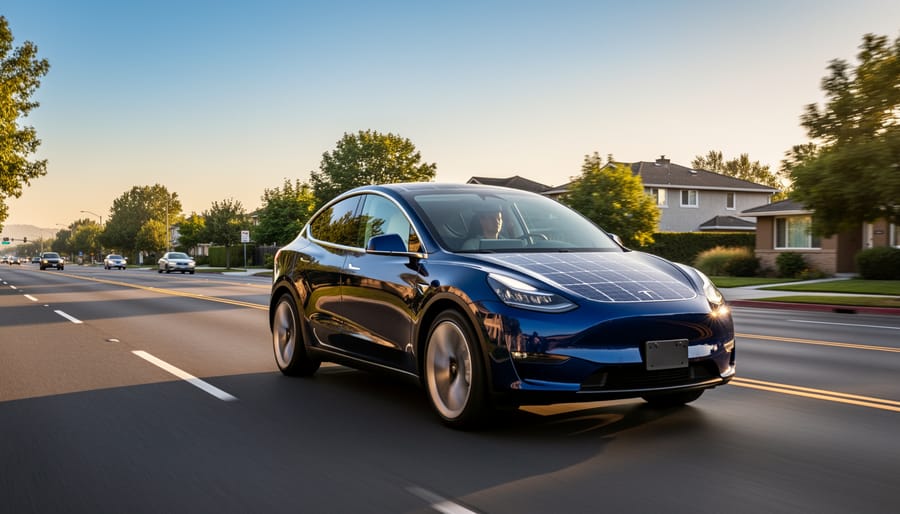
Solar electric vehicles face real technical and economic hurdles, but ongoing research, including the MIT team’s work, steadily chips away at these barriers.
Current solar panels convert only about 20 to 25 percent of sunlight into electricity, limiting how much energy a vehicle can harvest during typical use. A car’s surface area can’t accommodate enough cells to power long-distance travel on sunlight alone, especially in cloudy climates or during winter months. Battery storage adds significant weight, reducing the efficiency gains that solar panels provide. The MIT team addresses this through lightweight composite materials and aerodynamic designs that maximize every watt captured.
Manufacturing costs remain higher than conventional electric vehicles. Specialized solar cells, integration engineering, and custom chassis drive up production expenses. Yet prices for photovoltaic technology have dropped nearly 90 percent over the past decade, and economies of scale will continue this trend as more manufacturers enter the market. The economic case strengthens when you factor in reduced charging costs and the job creation potential in green manufacturing, appealing across the political spectrum.
Infrastructure presents another challenge. Parking structures and roadways aren’t optimized for solar charging, and fast-charging networks still rely primarily on grid power. Forward-thinking cities are exploring solar canopies in parking areas and transparent solar coatings for windows, creating opportunities for passive energy capture throughout the day.
The path forward combines incremental technological improvements with policy support that doesn’t favor one partisan approach. University teams demonstrate what’s possible, while industry partnerships translate prototypes into practical applications. Progress happens through collaboration between researchers, manufacturers, and communities willing to embrace change without demanding perfection from day one.
What Young Innovators and Advocates Can Learn
The MIT Solar Electric Vehicle Team demonstrates that meaningful climate action doesn’t require a PhD or years of industry experience. Students join this team as freshmen and sophomores, learning sophisticated engineering and project management skills through hands-on work. The lesson? Start where you are. Many universities host solar vehicle teams, robotics clubs, or sustainability initiatives that welcome members from all majors. Business students handle budgets and sponsorships, communications majors document progress and engage the public, and designers create interfaces that make complex technology accessible.
If your school lacks such programs, consider initiating one. The MIT team began with passionate students who saw a gap and filled it. Community colleges, trade schools, and even high schools increasingly offer renewable energy coursework and competitions. Online resources make solar technology education more accessible than ever, from free courses on photovoltaic systems to open-source vehicle designs.
The interdisciplinary nature of solar EV work offers another crucial lesson: climate solutions emerge from diverse collaboration. Understanding climate change and health connections requires medical and public health perspectives. Learning to explain climate change effectively demands communication skills. Policy advocacy, community organizing, and financial innovation all contribute to renewable energy adoption.
How can students get involved in solar vehicle projects?
Check if your university has an existing solar vehicle team or electric vehicle club that accepts new members regardless of experience level. If not, reach out to engineering departments, sustainability offices, or student organizations to explore starting one, and connect with established teams at other schools for guidance.
What skills are needed for solar EV work?
While engineering knowledge helps, teams need marketing, finance, graphic design, event planning, writing, and project management skills. Most successful teams emphasize that enthusiasm and willingness to learn matter more than existing technical expertise.
Are there similar teams at other universities?
Yes, dozens of universities worldwide maintain solar vehicle teams that compete in events like the American Solar Challenge and World Solar Challenge. Many also participate in Formula SAE Electric and other sustainable transportation competitions.
How does this work contribute to fighting climate change?
Solar vehicle research advances battery technology, solar panel efficiency, and lightweight materials that accelerate the transportation sector’s shift away from fossil fuels. Student teams also inspire peers and demonstrate renewable technology’s viability to broader audiences.
Your contribution doesn’t require joining a formal team. Advocate for solar installations at your school, volunteer with organizations promoting clean transportation, or simply share what you learn about renewable technology with your community. The MIT team’s success proves that young people can drive technological progress when given space to experiment, fail, and iterate toward better solutions.
The MIT Solar Electric Vehicle Team proves that breakthrough climate solutions often emerge from student laboratories and university workshops, not just corporate research centers. Their work moves solar-integrated transportation from theoretical possibility to tested reality, showing what’s achievable when young innovators combine technical skill with environmental commitment. Each prototype they build, every competition they enter, and all the data they generate contributes to a knowledge base that benefits the entire renewable transportation sector.
This isn’t just about building faster solar cars or winning races. It’s about creating a pipeline of talent equipped to tackle our most pressing environmental challenges while simultaneously building an industry that generates quality jobs and economic opportunity. Solar EV technology appeals across political divides precisely because it delivers on multiple fronts: cleaner air, reduced dependence on fossil fuels, manufacturing jobs, and technological leadership.
Whether you’re a student considering engineering, a community member advocating for clean transportation policies, or someone exploring career paths in renewable energy, there’s a role for you in this transition. Support university programs that enable hands-on sustainability projects. Follow teams like MIT’s to stay informed about emerging technologies. Most importantly, recognize that solving climate challenges requires all of us, bringing different skills and perspectives to the table. The road to widespread solar EV adoption runs through collaboration, innovation, and the determination of people who refuse to accept that our transportation future must look like our past.